

Protection for tendons and ligaments
Gaiters
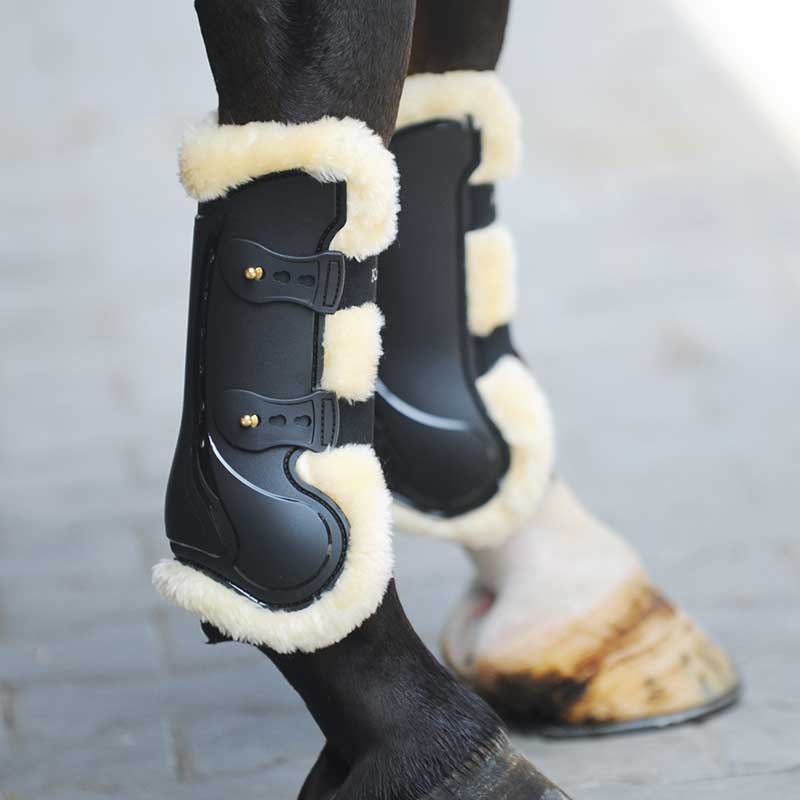
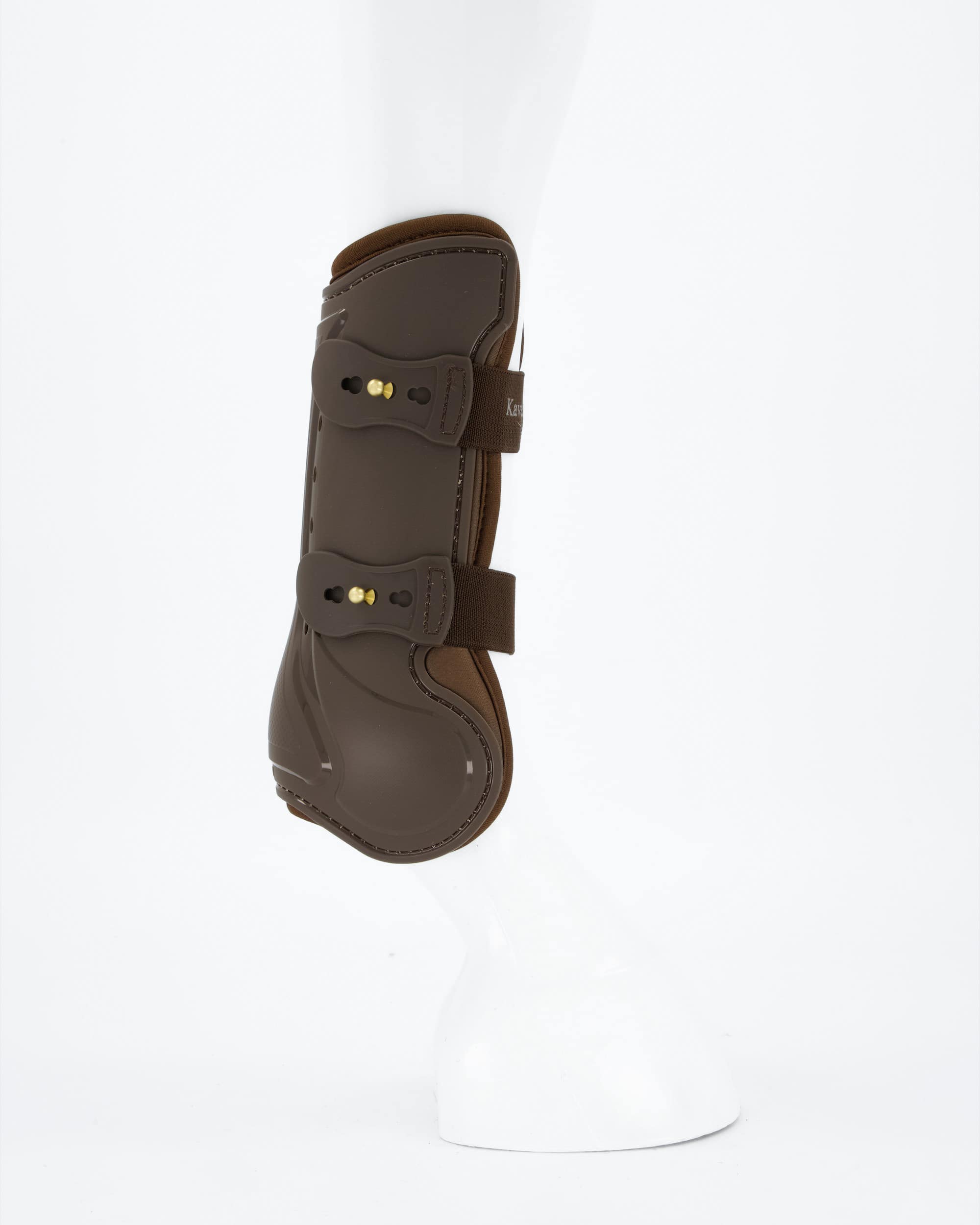
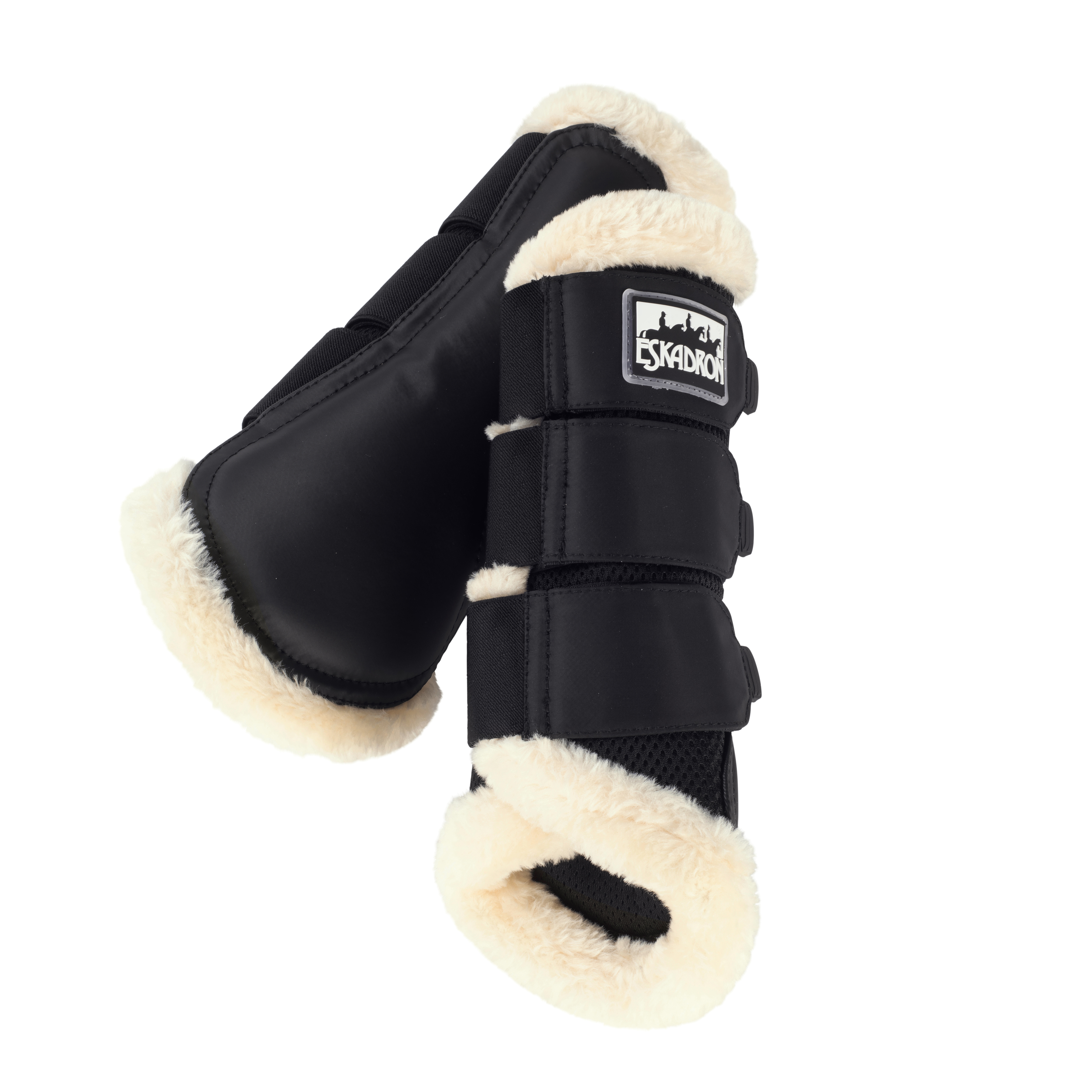
Horse boots protect your horse's fetlock, cannon bone and tendons from brushing injuries, stones, branches and falling poles. At Lepona you will find hard-shell, dressage, mesh, fleece and cross-country boots for pony, cob and warmblood, for example from Eskadron, Kentucky Horsewear and Veredus. Matching brushing boots and overreach boots are available too. Not sure which type suits you? You will find some guidance below, and we are happy to advise you by phone, WhatsApp or video.






Which horse boots suit you and your horse?
Horse boots protect against knocks and strain on the tendons: they shield the fetlock, cannon bone and tendons from brushing injuries with the horse's own hooves, from stones and branches and, when jumping, from falling poles. Which type makes sense depends on the discipline, the leg and the horse. Our guide Horse boots explained covers what horse boots are and when you need them at all. Here you will find the selection and a short overview.
Types of horse boots at a glance
- Hard-shell boots: the firm outer shell made of plastic, sometimes with carbon or Kevlar, protects the cannon bone and fetlock. Inside they are usually lined with neoprene or fleece. Typical for showjumping and cross-country.
- Dressage boots and fetlock boots: softer, more flexible models, often made of mesh or faux leather and frequently fleece-lined. They wrap around the fetlock, are easier to put on than bandages and are often available to match collection colours.
- Cross-country boots: closed models with a shock-absorbing outer shell for cross-country and eventing. The risk of injury from branches and undergrowth is higher here.
- Boots with fleece: faux fur or lambskin lining, as models of their own or combined with a hard shell.
- Tendon boots and tendon guards: models designed mainly to protect the tendon area. The product listing shows which part of the leg is covered.
- Brushing boots: shorter than horse boots and usually intended for the hind leg.
- Overreach boots: protect the heel bulb, for example when jumping or cross-country, and complement horse boots.
- Travel boots: protect during loading and on the journey, often reaching over the coronet band.
- Stable, cooling and fly boots: these are only used for certain periods. You will find cooling and therapy products under therapy products; we also carry a few fly boots.
Dressage, showjumping, cross-country: what matters?
In dressage training many riders use soft dressage or fetlock boots if their horse tends to brush. When jumping, fetlock joint and tendons should be protected from poles, which is why hard-shell boots with good shock absorption are in demand, often together with overreach boots. For cross-country, closed cross-country boots come into consideration. Bandages are an alternative that can be adjusted more individually but takes more practice. Leg protection is generally not allowed in dressage tests. Check the rules of your class before you start.
Front or hind?
Many models are available separately for front and hind legs because legs and load differ. Hind boots are often cut differently, for example longer or with hock protection. How many boots you need depends on how you use them. Some products are sold individually, others as a set. Whether a set contains two or four boots is stated on the product.
Size and fit
In the shop you will find horse boots in sizes Mini Shetty, Shetty, Pony, Cob, Warmblood and Warmblood Extra as well as in ready-to-wear sizes (from XXS to XL). Every manufacturer cuts differently, so the measurements in the product listing apply. Check these points when putting them on:
- Fit: the boot should sit firmly and not slip, but must not pinch the tendons.
- Fasteners: close the Velcro fasteners evenly.
- Rub marks: after riding, check leg and coat. Poorly fitting boots can rub.
- Cleanliness: remove dirt from the inside and the leg before putting them on.
Material, colours and brands
Horse boots come with neoprene, faux fur or lambskin lining and an outer made of plastic, carbon, Kevlar, nylon, leather or faux leather. Black is the most common colour, followed by brown, blue, white and many others. An overview of the brands:
- Eskadron horse boots in many colours, matching the collections
- Kentucky Horsewear horse boots
- Veredus horse boots
- plus models from Waldhausen, Kavalkade, LeMieux and QHP
Advice
Unsure about the type, size or combination of horse boots, brushing boots and overreach boots? We are happy to advise you by phone, WhatsApp or video.
That depends on the use. For dressage training many riders use soft dressage or fetlock boots, which are easier to put on than bandages. For showjumping, hard-shell boots with a shock-absorbing outer shell are needed so fetlock joint and tendons are protected if a pole hits. Cross-country may call for closed cross-country boots. In dressage tests leg protection is usually not allowed; check the rules of your class before you start.
In the shop you will find horse boots in sizes Mini Shetty, Shetty, Pony, Cob, Warmblood and Warmblood Extra, sometimes also in standard sizes. The label is only a guide because every maker cuts a little differently. Compare the product measurements with your horse's leg; we are happy to help.
Many models are available separately for front and hind legs, sometimes also as a set of four boots. Which legs you want to protect depends on what you use the boots for and how your horse moves. What is included in a set is listed on the relevant product.
Hard-shell boots have a firm outer shell and protect cannon bone and fetlock from knocks; they are typical for showjumping and cross-country. Fetlock boots are softer and more flexible, wrap the fetlock and are often used in dressage training. Both types come with neoprene or fleece lining.
A good fit is what matters: the boot should sit firmly and not slip, but not pinch anything. Leg and lining should be clean before putting it on, and the fasteners closed evenly. After riding, check leg and coat for rub marks. If you are unsure, the measurements on the product or our advice will help.
Brushing boots are shorter than horse boots and are usually used on the hind leg. Overreach boots protect the heel bulb and complement horse boots, for example in showjumping or cross-country. You will find both in our Leg protection category, as brushing boots and overreach boots.