

Laced, glitter or classic
Riding boots - comfort, style & perfect fit
Riding boots are divided into dressage, jumping and all-rounders. Whichever you choose, you have the choice between many different designs and materials. We offer riding boots from brands such as QHP. Busse, Hobo or Ego7.








Riding boots size advice & fit tips
If you want to buy your riding boots online, choosing the right size is particularly important to ensure comfort and functionality. In addition to the foot size, the shaft width and shaft height play a decisive role. Here is a detailed guide on how to determine your measurements and find the perfect fit:
-
Measure your foot size
Measure your foot length from the longest toe to the heel. It's best to take your measurements in the afternoon or evening when your feet are at their largest. Use the manufacturer's size chart, as sizes can vary slightly.
-
Determine the shaft width
The shaft width refers to the circumference of the calf at the widest point. To measure this correctly, sit down and place the measuring tape loosely around the calf. Make sure that you are wearing riding socks or the trousers that you want to wear with the boots when you try them on.
-
Determine the shaft height
The shaft height is measured from the ground to the back of the knee. The leg should be slightly bent. As leather boots settle over time, the shaft height should be slightly higher at the beginning so that the boots fit perfectly later on.
-
Tips for trying on
Fitting is also important when buying online. The riding boots should fit snugly without pinching, especially with leather boots: they can be tight at first, but adapt to the shape of the leg over time. The heel should not have too much play when walking and there should be enough freedom of movement in the ankle area to ride comfortably.
-
Notes on the fit
- Leather boots widen over time, so it is better to choose a slightly tighter fit.
- Synthetic boots retain their shape and hardly widen at all, so the measurements should fit directly.
- Also consider the riding discipline when choosing a size. Jumping boots are generally more flexible, while dressage boots have a tighter fit and a higher shaft.
With these tips and a careful measurement, nothing stands in the way of a successful purchase of riding boots online.
Riding boot designs: Stylish & individual
Riding boots are not only functional, but also fashionably versatile - they can be customised to suit the rider's style.
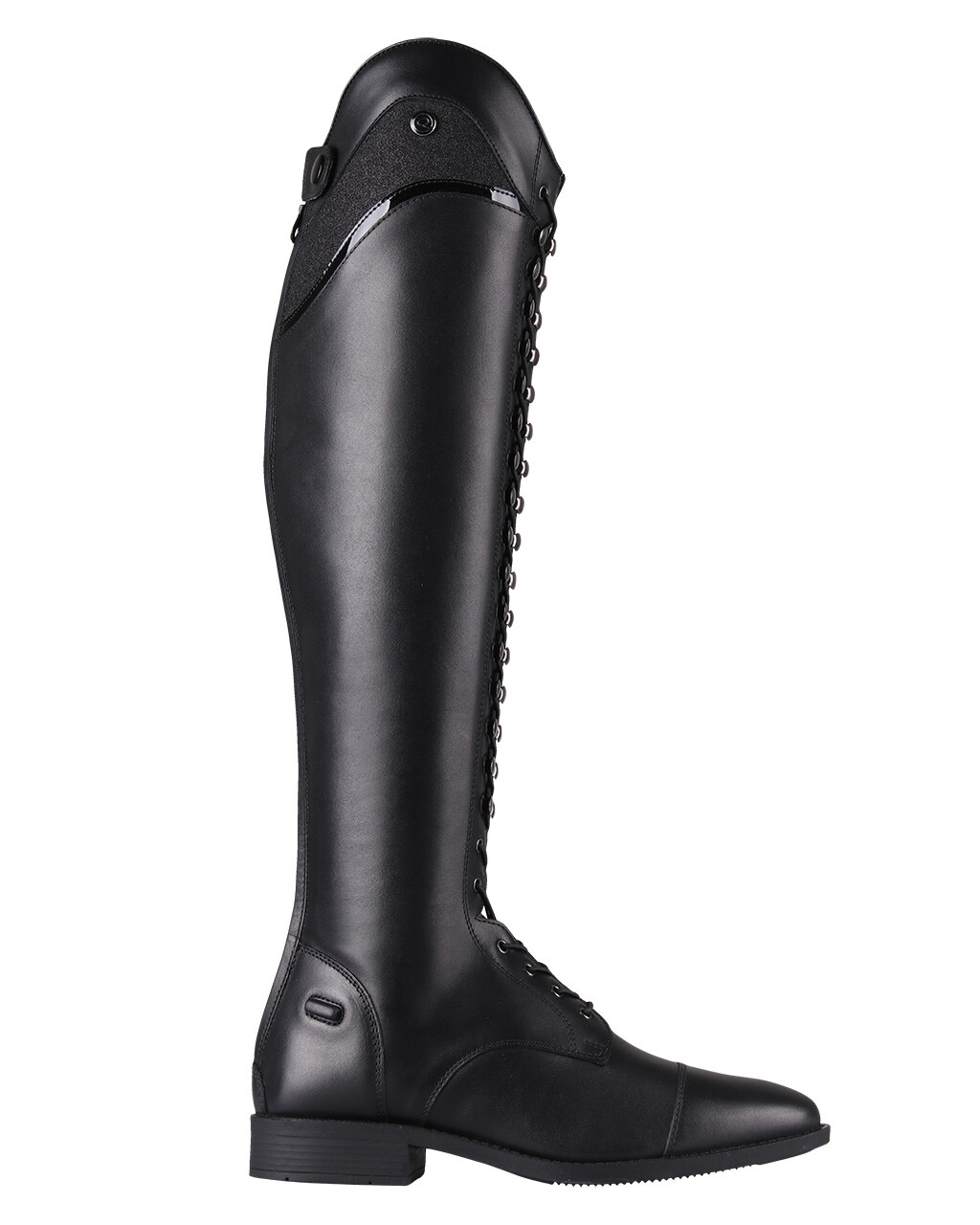
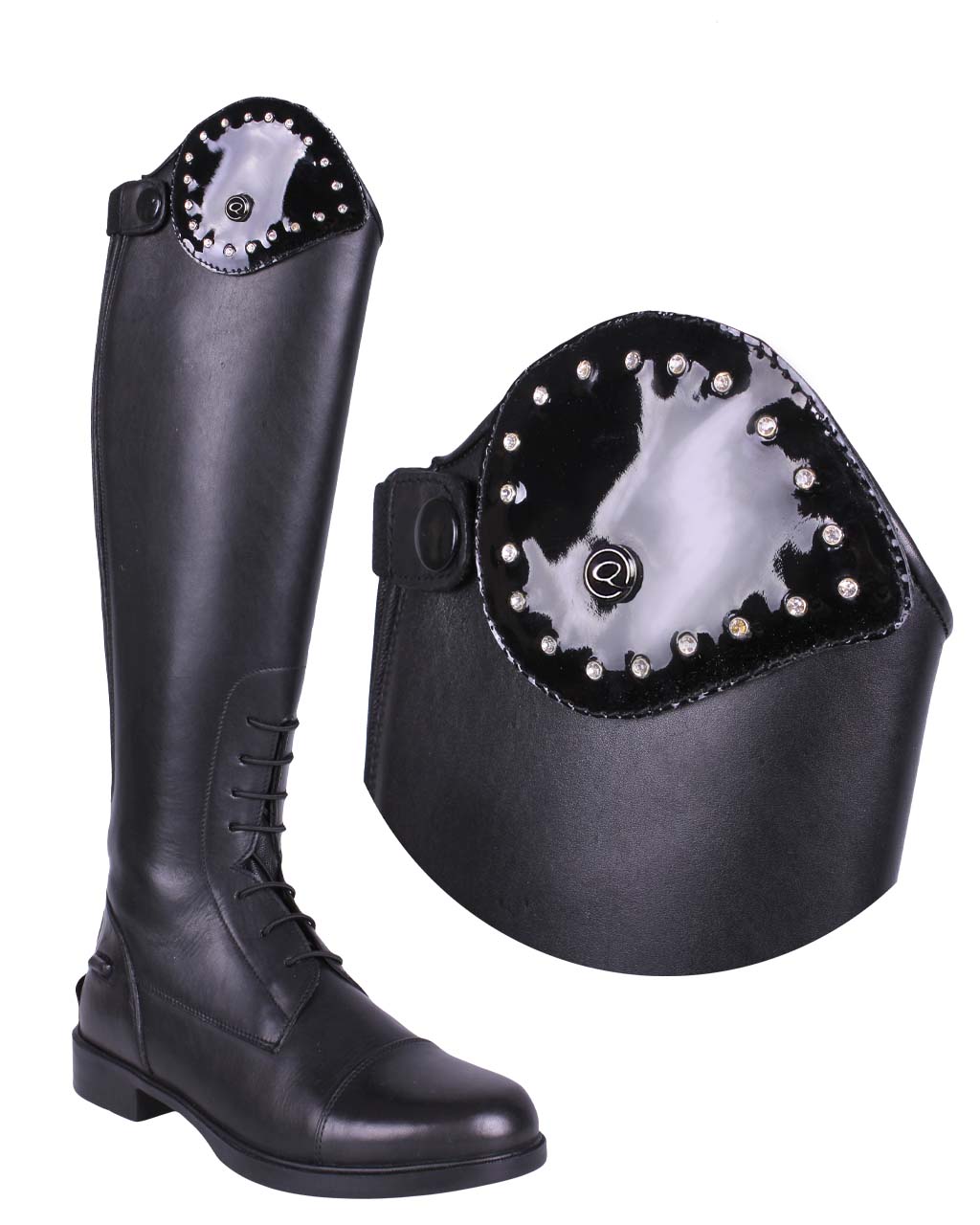
Matt leather boots offer a classic, elegant look that is suitable for both everyday use and competitions. If you prefer something a little more eye-catching, you can opt for boots with glitter elements, which visually enhance the boot and add a touch of glamour.
Patent boots are particularly popular with dressage riders and give the outfit a shiny, sophisticated touch.
Riding boots with laces not only offer a special look, but also maximum customisability. They are fully laced at the front from bottom to top, which makes it possible to adjust the fit of the boot precisely to the individual leg shape. This ensures a high level of comfort and the lacing also provides flexibility and freedom of movement in the ankle area.
Thanks to the different design variants, every rider can find the right boot for their style and preferences.
Which riding boot suits me?
Dressage boots
- for a long, slender leg
- slightly thinner and softer inside
- very high dressage arch
- reinforced heel
- mostly made from cowhide
Jumping boots
- much more flexible than a dressage boot
- softer material for more freedom of movement
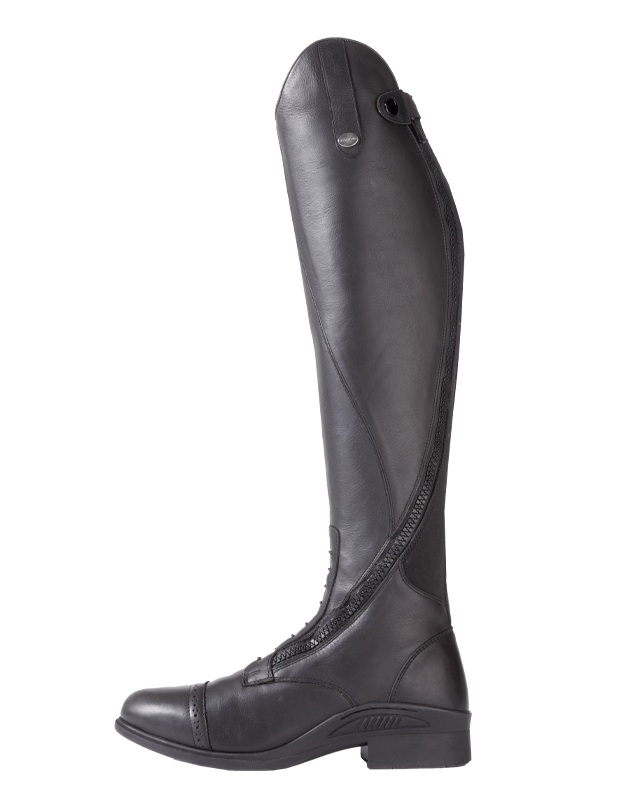
- elasticated lacing area at the front
- not as high cut
All-round boot
- combines the freedom of movement of a jumping boot with the look of a dressage boot
- insensitive material, often synthetic
Im Sommer bieten atmungsaktive Stiefel aus leichtem Leder oder synthetischen Materialien einen hohen Tragekomfort und vermeiden, dass die Füße überhitzen.
Im Gegensatz dazu sind Winterreitstiefel gefüttert und isoliert, häufig mit Materialien wie Fleece oder Lammfell. Mit diesen gefütterten Reitstiefeln bekommst du keine kalten Füße.
Für Regen und Matsch gibt es wasserdichte Reitstiefel, die verhindern, dass Feuchtigkeit eindringt und gleichzeitig für Stabilität im Steigbügel sorgen. Sie haben zudem häufig eine rutschfeste Sohle.
Obwohl Reitstiefel primär fürs Reiten gemacht sind, können sie bei leichten Stallarbeiten getragen werden. Für intensivere Arbeiten im Stall sind jedoch robuste Stallschuhe oder Gummistiefel empfehlenswerter, da diese besser gegen Schmutz und Feuchtigkeit schützen.
Außerdem greift Urin das Leder an und lässt deine Reitstiefel schneller spröde werden.
Beide Materialien haben ihre Vorteile. Lederstiefel bieten eine edle Optik, langlebige Qualität und passen sich gut an den Fuß an, benötigen aber mehr Pflege. Pflegeleichte Reitstiefel sind oft aus synthetischem Material. Sie sind oft leichter und preiswerter, bieten aber manchmal weniger Flexibilität in der Passform.
Reitstiefel sollten eng anliegen, ohne einzuengen. Im Knöchelbereich sollte noch etwas Bewegungsfreiheit bestehen, während die Wade fest umschlossen wird. Bei neuen Lederstiefeln ist ein enger Sitz normal, da sich das Leder mit der Zeit anpasst.
Ja, es gibt die Möglichkeit, Reitstiefel individuell anzupassen. Einige Marken bieten Maßanfertigungen oder individuelle Anpassungen von Schaftweite, -höhe und Design an. Dies ist besonders nützlich für Reiter mit speziellen Passformanforderungen.
Für Einsteiger eignen sich Allround-Reitstiefel oder Reitstiefeletten mit Chaps, da sie vielseitig und oft preiswerter sind. Wichtig ist eine gute Passform und Komfort, damit die ersten Reitstunden angenehm sind.
Die Lebensdauer hängt von der Qualität, dem Material und der Pflege ab. Gut gepflegte Lederstiefel können bei regelmäßigem Gebrauch mehrere Jahre halten, während synthetische Stiefel eine etwas kürzere Lebensdauer haben können. Regelmäßige Reinigung und richtige Pflege verlängern die Haltbarkeit erheblich.
Proper care of riding boots
- No leather oil care: Use shoe polish without turpentine, as turpentine damages the leather.
-
Cleaning:
- Clean leather boots carefully with a sponge and water; avoid using a root brush on leather.
- Optionally use leather cleaner (free from harmful ingredients).
- Drying: Allow boots to dry sufficiently at room temperature.
-
Care:
- Apply boot polish or shoe polish evenly with a soft sponge/cloth.
- After the polish has been absorbed, polish the boot with a soft cloth for more shine.
-
Drying after riding:
- Always leave to dry in a well-ventilated area at room temperature.
- Never dry on a radiator or in the sun - risk of dry, cracked leather.
-
Useful accessories:
- Boot trees: Prevent creasing and loss of shape.
- Boot bag: Protects against damage, dust and dirt in the wardrobe.