
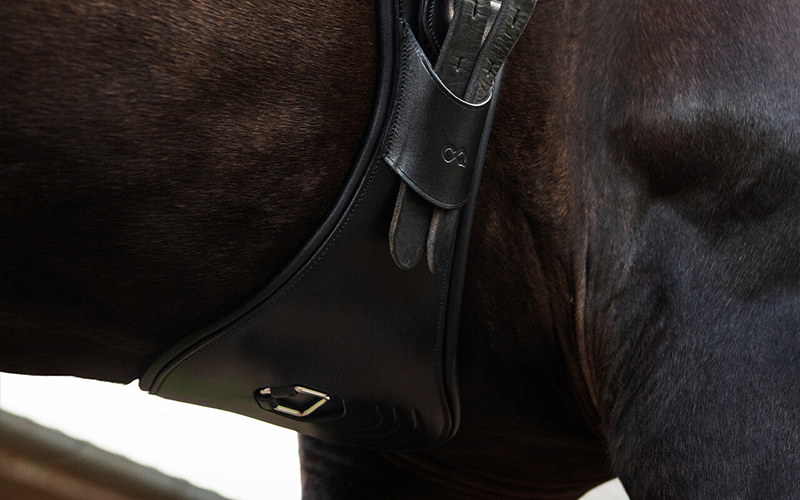
Short, long or studded
Saddle girths
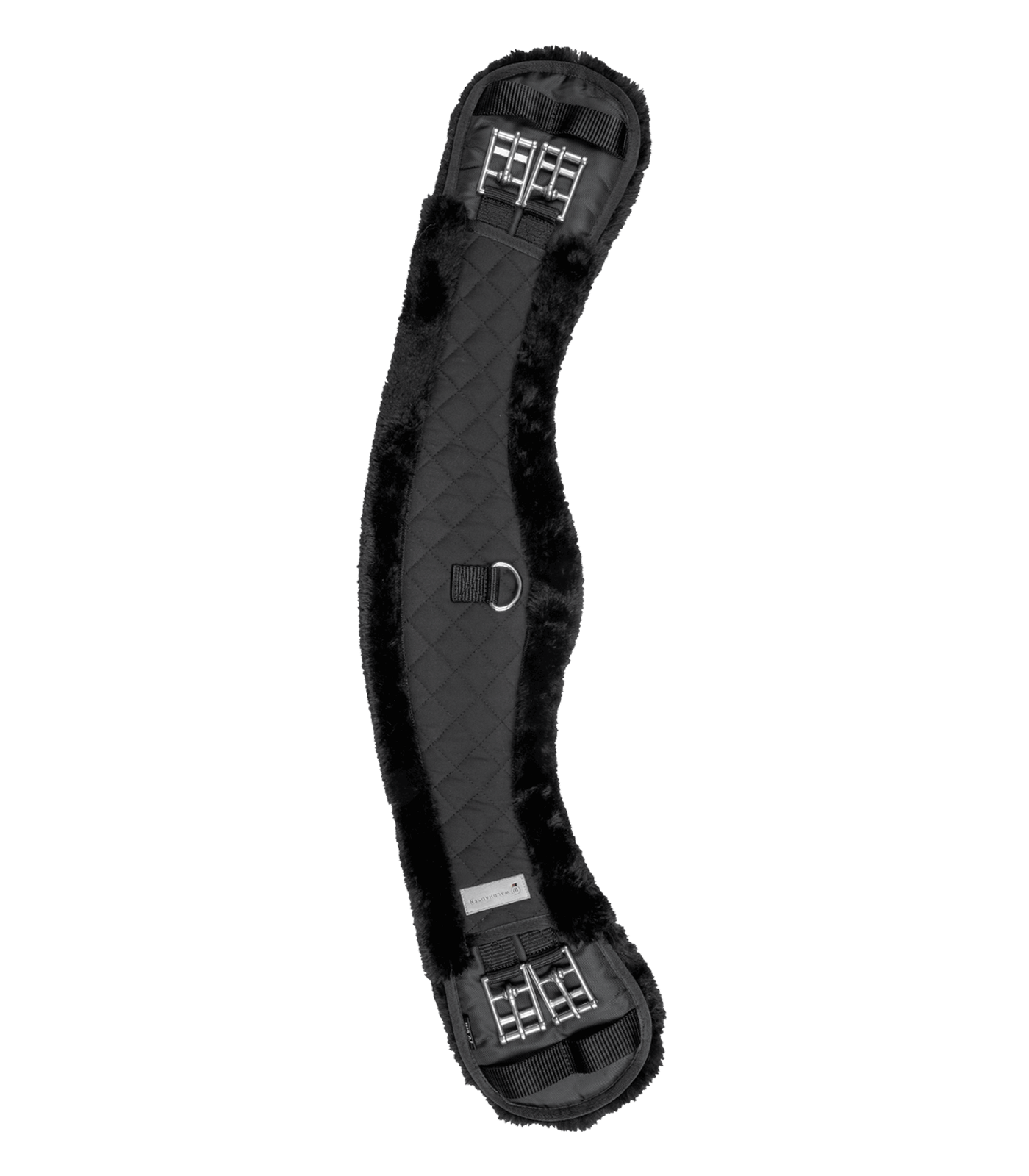
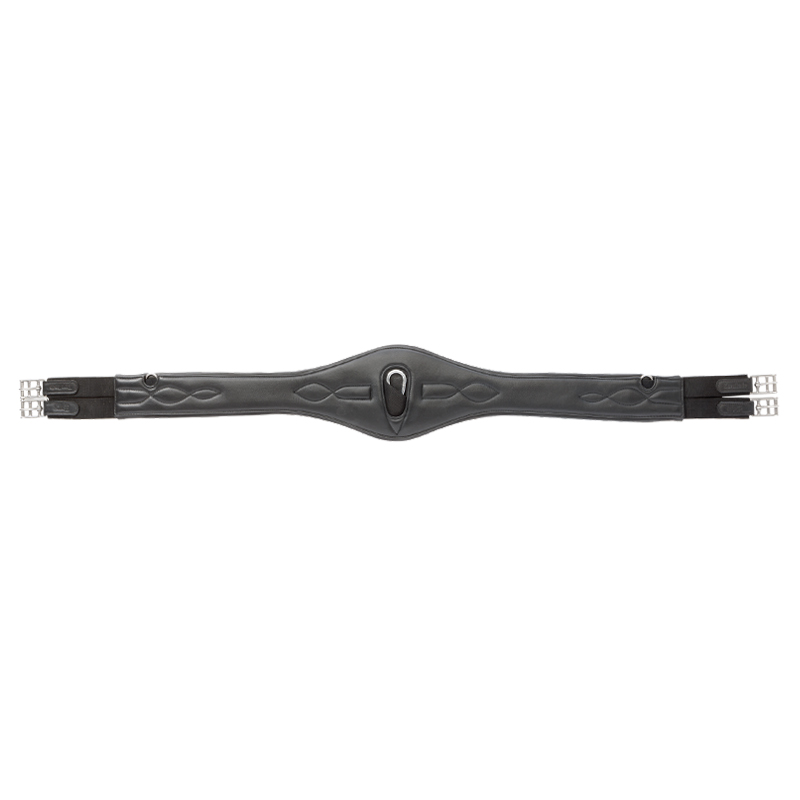
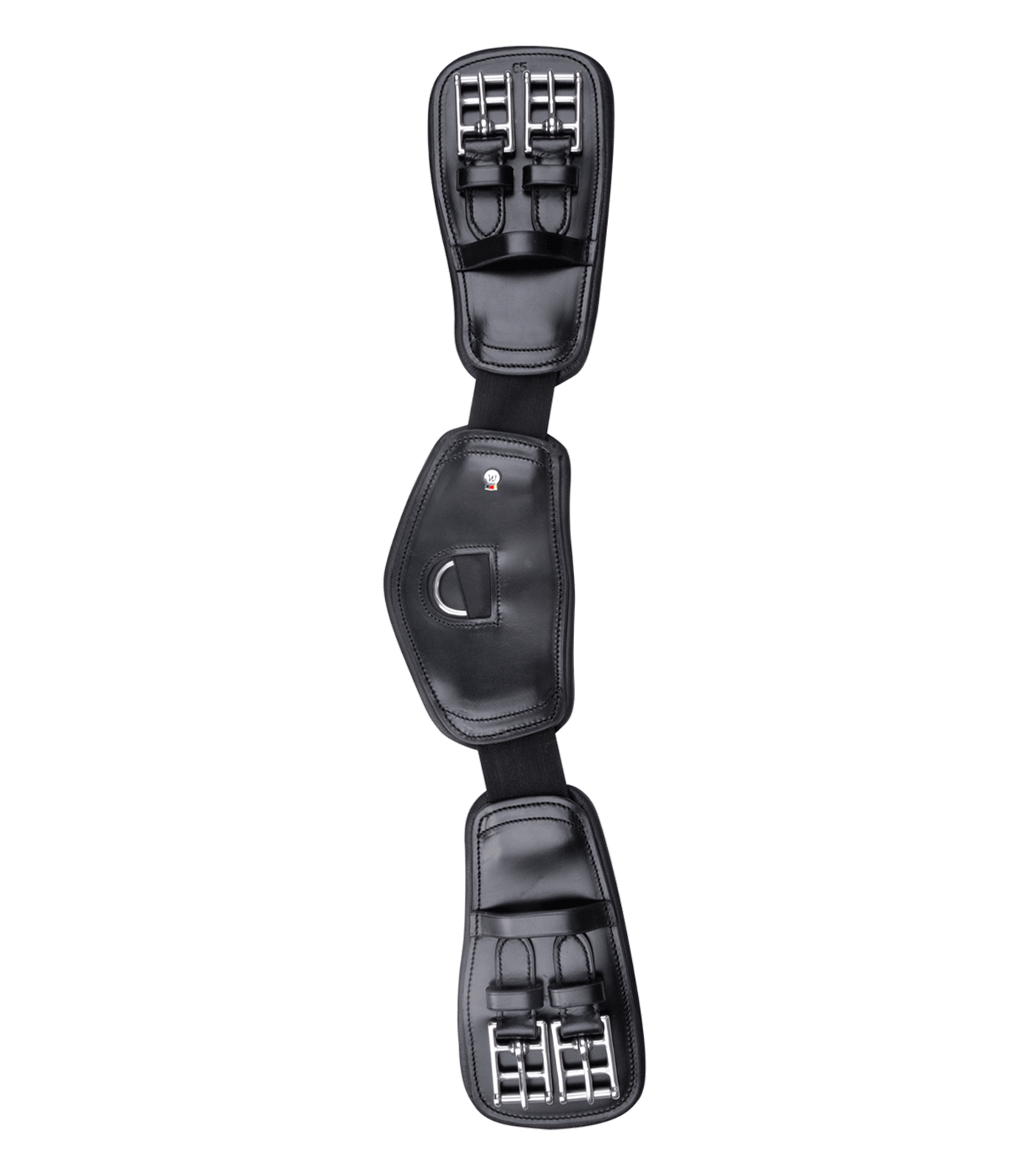
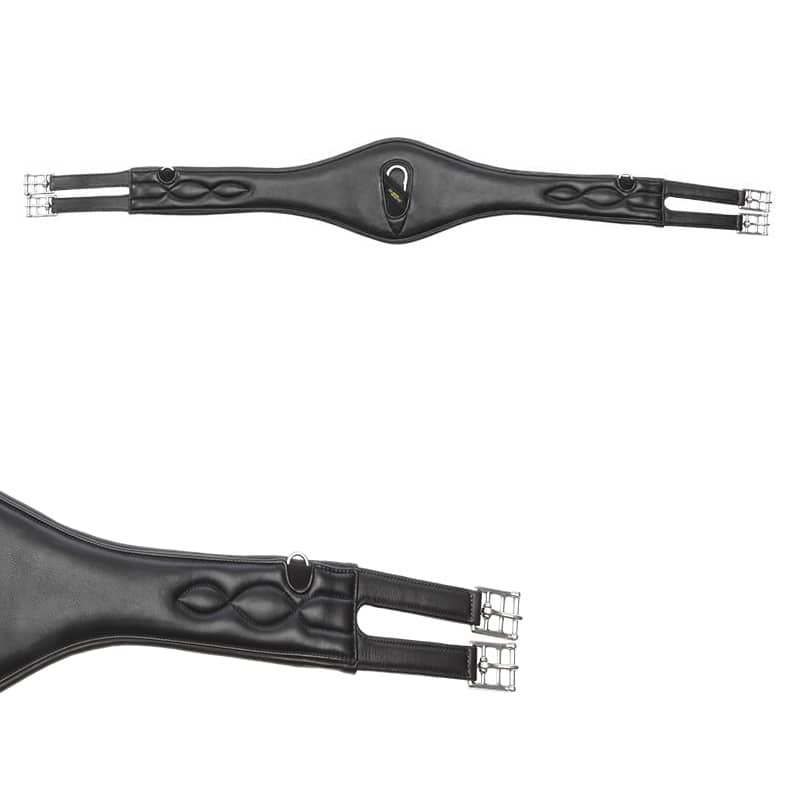
You can choose between three variants: the short girth, the long girth and the cleated girth. Saddle girths are also available in different shapes. The straight, anatomical or asymmetrical shape are the most common saddle girth shapes.














Types of girths
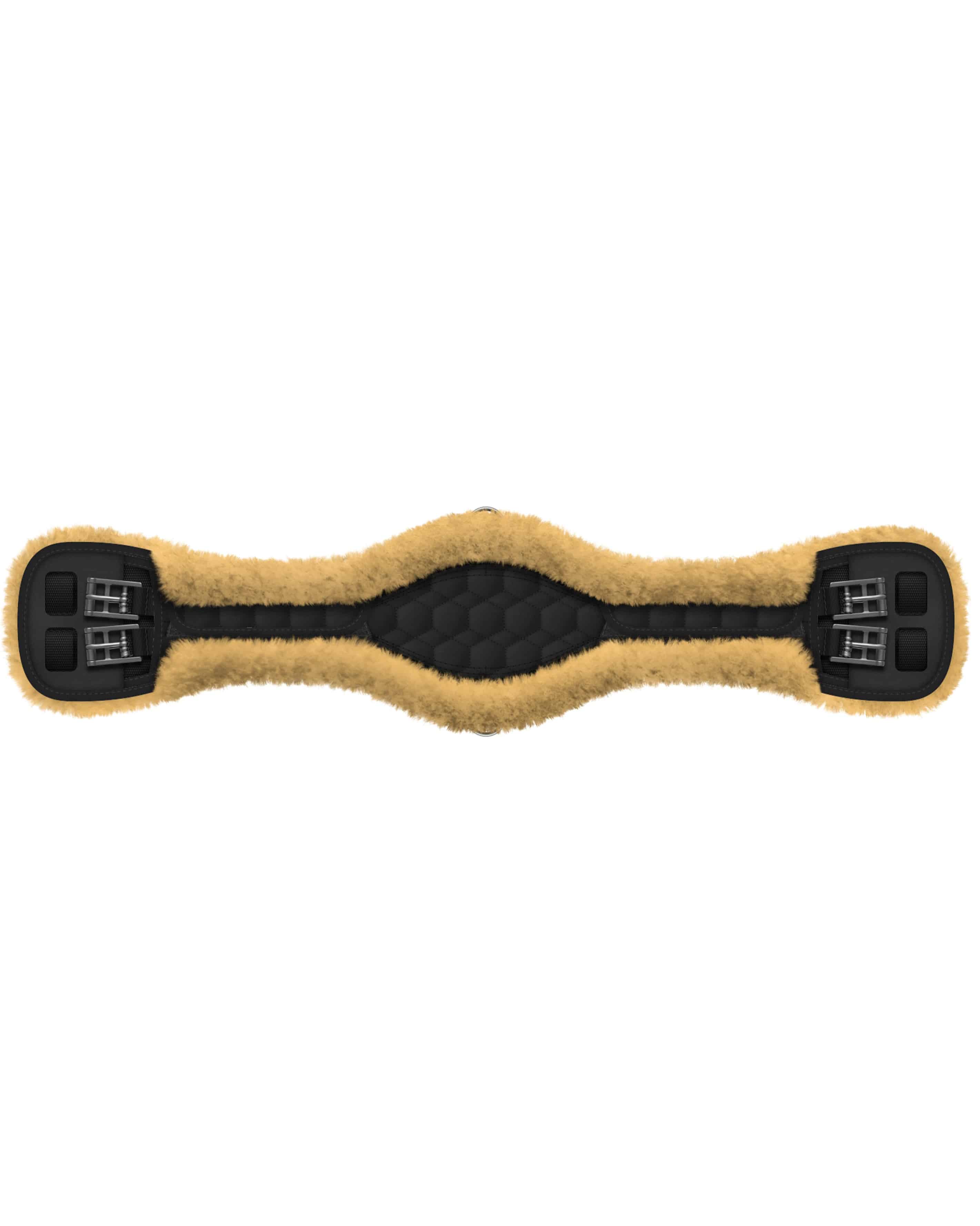
Short girths:
- for dressage saddles, with long saddle flaps and girth straps
- Girth buckles end at the lower edge of the saddle flap
- Girth buckles should be well above the range of movement of the elbow
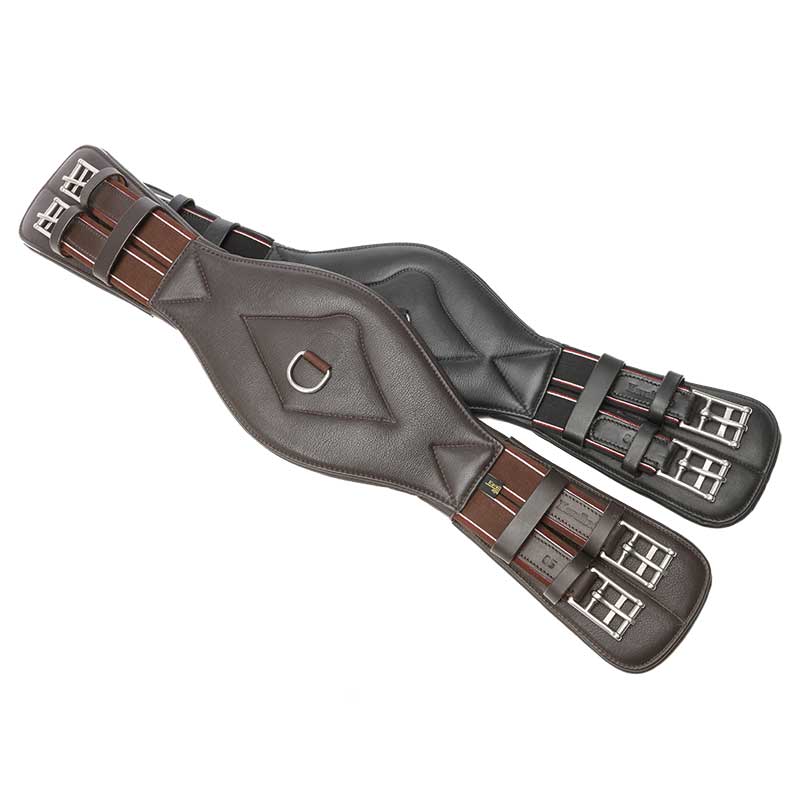
Long girths:
- for the jumping saddle
- Girth buckles are located under the saddle flap
- usually fitted with D-rings for attaching a martingale
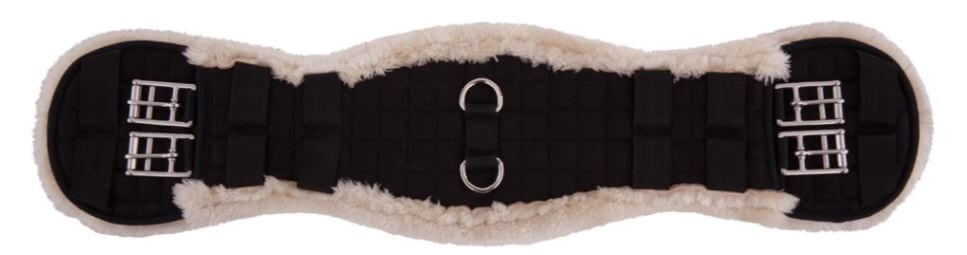
Stud girths:
- for show jumpers with a lot of action in the foreleg
- wide plate protects the chest & belly area from studs in the horseshoe
Different girth shapes for an optimum fit
Saddle girths are available in different cuts. It does not matter whether it is a short girth or a long girth. The most common cuts are straight, anatomical and asymmetrical.
Straight girth:
- cut to the same width throughout
- for horses with an even build and pronounced girth position
Anatomical girth:
- cut out at the front and back in the elbow area of the horse
- slightly wider cut in the chest area
- ensures better pressure distribution
- suitable for horses with a pronounced girth position and enough distance to the elbow
- can be used in both directions
Asymmetrical girth:
- more cut back on the front side in the elbow area
- rear side is more straight
- The contact surface in the chest area is also slightly wider and thus ensures good pressure distribution
- for horses with a girth position that is closer to the elbow or less pronounced
Moon girth:
- for round-ribbed horses, horses with a narrow chest or short back
- absorbs the curvature of the ribs thanks to its special cut and prevents pressure points and chafing
- cut back strongly in the elbow area
- cut shorter at the front than at the back
Different materials for different needs
Leather saddle girths are suitable for almost any horse. This is because leather is soft, supple and hard-wearing at the same time. With leather saddle girths, you must ensure that the leather is cared for regularly.
Neoprene is suitable for sensitive horses with sensitive skin, as the material is soft and flexible.
Synthetic leather girths are also very easy to care for and can be easily washed under water. However, make sure you take good care of the artificial leather so that the surface does not become brittle.
Saddle girths with gel or memory foam are usually also made of neoprene or nylon. The gel or memory foam filling is designed to relieve pressure and prevent chafing.
Saddle girths with lambskin are particularly suitable for changing coats and for sensitive horses that are prone to chafing. The lambskin has a climate-regulating and pressure-relieving effect. However, bear in mind that the thickness of the fur means that it cannot always be girted tightly. Your saddle should therefore be in a very good position and not slip.
Girths with or without elastic?
Most standard saddle girths have an elasticated insert to connect the girth buckle to the saddle girth. This allows the girth to give to a certain extent. This can be helpful for horses with saddle or girth constraints, as long as the girth is not pulled too tight.
Unfortunately, elasticated inserts tempt you to tighten the girth too much. If you choose a saddle girth with elastic, always girth with feeling and caution so that your horse does not develop a defensive attitude towards the girth.