
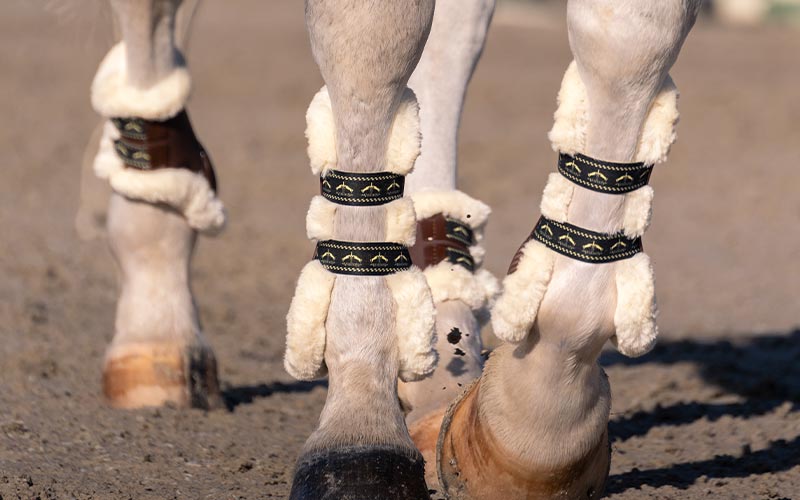
Protection for tendons and ligaments
Gaiters
Gaiters protect your horse's front and hind legs.
You can get gaiters with either neoprene or lambskin or synthetic fur lining. The outer material can be made of plastic, carbon, Kevlar, leather or synthetic leather, as well as nylon.


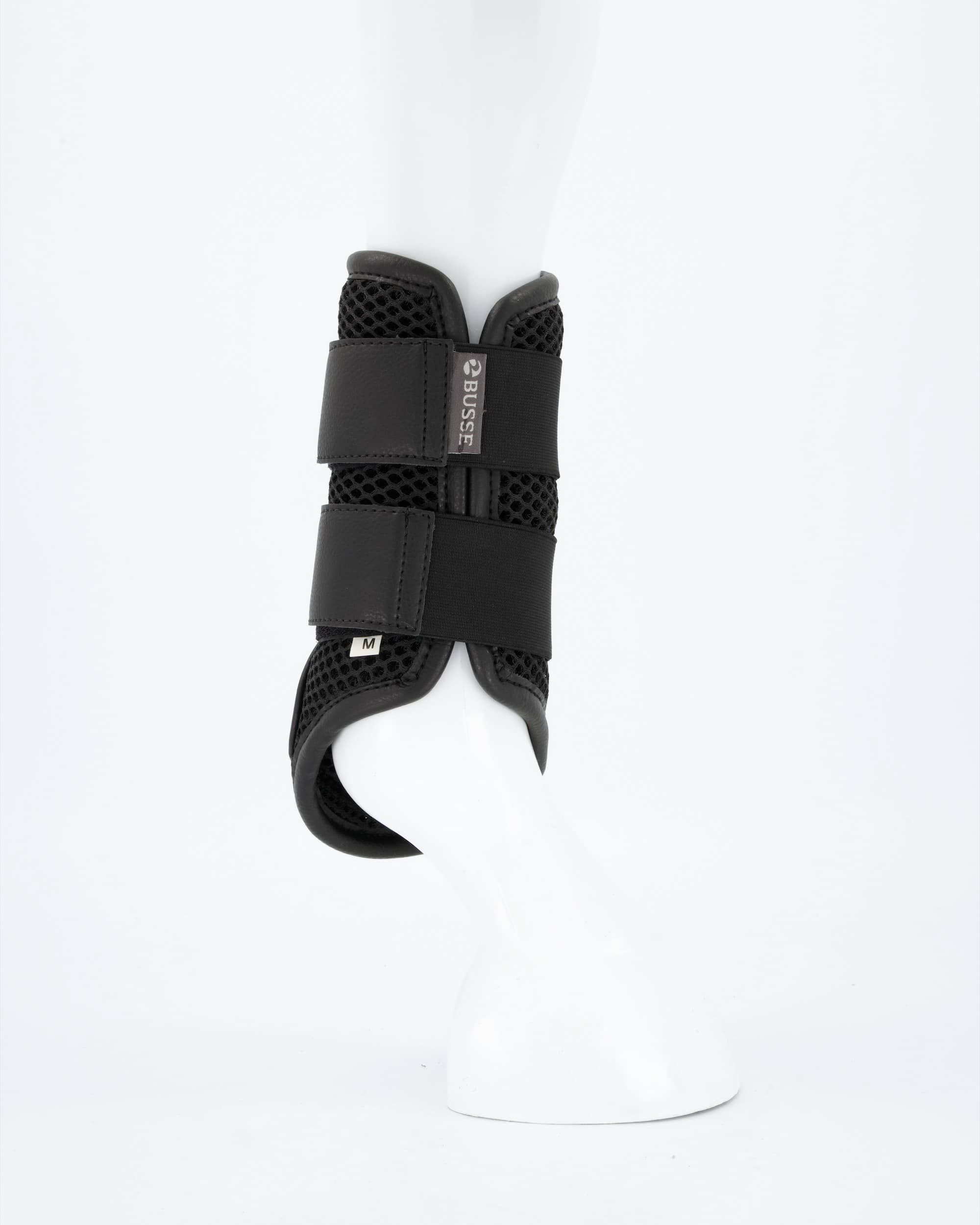


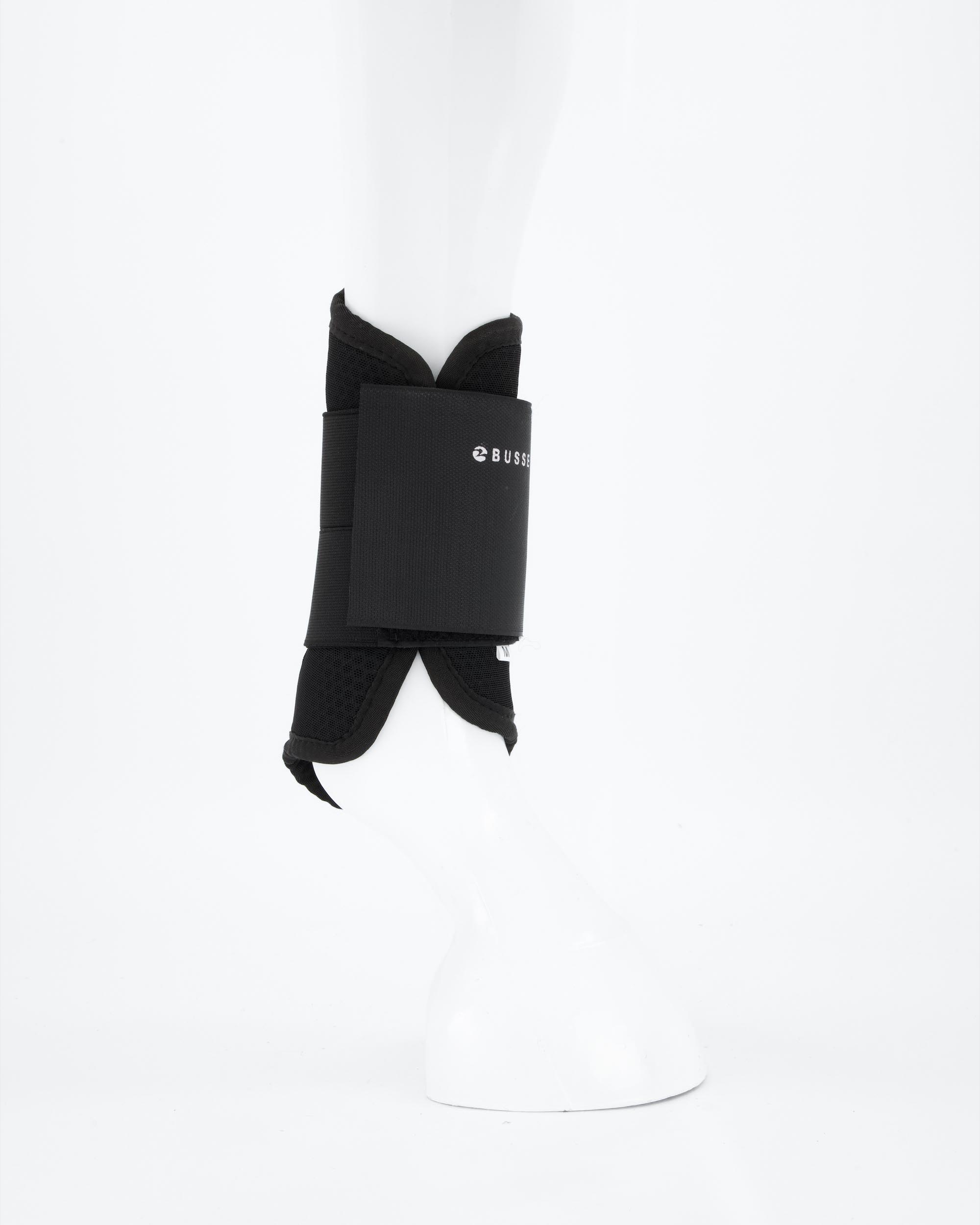


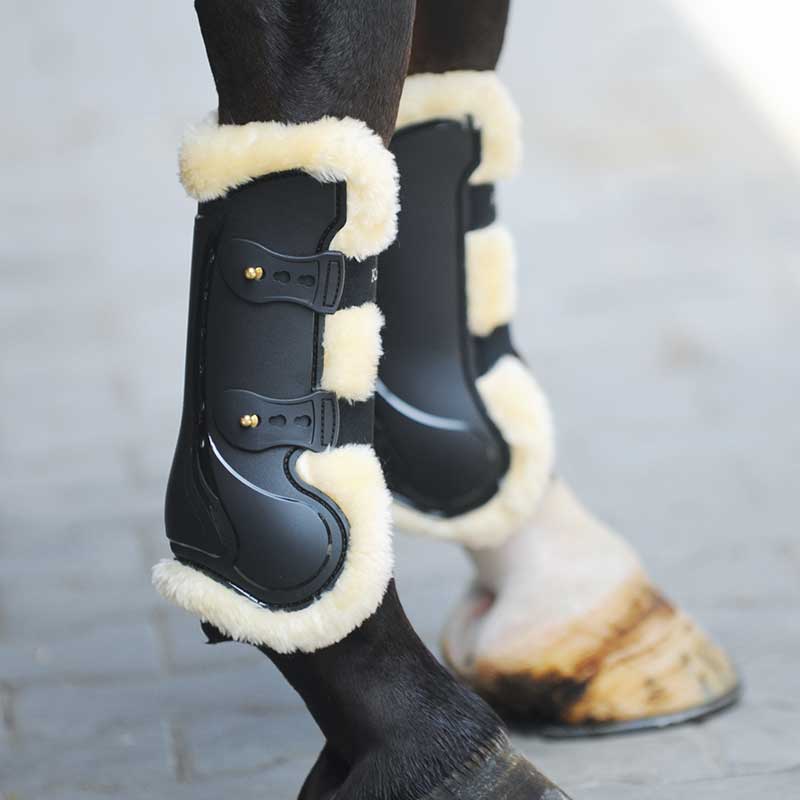


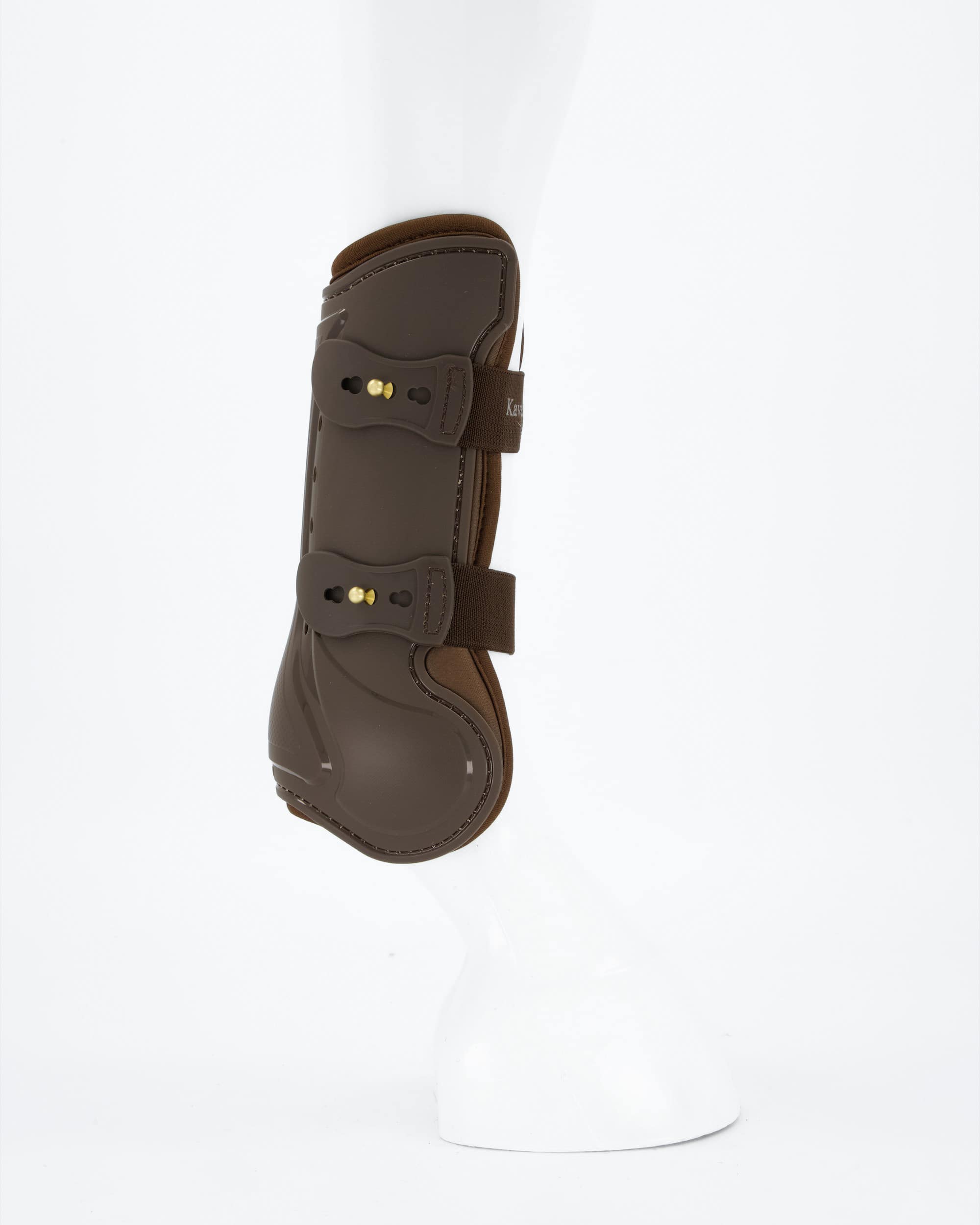


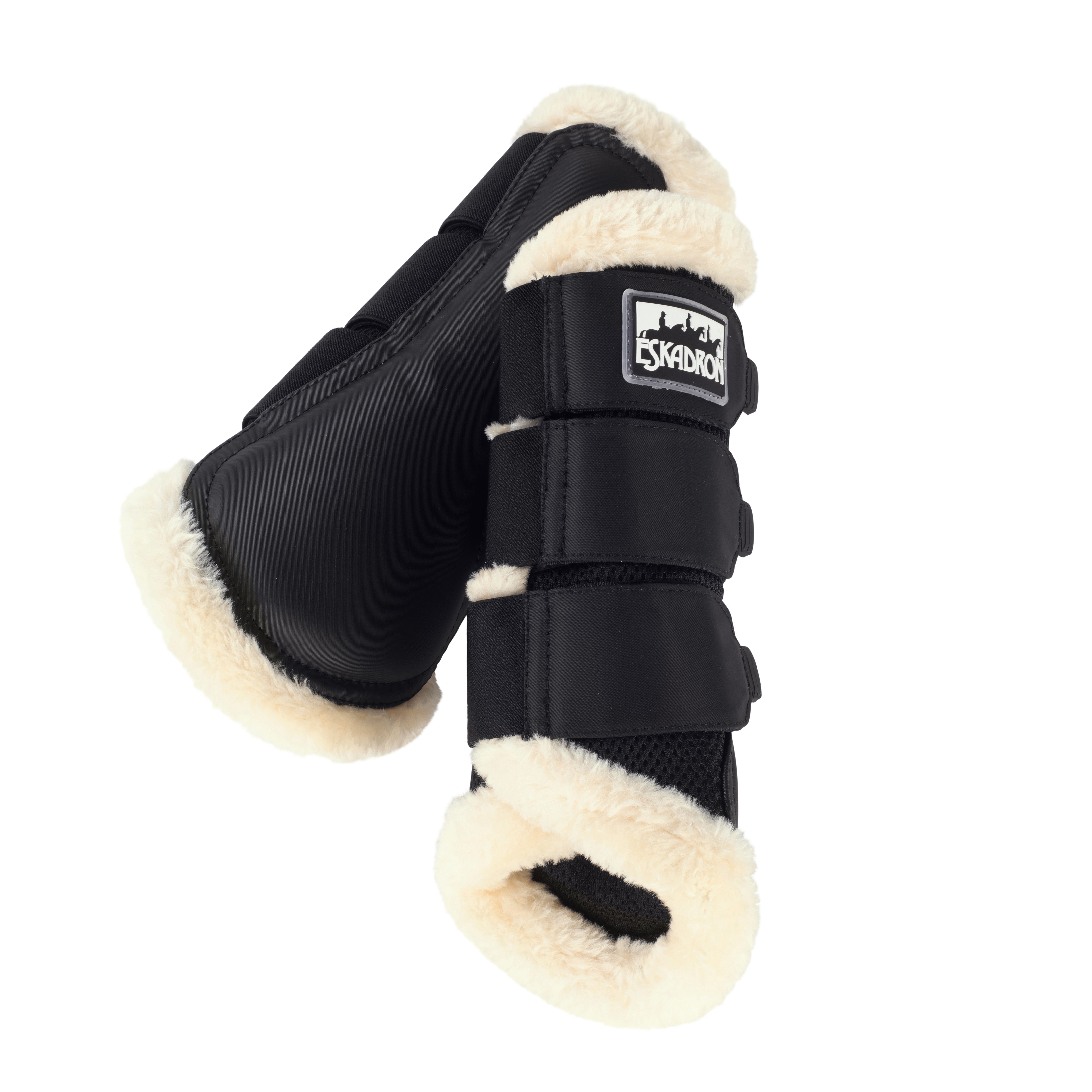


Gaiters as impact and tendon protection
If your horse runs in dressage without grazing, it doesn't necessarily need leg protection. However, you should protect the leg for show jumping or eventing.
These are the advantages of gaiters:
- Protection from small stones and branches that could be thrown against the leg
- Protection from rubbing against the other hooves
- Stabilising effect
- Protection from falling poles when jumping
Dressage boots and jumping boots
What makes dressage boots so special?
- Fitting is much easier and quicker than bandaging
- Impact protection is higher
- protect the fetlock head and cannon bone
- usually match the collection colours of the individual equestrian brands
- Made from a durable synthetic material or leather
- usually cut slightly higher than the usual hard-shell boots
- often lined with artificial fur or lambskin
- made from flexible material
What is a jumping boot?
- protect the cannon bone and fetlock head with the outer hard shell
- Outer shell has a shock-absorbing effect
- usually anatomically shaped
- often with high-tech materials such as carbon, gel and Kevlar in the outer shell
- Inner material made from neoprene, lambskin or faux fur
- Significantly greater shock-absorbing effect than wrap-around gaiters, for example
Why are gaiters not allowed in dressage tests?
You are not allowed to wear bandages or gaiters in a dressage test, as the judges want and need to judge the natural movement of the horse. This can be made more difficult by bandages or gaiters. Your horse should also be as balanced as possible so that it does not injure itself during the test.