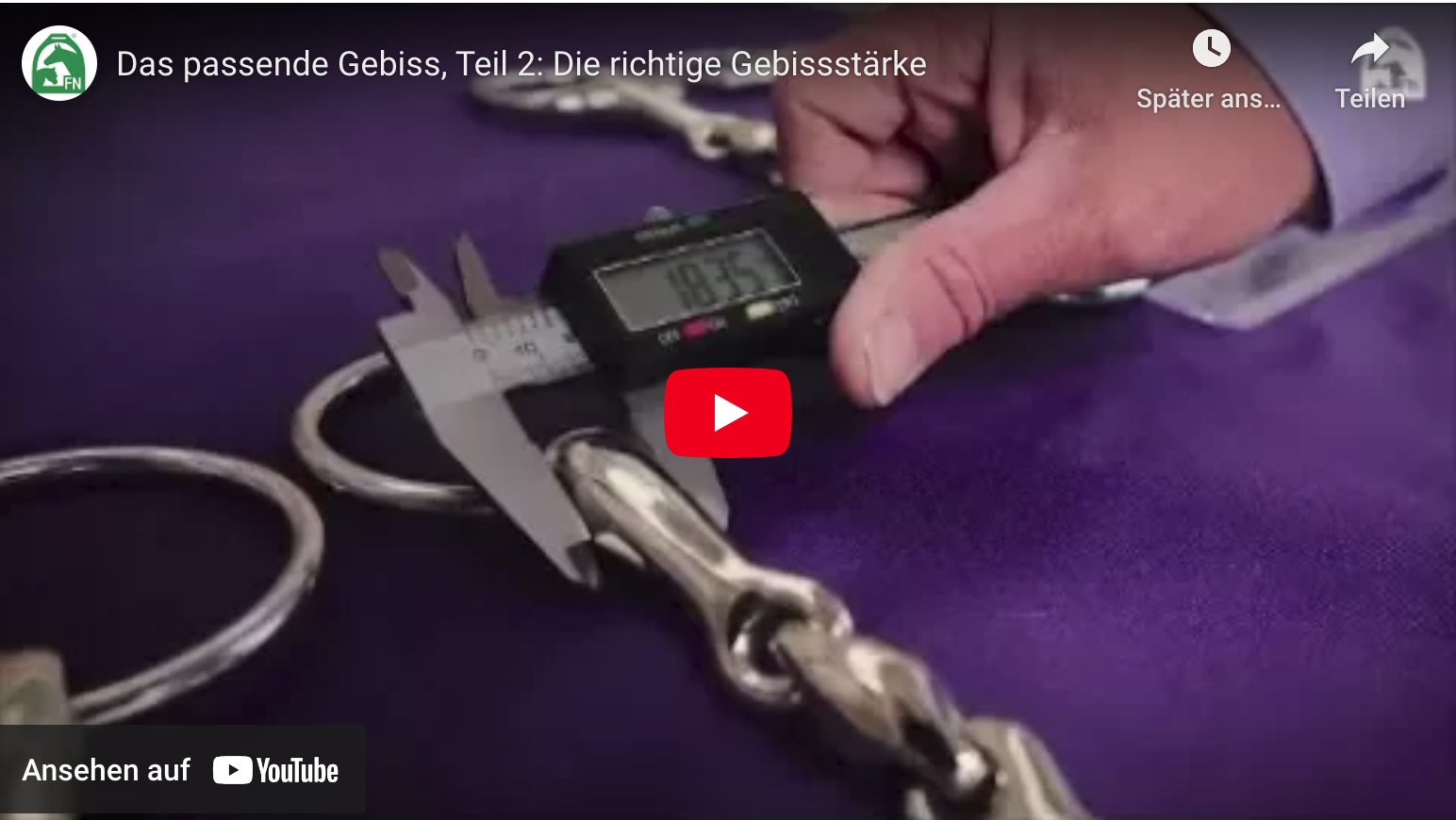
How to find the right bit for your horse
Measuring bits correctly
Bits are used for fine communication between rider and horse. The aids should be transmitted directly and specifically to the horse's mouth. This requires the bit to have the right shape and size and to be correctly buckled. As the horse's mouth is very sensitive, this topic should be treated carefully and adapted to the individual needs of your horse.
Here you can find out how to determine the right bit size.
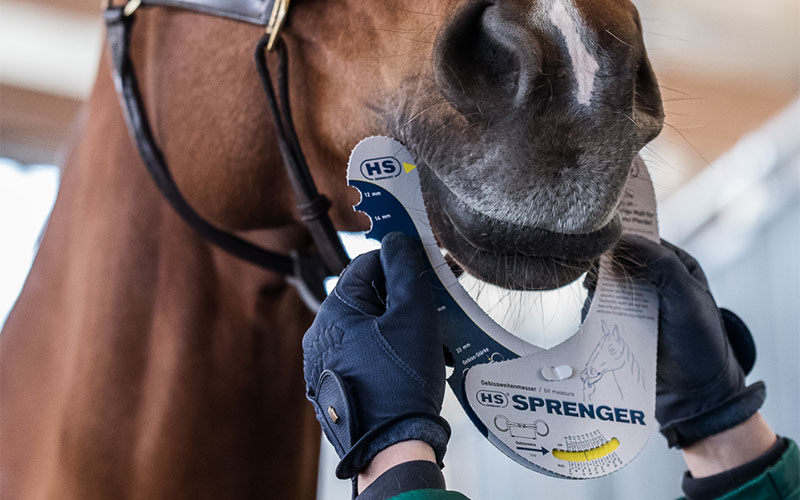
Measuring made easy
How to determine the bit width
When measuring the width, you must ensure that there is a gap of 5 mm between the bar and the bit ring. Furthermore, the bit must not protrude more than 0.5 cm when it is straight in the mouth.
You can either download the bit width gauge from Sprenger, or you can take a leather strap (or a stick strap) and place it in the mouth like a bit. Then mark the two sides of the horse's mouth. You can then measure the length with a tape measure.
Bits with fixed side pieces
If you opt for a horse bit with fixed side pieces (e.g. olive head and D-ring bits or shank snaffles), the bit can be selected half a size or a whole size smaller than with so-called water snaffles.
Bits with movable side parts
In the case of water snaffles, i.e. bits with freely movable rings, it is important that the corners of the mouth are not clamped and that the rings always remain freely movable. The bit must not protrude more than 0.5 cm from the horse's mouth (§ 70 of the current LPO).
Double bridles & snaffles
If you are riding on a curb bit, it should be half a size or a whole size smaller than the corresponding snaffle bit. The size of this should be similar to that of the working bit used.
2-finger test
Determining denture strength made easy
An important criterion when selecting bits is their strength. There are also different variants here. The bit strength must always be individually adapted to the horse. The decisive factor here is how much space is available in the horse's mouth. There is a widespread misconception that horses with large heads need a stronger bit than petite horses. In fact, the mouth cavity is often smaller and shallower than is usually assumed.
The 2-finger test
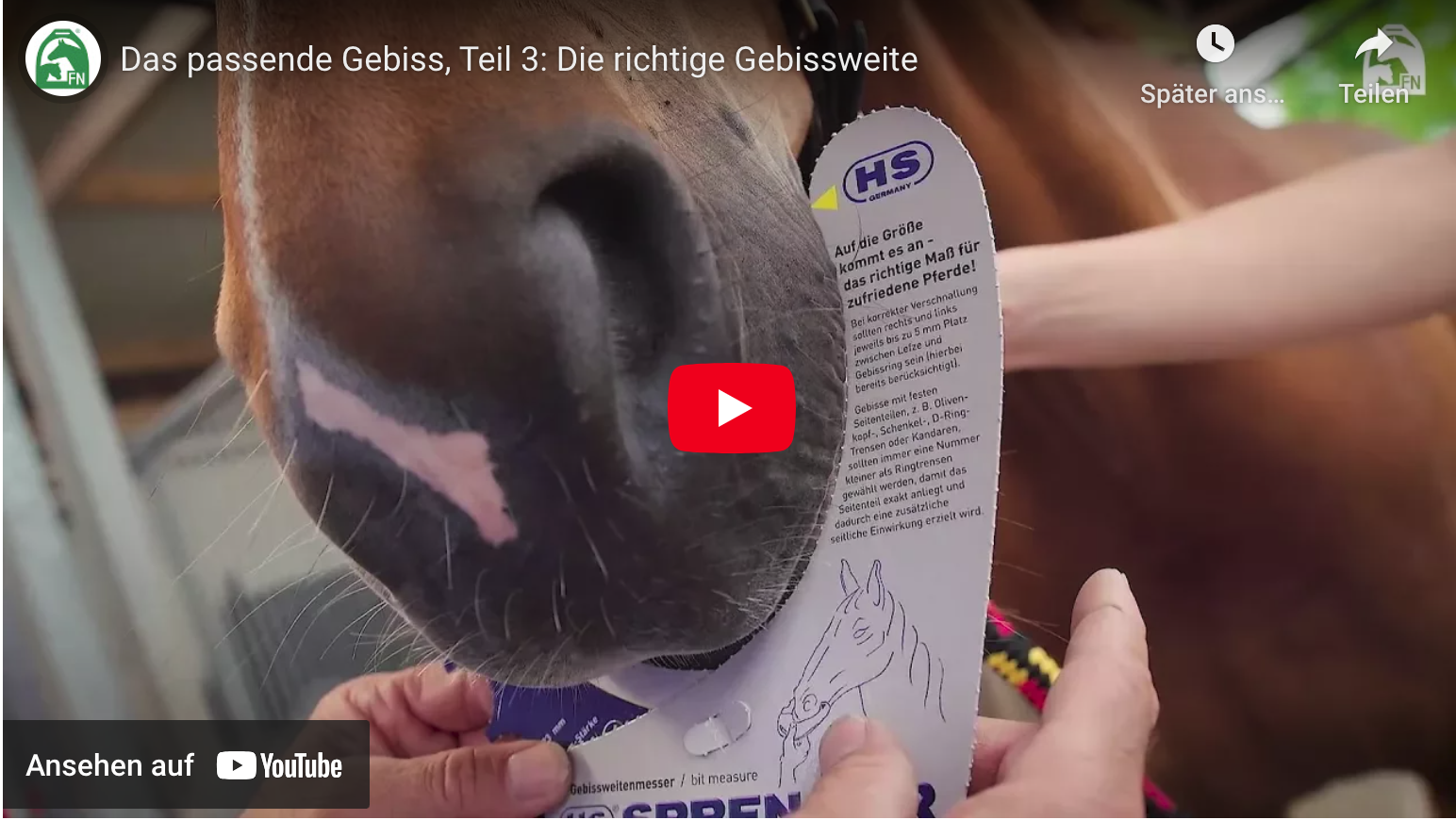
A somewhat imprecise but very helpful method for measuring the required strength is the 2-finger test. To do this, place your index and middle fingers in the horse's mouth at the point where the bit is inserted. If you feel pressure on both fingers, the recommended thickness is 14 - 16 mm. If, on the other hand, you hardly feel any pressure, you can also use a bit with a thickness of 16 - 18 mm.
If you want to know exactly, you can ask your vet for help at your next dental examination.
If you choose a bit that is too thick, it can press very uncomfortably on the sensitive palate and lead to painful pressure points. Unfortunately, this problem is relatively common and can lead to head banging, opening of the mouth or "laying on the hand". If your horse shows these symptoms, you should also check the bit strength.