
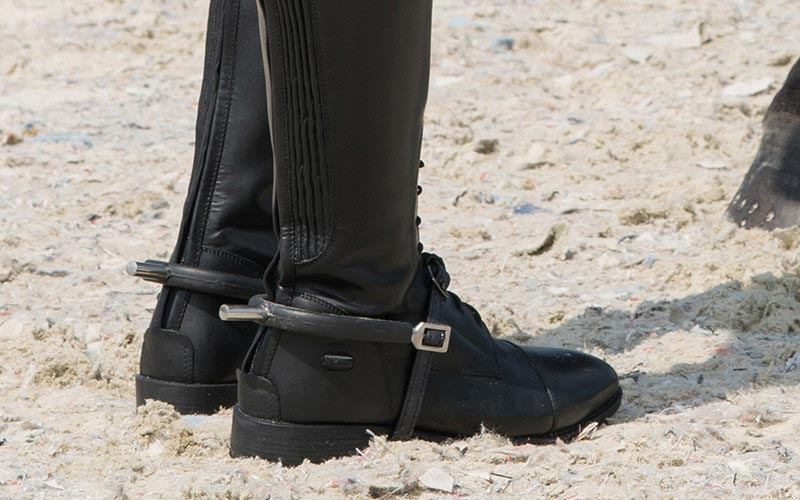
Refinement of the thigh aids
Spurs & spur straps
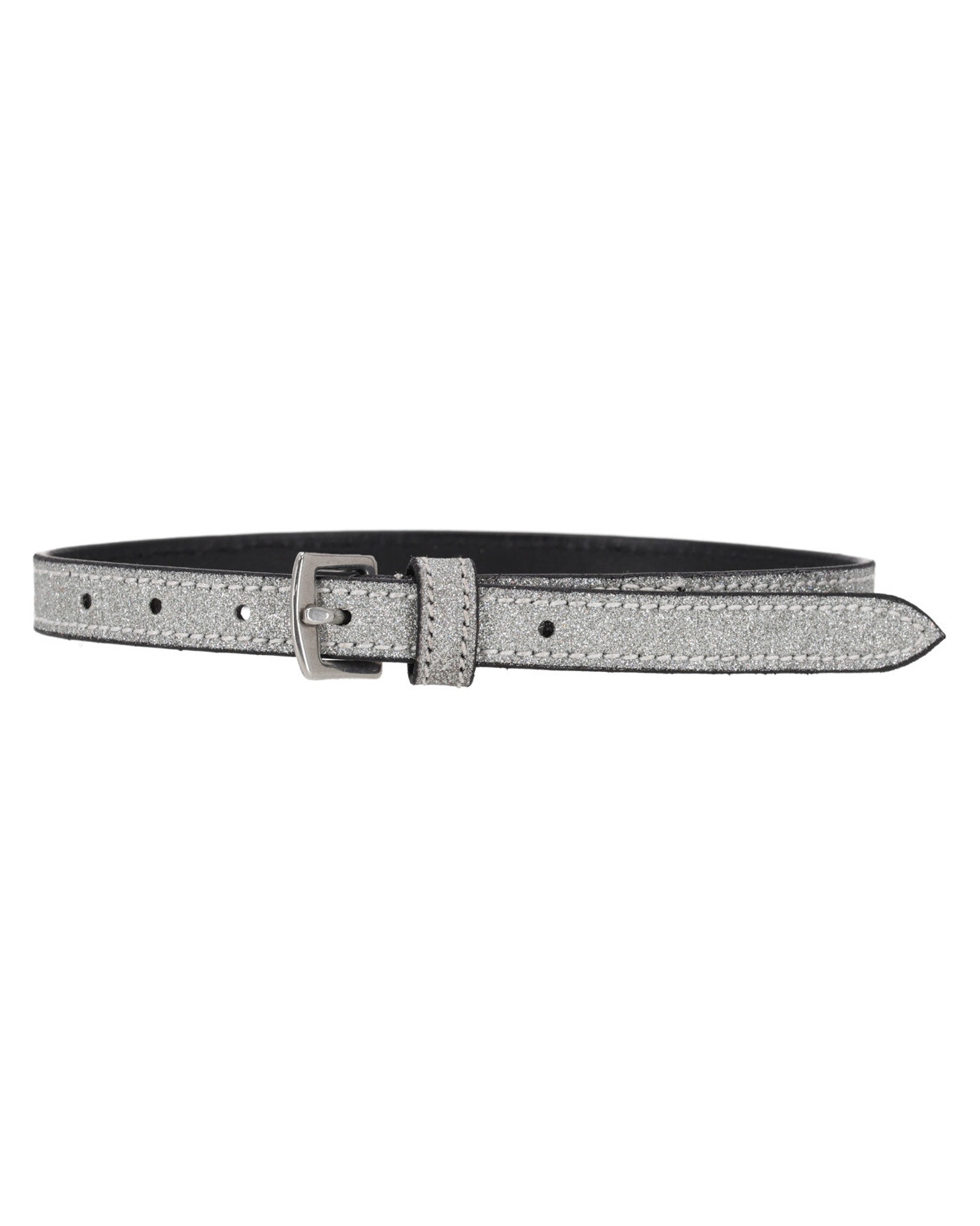
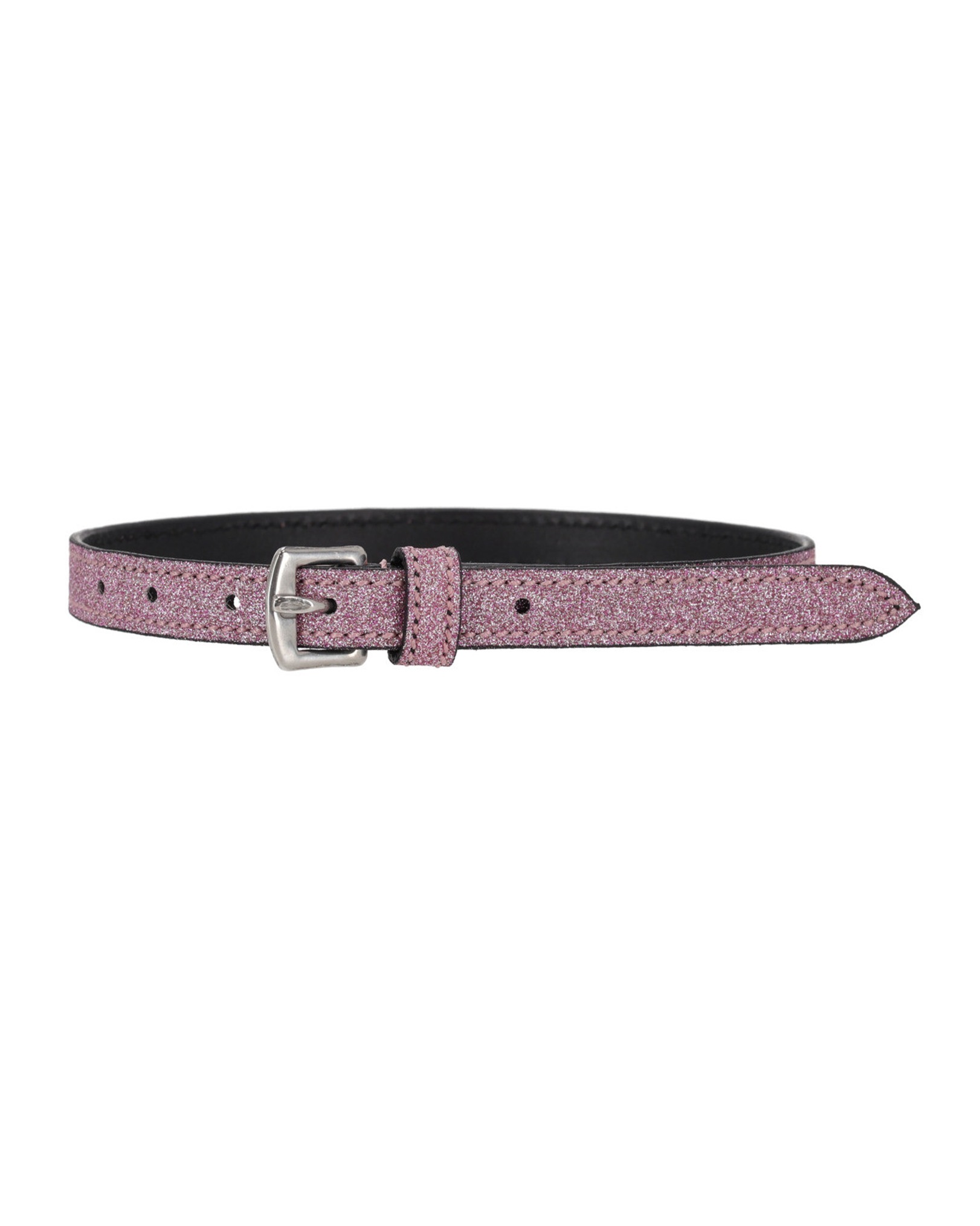
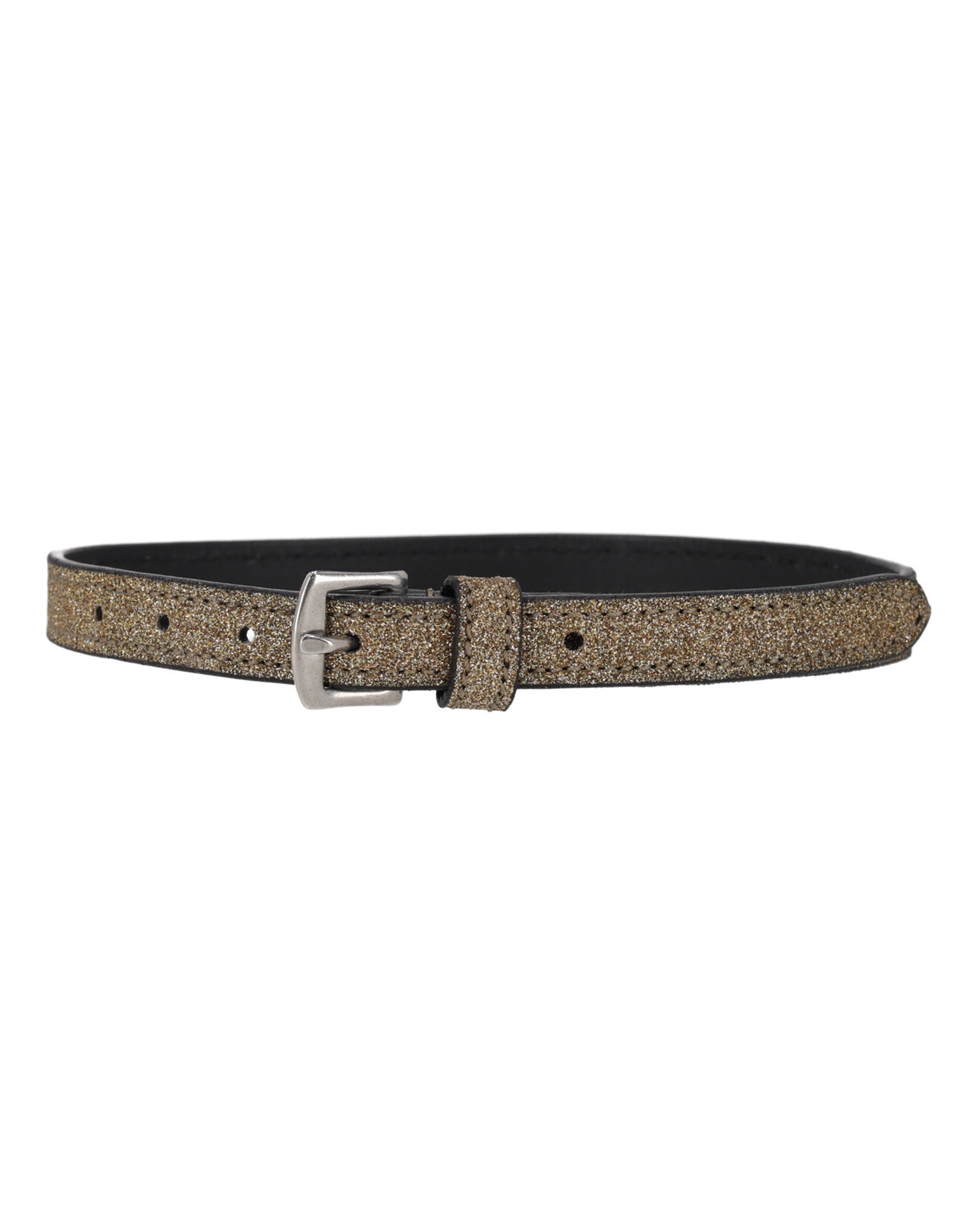
Use spurs to refine or reinforce your thigh aids. You can choose between different types and matching spur straps with patent leather and glitter, or classic leather or nylon.




What are spores needed for?
Riding spurs are primarily used to refine the aids in higher lessons in all equestrian disciplines. If you touch your horse's belly with the spurs, it tenses its abdominal muscles as a reflex.
- when used on one side, the horse should step forwards with its hind leg
- When used on both sides, the horse should ideally shorten its entire belly and thus arch its back.
- Spurs are not used to drive the horse forwards permanently
- Spurs only belong on a calm rider's leg
The types of riding spurs
The four most common types of spurs on offer are with a pin, wheel, ball wheel or button. Almost all riding spurs are made of stainless steel. Here we show the differences:
Thorn spores
- the most frequently used variant
- Mandrel at the rear is most commonly offered in lengths between 15 mm and 35 mm
- Mandrel can be bevelled or rounded
Button spurs or ball spurs
- have an immovable ball attached to the end of the mandrel
Wheel spurs
- have a movable, rotating wheel attached to the end
- sun wheel spurs also have teeth on the wheel
- must be checked regularly to ensure that the wheel can move
Ball wheel spurs
- are available in horizontal and vertical versions
- have a freely movable ball in a fixed suspension
- must be checked regularly for ball mobility
Are wheel spurs sharper than thorn spurs?
Here, as with almost every question about the sharpness of a piece of equipment, opinions differ. The answer is: NO! Because the spur is only as sharp as the rider uses it. With wheel spurs, the larger and blunter the points are, the less dangerous they are.
In contrast to spurs, wheel spurs slide off the horse's belly more easily. It is important to note whether the wheel is attached horizontally or vertically to the spur. Due to the up and down movement of the heel, the classic wheel spur with vertical attachment is particularly suitable for sliding off the belly.
With a spur, on the other hand, you apply targeted pressure to a small point but do not slide off so easily. As all spurs are used for refinement, careful handling is advisable. Improper reinforcement, such as constant tapping with the riding spur, will dull the horse.
What length must the spur have?
If your leg is very long, you should also use a longer spur or swan-neck spurs. This will prevent your leg from becoming restless or you pulling up the heel to insert the spur.
If your horse is sensitive, very short spurs or button spurs are suitable. You can use these very specifically with small, gentle impulses. No matter what length you use on your horse - the principle of "as much as necessary, as little as possible" applies here too!