
Ointments & sprays
Medication for horses
There are ointments and sprays that you should always have in the stable and for which you don't have to go to the vet first. You can get these medicines from us in the shop or from the pharmacy.
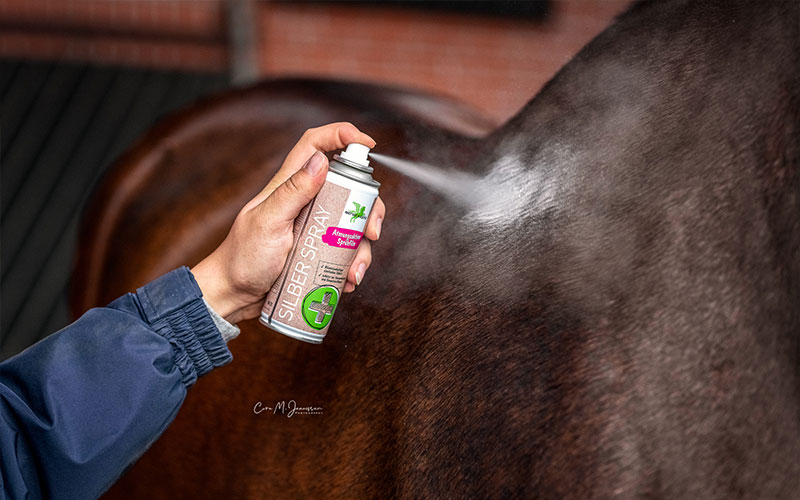
- Aluminium spray: hairless skin surfaces are protected from dirt and insects. An elastic, breathable and metallic protective film is formed. Clean and disinfect the wound before spraying!
- Eye ointment / eye drops: Use to reduce irritation to the eye - use a product without cortisone
- Bepanthen / milking fat: Keeps wounds supple
- ColoSan®: For supportive treatment of feed-related flatulence and gastrointestinal disorders such as mild colic or for more severe colic to bridge the gap until the vet arrives
- Disinfectant spray / wipes: For disinfecting open wounds. Disinfectant wipes can be used to clean minor injuries in a more targeted manner
- Hand sanitiser: always disinfect your hands before treating open wounds
- Iodine: The disinfectant solution is suitable for cleaning wounds on larger surfaces
- Saline solution / NaCl: Wounds can be rinsed and thus cleaned using a disposable syringe
- Cooling gel: Promotes the regeneration of tendons, ligaments and joints after great strain or exertion, as it stimulates blood circulation. Swelling subsides more quickly and cooling gel can provide relief and soothing on bruises and mosquito bites. Do not apply to open wounds
- Mineral earth / clay: Cools muscles, tendons, ligaments and joints for a long time. Also has a lasting decongestant effect
- Panthenol ointment: Wound ointment can be used on dry wounds to prevent painful tears during wound healing
- Wound spray / wound ointment: Prevents wound infections (Betaisodona)
- Zinc ointment / zinc spray: In the case of moist or weeping skin wounds (including mauke), zinc promotes the drying out of the wound and thus supports healing
Cover & protect
Dressing material
Sometimes it is not enough just to use a wound ointment or spray. Bleeding or wet wounds sometimes need to be covered to protect against further infection. A pressure bandage can also be helpful for larger wounds until the vet arrives.
- Bandaging cotton / dressing cotton: Is necessary for support bandages and is required for padding and dressing wounds. The padding should be applied without creases to prevent the formation of pressure points
- Gauze swabs: The soft, absorbent and air-permeable gauze swabs absorb liquid, which enables optimum wound cleansing and wound treatment (distribution of medication)
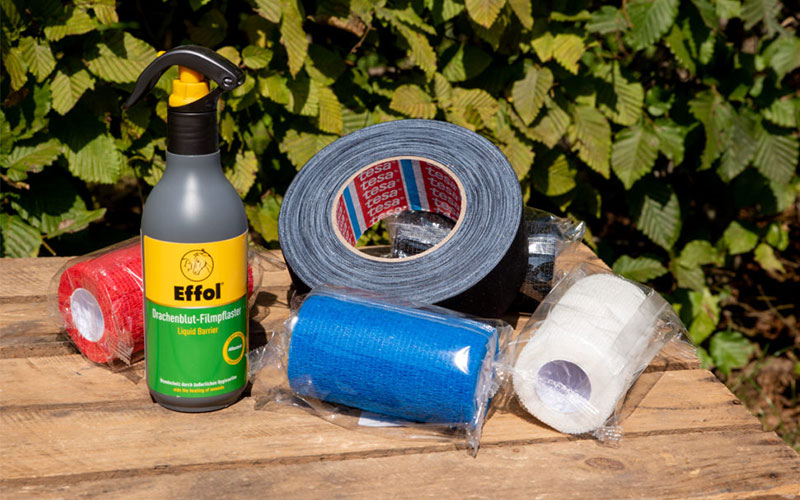
- Fabric adhesive tape / armour tape / Tesa tape / adhesive plaster tape: Tape and adhesive tape are functional and versatile, for example for securing (hoof) bandages
- Gauze bandages: Usually consist of a thin fleece or gauze material. As a pressure bandage, gauze bandages are used to fix compresses and as wound dressings on injuries
- Self-adhesive bandages / elastic adhesive bandages: The self-adhesive properties of the bandage make it quick and easy to apply support bandages and other types of bandage. The advantage of this is that they only adhere to themselves and do not stick to the skin. Nevertheless, never apply directly to the open wound
- Sterile compresses: Suitable for cleaning wound edges. Take particular care to ensure that they are sterile and that the compress does not contaminate the wound
- Spray plasters: Spray or film plasters are a flexible wound cover that prevents the penetration of germs. The protective film that is formed is breathable and keeps the skin supple and elastic during the regeneration process
- Gauze / gauze compress: Whether gauze or a gauze dressing - both are used to cover the wound
- Wound dressings / wound dressings: This prevents the penetration of dirt, bacteria and germs. It also absorbs wound secretions and / or blood. Wound dressings and wound covers must be packed in sterile packaging as there is direct contact with the injury! It is best to have different sizes available for wounds of different sizes
No medication, but important
Useful aids
Not only medication and bandages are important in a stable first-aid kit. Other useful aids should also be available so that you can care for your horse effectively.
- (Digital) thermometer: For measuring temperature / fever. Tip: Tie a string to it so that the thermometer cannot get "lost" in the horse's intestines!
- Disposable gloves: Wearing disposable gloves reduces the risk of infection in the case of open wounds. Nevertheless, disinfect hands before treating wounds or injuries
- Disposable razors: Fur on wound edges should be removed so that the injury can be treated better
- Disposable syringes: Wounds filled with NaCl can be rinsed out with disposable syringes or medication can be administered using these
- Cooling compresses: For immediate application and direct cooling. Do not place directly on the skin as frostbite can occur
- Nose brake: The nose brake can help nervous horses to feel calmer as, when used correctly, endorphins are released which suppress the sensation of pain. This ensures that the potentially painful injury is treated safely (for the person treating the horse)
- Clean towels: An all-round helper, but be careful! Towels are not sterile and should therefore not be placed on open wounds
- Torch: The severity of an injury on the inside of the thigh or on the horse's belly can best be assessed with sufficient light
- Telephone list: The most important telephone numbers of the vet, farrier, stable owner, etc. should be accessible to everyone in an emergency and not just stored on your own mobile phone
- Tick tweezers: Ticks transmit many pathogens, although horses are generally less susceptible than humans to infections from tick bites. Remove the tick anyway and avoid squeezing the tick
- Tweezers: Foreign bodies can be removed with these and if no tick tweezers are to hand, they can also be used to remove ticks
Good to Know
PAT values in horses
The PAT values stand for the vital signs pulse, respiration and temperature in horses and are parameters that can provide an assessment of the general state of health of an "adult" horse (~3 years and older).
P = Pulse
A normal pulse rate for horses is between 28 and 40 beats per minute.
- count the beats within 15 seconds by timing them with a watch or your smartphone
- multiply the beats by 4 to calculate the beats per minute
- take the pulse on your horse's lower jawbone
It is best to practise taking the pulse in a calm, relaxed situation so that it works well in an emergency.
A = Breathing
A healthy horse takes 8 to 16 breaths per minute.
- Set your stopwatch to 1 minute
- count the nostril movements or the movement of the rib cage to determine the breaths
T = Temperature
37.5 to 38.2 °C is the body temperature of a horse under normal conditions. The body temperature of a foal can be slightly higher and is still within the normal range between 38.0 and 39.0 degrees.
- measure with a clinical thermometer that you have secured with a strap
- it should be measured over a period of at least 3 minutes
- if possible, stand to the side of your horse, as taking a temperature can be uncomfortable for the horse
Practise measuring the PAT values every now and then in a relaxed situation so that you don't become hectic or unsure in an emergency.
Write down your horse's normal values and put them in your grooming or first aid kit so that you have them to hand for comparison in an emergency.
If the weather is very warm, the sun is shining extremely brightly or the exertion due to intensive training is very high, then the PAT values can also deviate. However, the overall condition of the horse should not be neglected, as extreme weather conditions do not always justify the deviations in the values.