

High-tech protection for top performance
Veredus horse boots
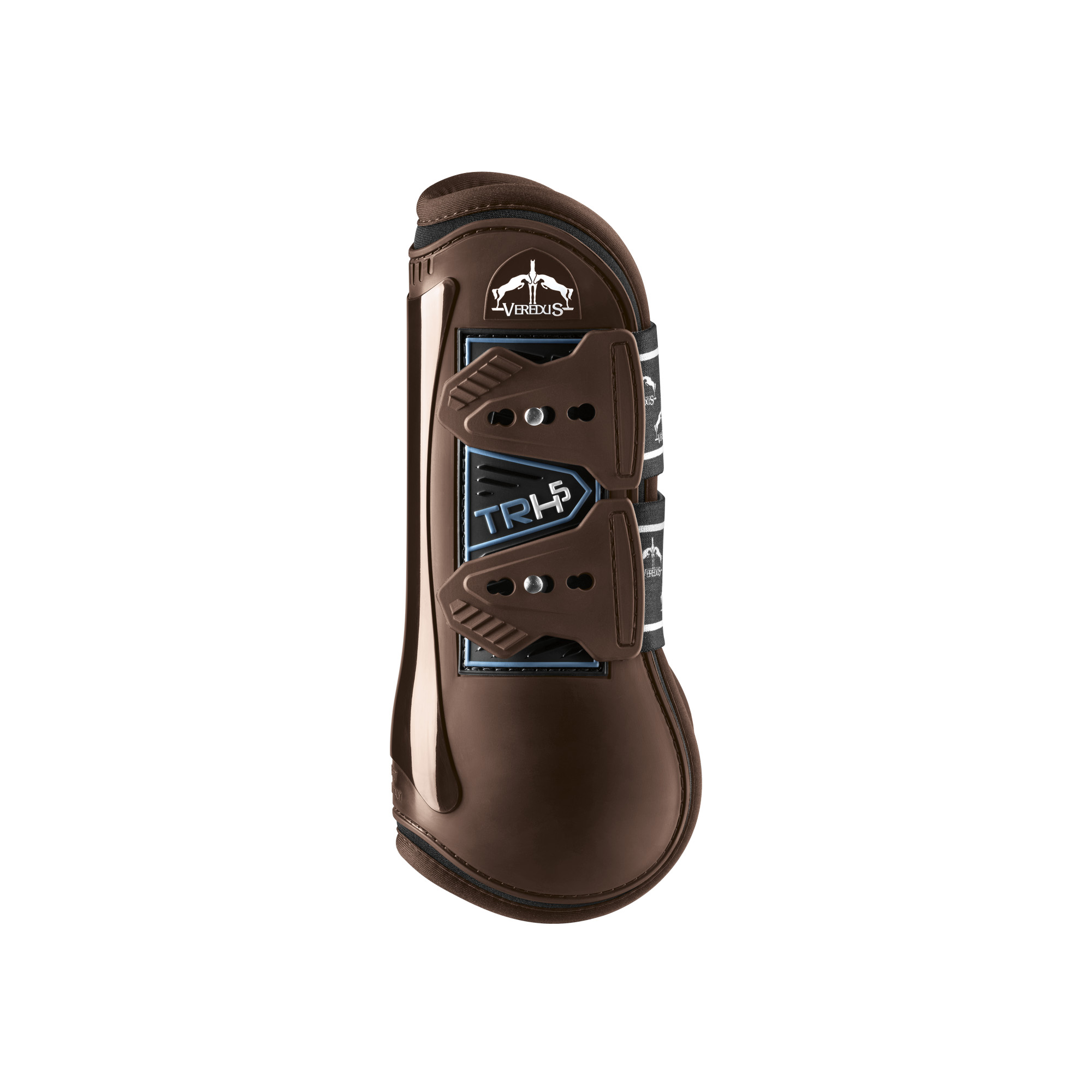
When it comes to protecting horses' legs, Veredus sets the standard worldwide. The horse boots from the Italian manufacturer combine state-of-the-art technology with exclusive design and maximum wearing comfort. Whether for daily training or use on international courses – Veredus horse boots give your horse exactly the security it needs.
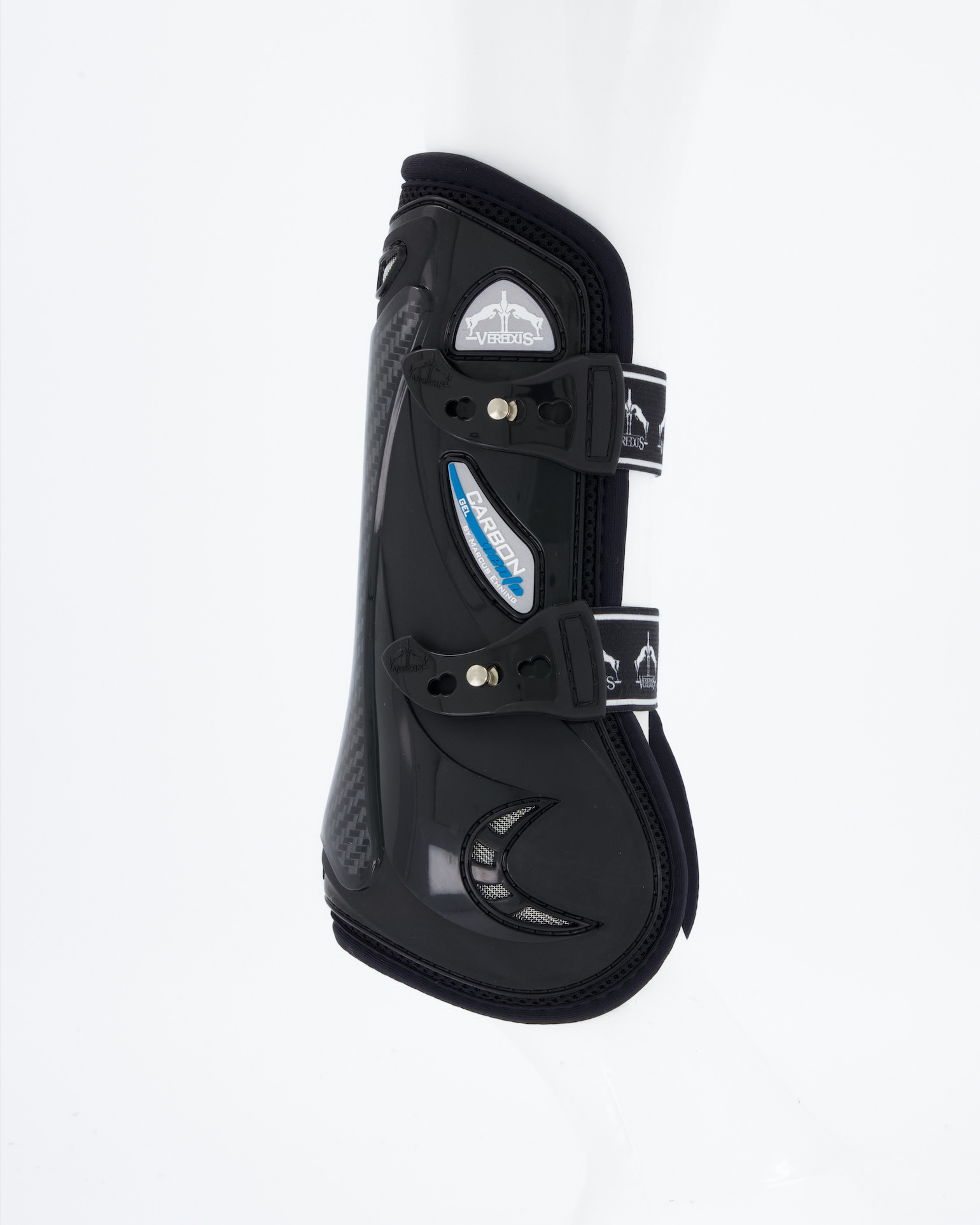
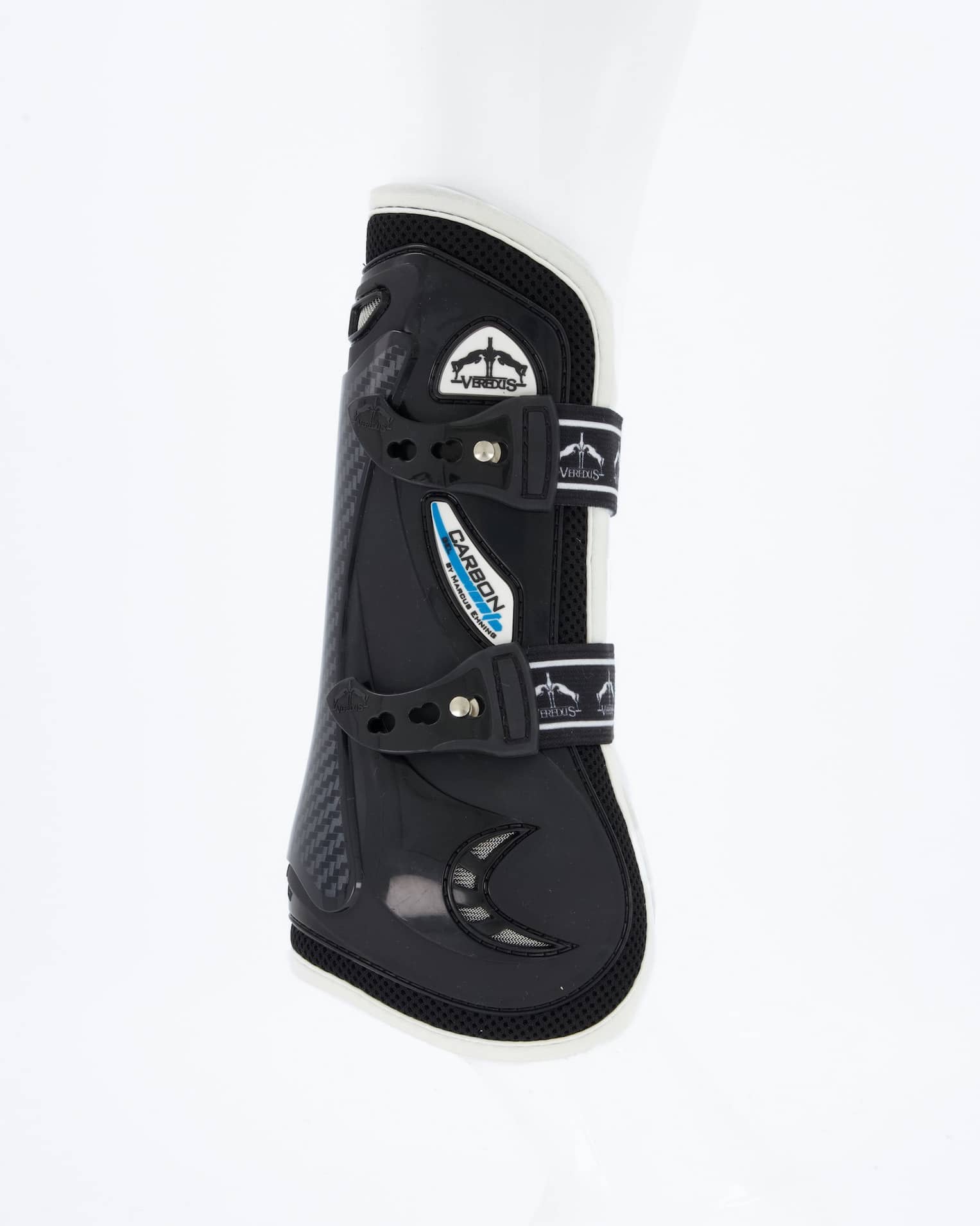
Especially in focus: Veredus horse boots Carbon Gel Absolute








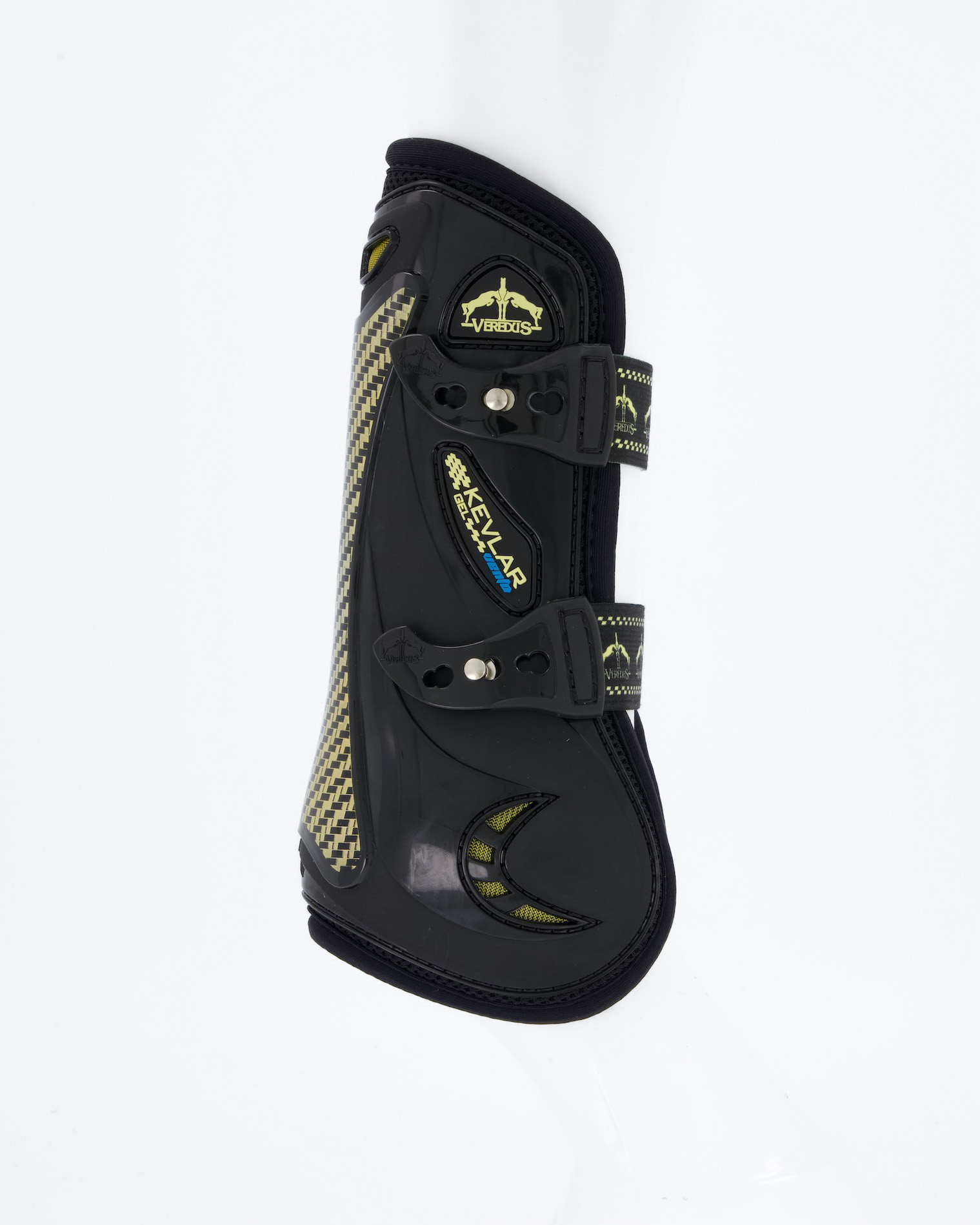


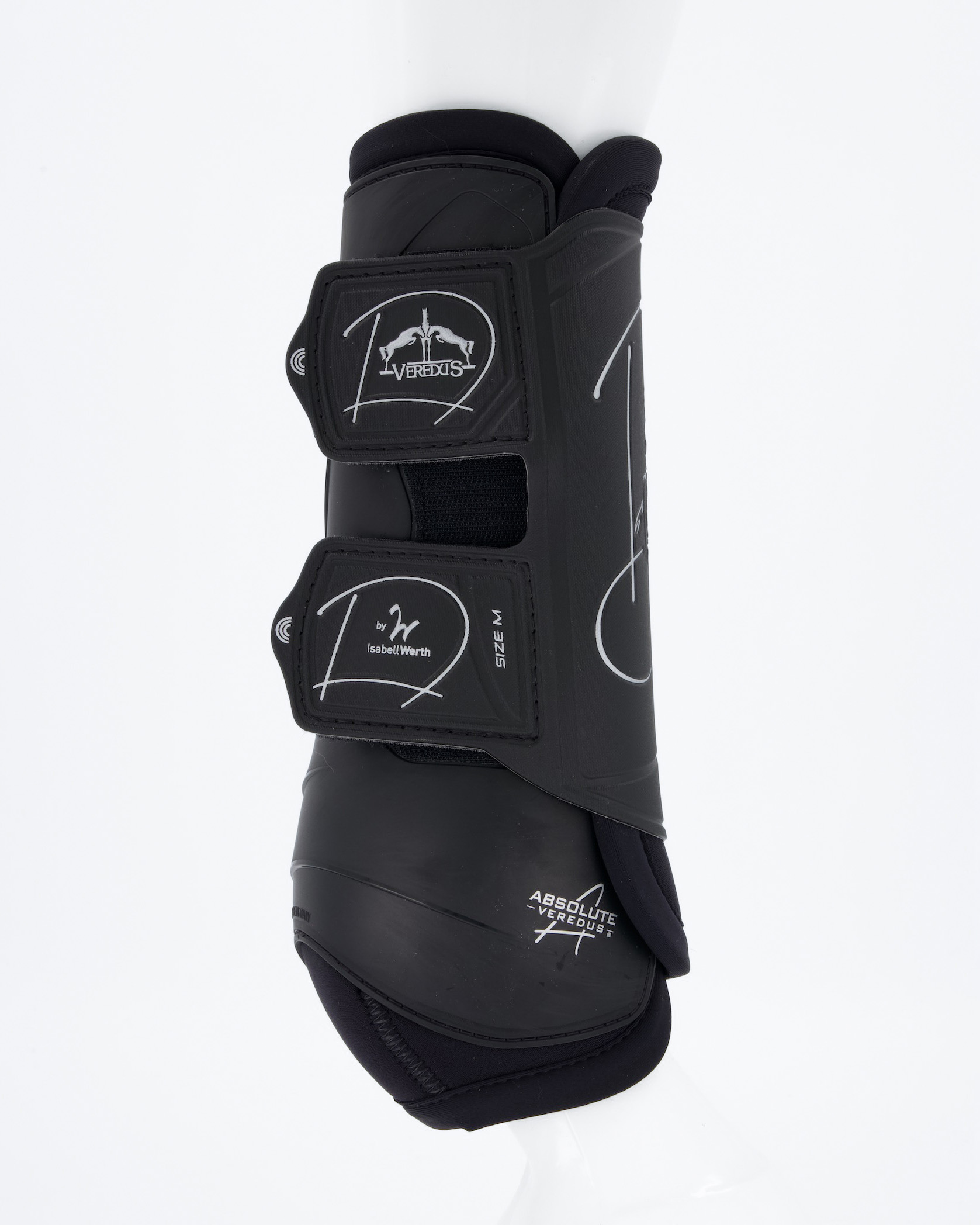


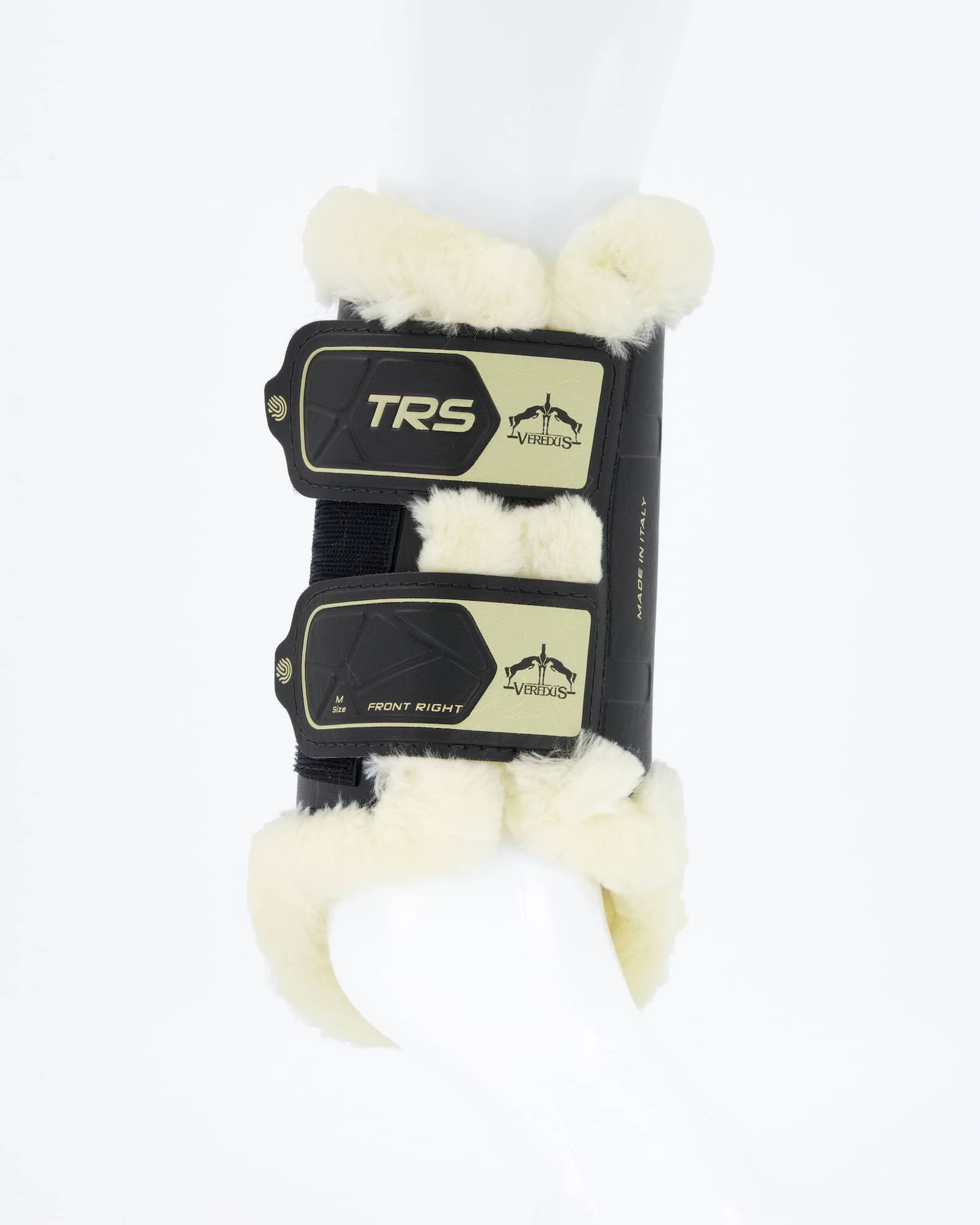


Why Veredus horse boots are the first choice:
- Innovative impact protection: Using materials such as Nitrexgel and anatomically shaped shells, the force of impacts is absorbed and distributed optimally.
- Excellent ventilation: Ranges such as the Vento line have double ventilation. Heat is drawn away from the horse's leg and replaced with fresh air – so heat-related tendon problems become a thing of the past.
- Anatomical fit: The horse boots are designed to hug the horse's leg perfectly without restricting freedom of movement or causing pressure points.
- Carbon & Gel: Many models use carbon reinforcements at particularly vulnerable points to guarantee maximum protection at minimum weight.
The right model for every discipline
Discover classics in our range such as the Carbon Gel Vento, the particularly breathable Grand Prix boots or the specialised Save the Sheep models with fluffy faux-fur lining – ideal for sensitive horses' legs.
Trust the expertise of professionals like Marcus Ehning and kit your horse out with the best that modern equestrian technology has to offer. Browse our selection of Veredus horse boots now and find the ideal companion for your next training session!
Of course you'll also find matching overreach boots and brushing boots with us.
That cannot be said in general. It depends on the shape of the mouth, level of training and your riding style. Many horses get on well with a single- or double-jointed snaffle. Whether another bit makes sense, you should discuss with your riding instructor or trainer. We are happy to advise you on the choice in the shop.
The snaffle bit has movable, loose rings. On the eggbutt bit the side pieces are fixed and end in olive-shaped heads. That way the eggbutt guides the mouth a little more laterally. Both types come single- or double-jointed. You can find more in our guide to bits.
The size depends on the mouth width, the thickness on your horse's mouth. You can measure the bit yourself. How to do that is explained in our guide “How to measure a bit correctly”. With bits with movable side pieces it should not sit too tightly. If in doubt, we are happy to advise you.
In the shop you will find, for example, stainless steel, Sensogan, Sweet Iron, copper alloys and rubber. The materials differ in taste, look and behaviour in the mouth. Which material your horse likes often only becomes clear in practice. The manufacturer states the exact material with the article.
Yes, there are bits in smaller sizes. With the size filter in the category you will find suitable models. Measure your pony's mouth, as the correct size is more important than the label. If you have questions, our advice will help you.
That varies from horse to horse. Some horses accept a new bit quickly, others need more time. Watch for signs of discomfort such as head tossing, overbending or going against the bit and discuss them with your riding instructor or vet. Bits in other materials or shapes can be an option.
That is a question of taste and riding style. Leather reins feel soft or grippy depending on the make and need care. Rubber reins usually stay grippy in the hand even when wet. Web reins are often light and robust. Best try out what you get on with best.
Stops are raised sections in the rein that give the hand extra grip. There are reins with and without stops; whether you like stops is a matter of taste. You will find both in the shop.
In the shop there are reins in widths such as 13, 16, 19 and 20 mm. The width depends on your hand size and preference. Narrow reins feel different in the hand than wide ones. The width is stated with each article.
Select Warmblood, Cob, Pony or Shetty in the size filter. The label is only a guide, so it is best to compare the measurements in the article with your bridle and your horse. If you have questions, we are happy to help.
Curb reins are intended for double bridle use, where snaffle and curb reins are ridden together. They are usually narrower. Which reins suit your double bridle is stated with the article. If you are unsure, your trainer or our team will advise you.
Clean leather reins after riding of dirt and sweat and care for them regularly with suitable leather care. Follow the manufacturer's care instructions. Suitable products are in our category Leather care.
A stable shoe is made for work around the horse: waterproof, robust and with a grippy sole. For riding you need a firm heel and a sole that does not get caught in the stirrup. The riding and stable shoes from Busse combine both.
For example BR Cavan, Cavan Zip and Audace, Busse Dallas and ZIP IT WP, the ELT Bootie Rainless models and the Imperial Riding stable shoes. According to the manufacturer, many Muck Boots are 100 % waterproof.
Models with a neoprene, fleece or faux fur lining, for example Muck Boots Arctic Sport II and Woody Max, ELT Oakland stable boots, Imperial Riding Frosty, Fur and Freezy, HV Polo Glaslynn or the Busse Dallas Winter.
Not in every pair. For riding you need a heel so that your foot does not slip through the stirrup. According to the manufacturer, the Busse Dallas has a firm heel with a slip-through stop. For the saddle, riding boots or jodhpur boots are the better choice.
Allow room for thick socks and ideally try the boots on in the afternoon, when your feet are slightly larger. You can see the available sizes on the item.
Yes, for example the Muck Boots Mini Mucks and the LeMieux Kanta Junior trainer. Children’s feet grow quickly, so check the size before every season.
No. Lepona is an equestrian shop and does not sell animals. With us you will find equipment and accessories for your Shetland or mini Shetland, for example headcollars, bridles, fly masks and horse boots. If you would like to buy a Shetland, please contact breeders, breed societies or reputable agencies.
The shop offers the sizes Falabella, Mini-Shetty, Shetty and occasionally Pony. The names are only a guide, as every manufacturer cuts slightly differently. Compare the measurements on the product with those of your animal. We are happy to advise you.
The noseband should not slip onto the soft part of the nose or rub on the cheekbone. As a rule, about two fingers should fit between the strap and the head. The headpiece should not press on the ears. As the winter coat can add bulk, you should check the fit regularly.
Not necessarily. Many Shetlands grow a thick winter coat. A rug can make sense for clipped, old or sick animals, for example. If in doubt, talk to your vet. Rugs in small sizes can be found in the Turnout rugs category.
Usually not. Pony bridles are too big for most Shetlands. Choose bridles in Shetty or Mini-Shetty size and compare the measurements on the product. The bit and browband should also suit the size of the head.
For the smallest sizes, the shop mainly offers headcollars, bridles, fly protection and individual accessories. Filter by size "Mini-Shetty" or "Falabella". The selection is smaller than for Shetty sizes.
Size depends on your horse's head, not only breed or height. Roughly: Shetty and Pony for small horses, Cob for sturdy small to medium horses with a broader head, Warmblood for larger horses. Some makers also offer Thoroughbred (Full) and Extra sizes. Because every maker cuts a little differently, compare the product measurements with your horse's head; we are happy to help.
Both have a combined noseband with cavesson and flash. The Swedish variant often has a more widely padded noseband with a pulley; the English combined is the most common standard model. Which fits better depends on your horse's head shape and sensitivity.
Anatomical bridles spare sensitive areas of the horse's head and offer plenty of ear clearance. They can make sense if your horse is sensitive to pressure. What matters is that they are fitted precisely, otherwise the benefit is lost.
Not automatically. Bitless bridles act on the nasal bone and poll rather than in the mouth. They assume you ride with rein-independent weight and leg aids and that your horse responds reliably. For cross-country they are not always the right choice, partly for insurance reasons. Also check whether they are allowed in your show discipline.
Wipe it dry after riding, clean the leather regularly and care for it with a suitable leather care product. Clean patent leather with a damp cloth. Wet leather dries best slowly in the air, not on a radiator.
That varies by product. Some bridles include reins; you usually choose the bit separately to suit your horse's mouth. Exact contents are listed on each product. Help choosing a bit is in our guide “Bits – the basics explained”.
It is an inhalation device for horses. It nebulises an inhalation solution into a fine aerosol, which your horse breathes in through a mask. Your vet decides whether inhalation makes sense and with what.
According to Nebu-Tec, all inhalation solutions that are approved for inhalation with a nebuliser or that Nebu-Tec has tested and approved. Your vet decides which solution your horse receives.
According to the manufacturer, one filter membrane lasts for about five uses. They are available in packs of 5 and 50.
There are three sizes: HM-215 for large horses, HM-216 for foals and HM-219 for small foals. The inhalation set includes the sealing ring for large horses.
According to Nebu-Tec, the HM-236 is the successor to the HM-235 and can be used with all SaHoMa-II control units.
Yes, with the adapter for metered-dose inhalers (HM-107). It is attached to the SaHoMa-II housing together with the metered-dose inhaler. Only use it if your vet has prescribed a metered-dose inhaler.
The shop offers Mini-Shetty, Shetty, Pony, Cob, Warmblood and Warmblood Extra, and with some manufacturers also "Full" or "Over". Because the lengths vary depending on the manufacturer, compare the centimetre figure on the product with a browband that already fits your horse well.
The easiest way is to measure a browband that fits well and compare the length with the product. Alternatively, place a tape measure across the forehead, from the point behind one ear where the headpiece runs to the same point at the other ear. The browband should not pinch the ears or press on the forehead.
This is mainly a question of taste and occasion. Classic leather browbands are understated, models with glitter or rhinestones make a statement. With both, it is important that the size and shape fit. Whether a model is permitted at a show is governed by the show schedule and the rules.
With classic browbands with closed loops, undo the headpiece and throatlatch and pull them out of the loops. Then thread the new browband on and check that everything sits evenly. Models with a button fastening or interchangeable system can be swapped more quickly. Whether they fit your bridle is stated on the product.
Not always. The width and shape of the loops have to match the straps of the bridle. Some browbands are designed for a specific bridle system from one manufacturer. Double bridles need browbands with larger loops for two headpieces. The details are stated on the product.
Yes. In the size filter you will find Pony, Shetty and Mini-Shetty. The selection in Shetty sizes is small. More equipment in small sizes is available in the Shetty and Mini-Shetty category.
Most items come from Eskadron, QHP, Q-essentials, Equestro and Pikeur. There are also brands including Kentucky Horsewear, Busse, Imperial Riding, Waldhausen, eaSt, BR and Sprenger.
Only items that can currently be ordered appear on this page. You can see which sizes are available on the respective product page.
The easiest way is to stay within one collection, for example Eskadron Heritage in Wildberry with saddle pad, cooler and gilet, Eskadron Dynamic in Lipstick with overreach boots and horse boots, or QHP in Fuchsia with lunging cavesson, lunging roller and lunging aid. Colour names differ from brand to brand, so it's best to compare the product images.
Yes. For children there are, for example, the REGGINGS R1 riding leggings from eaSt in Raspberry, the Junior Mickey breeches from QHP in Fuchsia and the children's stirrups from Equestro in Pink.
That depends on your horse's head, not just on its breed or height. As a rough guide: Shetty and Mini-Shetty for the smallest ponies, Pony for small horses, Cob for small to medium-sized horses with a rather short head, Warmblood for large horses, Warmblood Extra for particularly large heads. Because manufacturers cut differently, compare the measurements on the product with a headcollar that already fits your horse.
Yes. In the size filter you will find Shetty, Mini-Shetty and Falabella. More equipment in small sizes is available in our Shetty and Mini-Shetty category.
Nylon is hard-wearing, easy to care for and available in many colours. Leather looks classic and needs regular care. Headcollars with lambskin or faux fur padding can be more comfortable for sensitive skin or after clipping. Which material is right depends on how you use it, your horse's skin and your preferences.
A panic hook is a clip on the lead rope that can be opened even under tension. That is why it is often used for tying up. It does not replace supervision or a safe tie-up area. Ropes with panic hooks can be found in the Lead ropes category.
Safety headcollars have an element that is designed to release or break under strong pull, for example an elastic part or a breakaway headpiece. This can reduce the risk if a horse gets caught, but does not rule out injuries. How the element works is stated on the product. Check it regularly for wear.
Yes, some models come with a lead rope, for example rope halters or headcollars with a tie rope. What is included is stated on the product. Individual ropes can be found in the Lead ropes category.
A hobby horse is the stick horse (product). Hobby horsing is the sport or hobby with it – exercises, training, sometimes competitions. You will find products in this category and the explanation of the sport in our guide "Hobby horsing".
To get started, a hobby horse is often enough. Many add a bridle, headcollar or other accessories later. Whether a bridle is already included with the hobby horse is stated with the item.
Yes. The shop has bridles, headcollars, fly veils and rugs for hobby horses or toy pony accessories, among other things, where listed. Filter by product type or use the search.
That depends on the model and the recommended use. Hobby horsing is done by children and adults. Details on size or suitability are given with the item; if in doubt, just ask us for advice.
In our guide Hobby horsing on Lepona Knowledge: its origins, who the sport is suitable for and which aspects are covered there. To buy a hobby horse and accessories, just stay in this category.
The brand filter of this category includes LeMieux, QHP, Cheval Roi and BR, among others. Availability may change.
That depends on the use. For dressage training many riders use soft dressage or fetlock boots, which are easier to put on than bandages. For showjumping, hard-shell boots with a shock-absorbing outer shell are needed so fetlock joint and tendons are protected if a pole hits. Cross-country may call for closed cross-country boots. In dressage tests leg protection is usually not allowed; check the rules of your class before you start.
In the shop you will find horse boots in sizes Mini Shetty, Shetty, Pony, Cob, Warmblood and Warmblood Extra, sometimes also in standard sizes. The label is only a guide because every maker cuts a little differently. Compare the product measurements with your horse's leg; we are happy to help.
Many models are available separately for front and hind legs, sometimes also as a set of four boots. Which legs you want to protect depends on what you use the boots for and how your horse moves. What is included in a set is listed on the relevant product.
Hard-shell boots have a firm outer shell and protect cannon bone and fetlock from knocks; they are typical for showjumping and cross-country. Fetlock boots are softer and more flexible, wrap the fetlock and are often used in dressage training. Both types come with neoprene or fleece lining.
A good fit is what matters: the boot should sit firmly and not slip, but not pinch anything. Leg and lining should be clean before putting it on, and the fasteners closed evenly. After riding, check leg and coat for rub marks. If you are unsure, the measurements on the product or our advice will help.
Brushing boots are shorter than horse boots and are usually used on the hind leg. Overreach boots protect the heel bulb and complement horse boots, for example in showjumping or cross-country. You will find both in our Leg protection category, as brushing boots and overreach boots.
Over 800 items. Mostly riding boots, headcollars, bridles, boot accessories, stable supplies, breeches and turnout rugs, plus fly veils, hair nets, saddle pads, riding helmets and bridle numbers.
Yes. Many models such as Hailey, Romy, Tamar and Jaimy are available as Junior, often also with a wide or tall shaft.
Depending on the model, they come in Shetland, Pony, Cob and Full.
QHP turnout rugs come with 0 to 400 g filling and with 600 D or 1200 D outer material. There are also coolers and rug accessories.
Q-essentials is the basic line from QHP with functional, everyday items for rider and horse.
SensiSoft stands for particularly soft materials and fits that are suitable for horses with sensitive skin.
Ego7 is an Italian brand for riding boots and riding apparel. You will find tall boots, jodhpur boots, chaps, breeches, jackets and shirts there.
There are models for women, men and children. Orion and Aries are tall leather boots, Aster is the children's boot with lacing, Gemini and Taurus are jodhpur boots.
The fit differs by model. For the Orion, the description suggests choosing one size up. Check the size chart on the product page; the international size chart helps with comparison.
Dressage breeches such as CA and FG (with full grip) and jumping breeches such as EJ, GI, LA, PT and VB, also for men and children. For winter there is the WI Winter breech.
Yes. The WI Winter jumping breech and several jackets are designed for cooler days. Underneath you can wear a functional shirt.
Follow the care instructions on each product page. The descriptions for Aries and Aster mention Ego7 Boot Cream for the leather parts as well as drying and storing away from direct heat. Other models have their own care notes.
Riding boots are tall, closed boots. Chaps are leg pieces that you wear over paddock boots or jodhpur boots and can take off after riding. Both options can create a long leg line; the choice depends on fit, discipline and preference.
As a rule, yes: chaps are worn over paddock boots or jodhpur boots. Whether a particular shoe model fits depends on the heel, the shaft height and the manufacturer's information. You will find suitable boots in the category Paddock boots.
Compare the shaft length and calf circumference with the manufacturer's size chart. Measure your calf at the point specified by the manufacturer (often the widest point). The chap should fit firmly without pinching. If you're unsure, we are happy to advise you.
Half chaps are shorter or straight-cut leg pieces, often with an elastic insert. Dressage chaps or gaiters look more like a tall riding boot and may have a dressage arch. The exact name is given with the item.
The shop offers, among others, leather, soft leather, oiled leather, synthetic leather and mixed materials (e.g. with neoprene or cork content). Care and look differ – details and care instructions are given with the item.
Yes, the range includes junior and children's models. Filter by size and check the manufacturer's measurements, because children quickly grow out of a size. We are happy to help you choose.
Many riders like elastic or braided belts because they give in the saddle and do not pinch, for example BR Elastic, QHP Jorine or ELT Malina. Leather belts are the classic choice for breeches and jeans.
Measure a well-fitting belt from the end of the buckle to the middle hole and compare it with the size given with the item. Elastic belts without fixed holes, such as the BR Elastic, can be fastened at any point.
With some models, yes: according to the manufacturer, Pikeur leather belts can be shortened as needed, and the ANKY leather belt has a size adjustment system. With the Kentucky Pearls belt you can punch extra holes if needed.
Yes, for example QHP Lupine, Jaily and the Vaila competition belt, Euro-Star Glittery and Andria, the ELT Jewel, the LeMieux Crystal leather belt and the braided glitter belt from Pikeur.
Yes, for example the Euro-Star Vivian with a horse-head buckle, the Imperial Riding children's braided belt and the elastic Equestro children's belt with cross pattern.
The ELT Comfort Heat heated belt warms the lower back at three temperature levels (45, 50 and 55 °C). It is powered by a power bank, which is available separately.
Measure your head circumference with a tape measure about one centimetre above your eyebrows. BR states sizes as a range, for example 55/57 cm. Choose the range your measurement falls into. On models with a dial such as Thèta, Omega and Delta, you then fine-tune the fit.
Most models do. According to the product description, Zeta Sparkling, Zeta Sport and the cross-country helmet are supplied without a liner; for these, order the matching BR helmet liner in your size. The Sigma comes with three liner sizes.
The helmet liners are named after the model range: they are available for Omega (only in 52/54), Lambda, Thèta, Zeta and Cross Country. According to the description, the Zeta liner is intended for the models with item numbers 541052 (Zeta Sparkling) and 541053 (Zeta Sport). Choose the liner to match the model and your head circumference.
On most models the Cooldry lining is removable and, according to the manufacturer, machine washable at 40 °C. According to the description, on some Thèta Plus and Omega models the peak has a protective cover so that the helmet can be stored safely. For transport there is the BR helmet bag.
According to the product description, Thèta, Thèta Plus, Zeta, Cross Country, Lambda Glitter, Lambda Plus Painted in black/gunmetal and Omega Painted Glitter meet the EN 1384:2023 standard. For Sigma, Delta and Omega Microfibre Glitter, CE VG1 01.040 2014-12 is stated. The information on the product page of the respective model is decisive.
According to the manufacturer, it is intended for cross-country jumping in eventing and is worn with a cover. The shell has an anti-slip coating so that the cover stays in place. Order the liner separately as the Cross Country helmet liner.
Over 450 items, most of them fly masks, bits, lunging accessories, horse boots, girths, breeches, rugs, bridles and headcollars. Plus riding boots, riding gloves and competition shirts.
The Laval is made of European cowhide and has full-length polo lacing, a YKK zip at the back and an elastic insert that adjusts the calf width by up to 1 cm.
According to the product description, the Laval is rather snug in the foot. If you are between two sizes, choose the larger one, and the wider version for the calf. The size advisor on the product page helps you in three steps.
All three are Busse riding boots. The Laval is the best-known model with polo lacing; the Lavalet and Bondy are further models in the range. You will find the details on the respective product page.
Depending on the model, Busse headcollars and bridles come in Shetland, Pony, Cob and Full.
Yes, Busse has turnout rugs with various fillings from 0 to 350 g, plus coolers, exercise sheets and training rugs.
Unclipped horses usually manage with 100 to 200 g in winter; clipped ones need 200 to 400 g. For rain and wind in the transition season a rug without fill or with 50 g is enough. What matters is checking the horse: warm and dry behind the withers.
Measure the back length from the withers to the dock; sizes run in 10 cm steps from 105 to 165 cm. Choose turnout rugs rather one size larger than coolers. The full size chart is on our cooler page.
The turnout rug has a waterproof, breathable outer material and leg straps for outdoors. The stable rug warms in the stable without weather protection and is lined more softly inside. If you need both, combine a light turnout rug with an under rug.
The zip neck cover belongs to the Dynamic fleece cooler. Chest extension, fillet string and Inno-Strap surcingles are meant for the Alpha, Beta, Gamma and Omega turnout rugs. The chest protector can be worn under any rug.
Each time a new collection launches, i.e. around March, late June, late August and early November. That is when the remaining stock of the replaced collection is reduced. Between these dates the selection gets smaller, because nothing is reproduced.
They're not seconds: the Eskadron sale contains regular collection items that were reduced after a collection change. Individual pieces may have been ordered and sent back before. The same terms apply as for all items at Lepona.
Usually not. It's the previous collections that get reduced. We announce limited-time promotions on current items separately, and they then also appear in the sale listing.
Basic colours like black, navy or white work across collections. Special colours such as ocean, amber or lipstick are matched to their own collection. If you want to complete a set, it's best to check the set advisor on the Eskadron brand page to see which pieces are still available in that colour.
Popular choices are accessories for everyday yard life (socks, hat, charm), something for the horse or a hobby horse item for children. Go by the recipient's everyday life.
Choose items without sizes, such as charms, care products, treats or hats. That way the gift is sure to fit.
Small accessories, hair ties, charms, treats and a slightly bigger door every now and then. More ideas: Advent calendar for riders.
The designs are seasonal. As a small present or St Nicholas' gift they work best in the run-up to Christmas; after that, timeless accessories are the better choice.
A hobby horse or accessories such as a bridle, fly veil and sweat rug. Check under Hobby horse what is still missing.
Yes. Riding socks and hats, headbands and scarves go well with small presents from this category.
A Likit is a lick for horses that you place in a Likit holder, the Boredom Buster or the Boredom Breaker. It serves as a reward and keeps your horse occupied.
The Likit holder takes one 650 g Likit, the Boredom Buster two 250 g Likits. The Boredom Breaker holds two 250 g Likits and one 650 g Likit.
No, the Likit holder, Boredom Buster and Boredom Breaker are supplied without licks. If you want everything together, choose the starter pack with holder, three 650 g Likits and two Snaks.
Our multipacks contain apple, banana, cherry and carrot. The Treat Bars come in apple, carrot, cherry and mint, and the Snaks in the starter pack in mint-eucalyptus and apple-cinnamon. There is also Likit Muesli with grains.
Spread the mat with Likit Graze paste or mash and sprinkle feed, carrots or treats over it. Placed in a feed bucket, it works as a slow feeder.
Simply hang the Boredom Breaker and the Boredom Buster in the stable or in the paddock. The Likit Muesli ball can hang freely in the stable.
A riding gilet is clothing: it keeps you warm, is part of your outfit or makes you visible. A body protector, a back protector or an airbag vest is protective equipment in case of a fall. Both are separate categories in the shop. Which vest is right for you depends on how you use it; if in doubt, our team will advise you.
In the transitional season, light gilets such as quilted, softshell or hybrid gilets are common; in cool weather down or thermal gilets too. Which gilet suits you depends on the temperature, the wind and how much you move. Properties such as wind- or water-repellent are stated with each item.
Select your size in the filter and compare it with the manufacturer's size chart, as cuts vary. The gilet should give you enough freedom of movement when sitting and mounting. If you have any questions, we are happy to help.
Yes, the shop has heated gilets, for example from the ELT Comfort Heat collection. They need a power source, such as a power bank. Whether this is included is stated with the item. Please follow the manufacturer's operating and safety instructions.
Yes, some models are reflective and make you more visible in the dark. They are clothing and not a protective vest for falls. You will find more on this topic in the category Reflective items & visibility.
Follow the care label and the manufacturer's instructions. Down, fleece, softshell and heated gilets are cared for differently. Whether and how you may wash it is stated with the item.
Short girths go with saddles with long girth straps, usually dressage saddles. Long girths go with saddles with short girth straps, such as jumping and eventing saddles. So what matters is your saddle, not the discipline alone.
On the saddled horse, measure from the bottom hole of the girth strap on one side, under the belly, to the bottom hole on the other side. Deduct a little so that you can fasten the girth in the middle holes. A well-fitting old girth is the best comparison.
An anatomic girth is cut back in the elbow area and gives the elbow more room. It is a good choice if the girth sits close to your horse's elbow or a straight girth slides forward. You can best see whether it fits when the horse is moving.
A stud girth has a wide plate on the underside. It protects the horse's belly when it tucks its forelegs up sharply when jumping and wears studs. For training without studs, a normal long girth is usually enough.
Sheepskin and faux fur lie softly and are often used for horses with sensitive skin. It is important that the cover stays clean and dry. Many models have a removable cover that you can wash separately.
Elastic inserts give a little and make tightening the girth more precise. Some riders and saddlers prefer elastic on one side only, so that the saddle isn't pulled to one side. If in doubt, ask your saddler what suits your saddle.
For girths and saddle pads with genuine sheepskin, and matching accessories such as covers and care products.
The current range includes saddle pads (pads with sheepskin), not classic square saddle pads. More pads can be found under saddle pads.
A pocket solution for inserts in the Correction saddle pads. The exact design is stated on each product page. Have suitability for saddle and horse checked by a professional.
For horses with a deep barrel just behind the elbow and for rather short-backed horses. The crescent-shaped cut opens towards the rear.
On the anatomical short girth, yes: the sheepskin cover can be removed. Each product page states whether the fur is fixed or removable.
Mattes recommends the Melp special detergent and advises against ordinary detergents. Exact care instructions are on the pack and on the product page.
Over 170 items. Mostly breeches, plus show jackets and tailcoats, riding jackets, competition breeches, functional shirts, jumpers, gilets, show shirts, belts and riding socks.
Full grip gives you the most hold in the saddle, knee grip leaves more freedom of movement at the thigh. If you like a classic seat, choose a model with faux leather full seat or McCrown full seat. The Candela is the best-known model with a high waist and full-seat grip.
Yes, the Candela Curvy has the proven Candela cut with 5 cm more waist width and an integrated elastic waistband.
The Sports Waterproof jacket is waterproof and windproof with a 10,000 mm water column. There are also quilted jackets and gilets, softshell and fleece jackets as well as softshell breeches such as the Linn Softshell with a warm winter lining.
Yes. For men there are breeches such as Rodrigo, Rossini and Navaro as well as show jackets such as Luis and Teo. For children there are breeches such as Braddy and Ida and show jackets such as Ivo and Isalienne.
According to the manufacturer, many models, for example Isalie, Talia, Cecile, Ivo and Isalienne, are compatible with the Freejump airbag safety vest. You will find this information in the product description.
Measure the head circumference a finger's width above the eyebrows and ears. For Kep, Kask, BR and QHP the centimetre figure is the helmet size; for Samshield S is 52 to 55 cm, M is 55 to 58 cm and L is 57 to 61 cm. The helmet must not slip when you shake your head and must not pinch anywhere.
In Europe the VG1 01.040 2014-12 with CE mark. It replaces the earlier EN 1384 and is mandatory at shows. All riding helmets at Lepona meet it; some additionally meet the American ASTM standard.
Immediately after any fall onto the head, even without visible damage, because the inner shell dissipates energy through deformation. Without a fall, manufacturers recommend replacement after about five years because plastic and padding age. A drop from a cupboard or out of the car also counts as a fall.
Matt is less sensitive to fingerprints and fine scratches and looks sporty; glossy shines and is easier to wipe clean. The finish makes no difference to protection – it is a matter of taste.
Most riding helmets are unisex and are chosen by head circumference. Specifically for women there is the Samshield Miss Shield with a narrower shell and designs with glitter, Alcantara or lacquer. Kep and Kask also offer understated to glittery versions that are popular with female riders.
We advise against it. You do not know whether the helmet has already had a fall, and the inner shell can have damage that is invisible from the outside. Affordable new helmets from BR, QHP or Swing start from around €45, standards-compliant and with full protection.
Riding jackets are often designed for use in the saddle: for example with a longer back, a two-way zip or elastic inserts. Whether a model is dirt- or water-repellent is stated with the item. For the yard and riding, it's best to choose by cut and the manufacturer's weather information.
A two-way zip can be opened from the top and from the bottom. In the saddle you can open the lower part without exposing your upper body. Whether the jacket has such a zip is stated in the product details.
For cold days, lined winter jackets, thermal models, parkas or well-insulated hybrid jackets are common. The type of lining and weather protection is stated with the item. You can filter by the season "Winter" and by size. You will also find tips in our guide "Riding in winter".
Hybrid jackets often combine warmer sections with more flexible or more breathable zones. They are often worn for training and in the transitional season. Whether wind- or water-repellent is stated with each model.
For mild temperatures, light technical, softshell, rain or sweat jackets are common; they should protect against wind and light rain without being too warm. Breathability and weather protection are stated with the item.
Follow the care label and the manufacturer's instructions. Fleece, softshell, membranes and down are treated differently. Whether washing, reproofing or only air drying is intended is stated with the item.
Common types include side reins, triangle reins, Lauffer reins, martingale, Thiedemann or Köhler reins, neck stretchers, draw reins as well as Chambon and Gogue. There is also the breastplate. They differ in construction and use. An overview with pros and cons is in our guide “Training aids for horses explained”.
Side reins consist of two separate reins that are attached left and right between the bit ring and the girth. The triangle rein has a strap that runs between the front legs to the girth, forks in front of the chest and is threaded through the bit rings. Both types are also often used when lunging. Which one suits you, please discuss with your riding instructor or trainer.
That cannot be said in general. Training aids do not replace training of seat, hand and aids. Whether and which training aid makes sense in your case should be assessed by your riding instructor or trainer based on horse and rider.
The martingale is used mainly in show jumping and cross-country. There are running ring martingales and martingales with a fork. Among the auxiliary reins, it occupies a special position. In our Martingale category you will find the models in the shop.
That depends on the federation, event and class. The rules can differ and change. Please check the current schedule and your federation's rulebook before use.
In the shop you will find training aids in the sizes Warmblood, Cob, Pony, OVER and Shetty. The label is only a guide. Compare the measurements in the article with your horse. Training aids can usually be adjusted in length; we are happy to advise you on the choice.
A bridle without a mouthpiece. The rein signal acts via the noseband, the chin and the poll. Well-known types are the sidepull, cross-under bridle, Scawbrig and hackamore.
With a sidepull, the reins are attached to the sides of the noseband and act directly sideways. With a cross-under bridle, the straps cross under the chin or over the poll. Models such as Ceto, Sunna and FaySport can be buckled either way.
The hackamore is one type of bitless bridle. However, it works with shanks and leverage on the nose and chin and therefore requires a calm, experienced hand.
Yes. The QHP Ceto, Sunna, Anatomical and Thunderbolt are available in pony size, and the Ceto, Anatomical and Thunderbolt also for Shetlands. The Thunderbolt is also available for mini Shetlands.
Practise in the indoor school or arena first until the aids come through reliably. Whether a bitless bridle is permitted at competitions is governed by the current rules and the competition schedule.
With many models, yes, for example with the Waldhausen X-Line bridles, the STAR Bitless bridle and the QHP Ceto and Thunderbolt. The matching FayRein reins are available for the FaySport. You will find the scope of delivery on the item.
A body protector has protective padding intended to protect the back and torso. A back protector is designed for the back. An airbag vest has an inflatable airbag which, on many models, is triggered via a lanyard attached to the saddle. Which type of protection suits you depends on your riding style and use; if in doubt, our team will advise you.
A body protector is protective equipment in case of a fall. A riding gilet is clothing: it keeps you warm, is part of your outfit or makes you visible, but offers no protection in a fall. Both have their own categories in the shop.
EN 13158 is a European standard for body protectors in equestrian sport. It distinguishes three protection levels (level 1 to 3), which are based on tests. Some products also carry a BETA label. Different testing standards apply to airbag systems. The details of a model are given with the item; the manufacturer's information is binding.
The vest should fit snugly to your body without restricting you. Take your measurements according to the manufacturer's size chart, ideally while sitting, because the vest should not hit the saddle when you are seated. If you have any questions, we are happy to help.
The vest is connected to the saddle by a lanyard. In a fall the lanyard tightens, the mechanism triggers and gas from a cartridge fills the airbag. The cartridge then has to be replaced. Care, maintenance and inspection intervals are set by the manufacturer; please follow their instructions.
Yes, the shop has body protectors and airbag vests in children's sizes. Choose the size according to the manufacturer's size chart. If you have questions about the fit, our team will advise you.
To start with, a rubber curry comb, dandy brush, body brush, face brush, mane brush or mane comb and a hoof pick are enough. You need a sweat scraper if you wash your horse.
First the rubber curry comb, then the dandy brush, then the body brush and finally the face and finishing brushes. After that, brush the mane and tail and pick out the hooves.
The dandy brush has coarse, stiff bristles for heavy dirt. The body brush has finer, softer bristles and gets dust and fine dirt out of the coat.
For a thick winter coat, brushes with stiffer or long bristles are suitable, for example the Grooming Deluxe Overall Brush hard or a dust brush. For clipped horses, soft natural brushes made of horsehair or goat hair are the better choice.
Regularly stroke the body brush across the curry comb while grooming. From time to time you can wash the brushes in lukewarm water and leave them to dry with the bristles facing down. For natural bristles and wooden backs, follow the manufacturer's instructions.
Yes, for example the five-piece QHP brush set Royal, the six-piece Grooming Deluxe brush set Limited Edition or, for children, the Sammy Kids Brush Bag Set and the QHP grooming set Isalyn.
Equestro is an Italian equestrian brand. It was founded in 2012 and belongs to the Amahorse group based in San Giustino (Umbria), which also includes Acavallo.
Show jackets and tailcoats, show shirts (mostly competition polos) and breeches for women, men and children. You will find the overview under Equestro show jackets and Equestro show shirts.
Yes. There are show jackets for children, competition polos for girls and boys, children's breeches and riding leggings, as well as saddle pads in pony size.
Jumping and dressage saddle pads, also for ponies, and fly veils made of technical fabric, cotton or knit. Some lines, such as Universe and Scuderia, are available as both a saddle pad and a fly veil. You will find all saddle pads under Equestro saddle pads.
According to the manufacturer, to the European riding helmet standard EN 1384:2023. The exact information is given on each helmet. At competitions, the German competition rules (LPO) require a riding helmet to EN 1384 in all disciplines, including in the warm-up arena and at the prize-giving. The German Equestrian Federation (FN) recommends the current version of the standard.
According to the manufacturer, many models have a slim cut (slim fit). Show jackets are mostly available in sizes XS to XL, breeches mainly in numerical sizes and children's models by age, for example 8 to 14 years. You can see which sizes are available on each item. It is best to take your measurements beforehand and compare them with the information on the item and with our size chart.
Measure the back length from the withers to the dock. Up to about 145 cm the 145 fits; above that the 155. A warmblood of 165 to 170 cm height usually takes 145; large-framed horses from 175 cm rather 155. If in doubt choose the smaller size, because the rugs are cut rather generously at the neck.
The coolers themselves are without a neck. Alongside them there is the Dynamic zip neck cover in anti-pilling fleece, which zips onto the fleece cooler and is fixed with Velcro. Alternatively a loose fleece neck cover with Velcro fastening fits every cooler.
Fleece dries quickly, is light and cheaper, but straw sticks to it. Jersey is smooth outside, brushed inside, looks more elegant at shows and warms a little more. For everyday after training we recommend fleece with anti-pilling; for shows and for clipped horses, jersey.
At 30 °C on a gentle cycle, Velcro closed, without fabric softener. Do not tumble-dry, do not iron, especially with Glossy bindings, lurex cords and Sparkle surfaces. Leave to air-dry.
The checked models are called Fleece Check and belong to the respective collection: Classic Sports, Platinum, Dynamic and Heritage each bring out their own collection check every year. At around €50 to €70 they are also the cheapest collection rugs.
The cooler goes on the wet coat after riding and is taken off as soon as the horse is dry. An exercise sheet warms the loin area while riding or warming up. The stable rug replaces the winter coat round the clock for clipped horses. For an unclipped horse the cooler is usually enough in winter.
With an inhaler, the horse breathes in a finely nebulised liquid through a mask. Whether inhalation makes sense for your horse and which solution is used is decided by your vet. An inhaler does not replace a veterinary examination.
Coughing can have many causes. Please have it investigated by your vet first. The vet decides whether inhalation makes sense, with which solution and how often.
Only use inhalation solutions or medicines that your vet recommends or prescribes and that the device manufacturer has approved for its device. You will find information on this in the device's instructions for use.
In a mesh nebuliser, the liquid is pushed through a very finely perforated, vibrating disc. This creates a fine mist. This technology is used, for example, by the SaHoMa-II inhalation set. Other devices work with ultrasound or compressed air.
Clean and dry the mask, nebuliser and accessories after every use as described in the manufacturer's instructions for use. Replace wearing parts such as filter membranes as specified by the manufacturer. For the SaHoMa-II, according to the manufacturer, one membrane is designed for about five uses.
No. Masks, sealing rings and spare parts usually only fit a specific device. Check the device name in the item description, for example SaHoMa-II, AirOne or AirOne Flex. If you have any questions, we will be happy to help.
That depends on your figure and your taste. A high waistband sits at the waist, often slips less in the sitting position and combines well with short tops. A regular rise puts less pressure on the stomach when sitting. It's best to try both.
These are long sizes. The normal German dress size is doubled and the leg is cut longer: 72 corresponds roughly to size 36 in long, 80 roughly to size 40 in long. Long sizes are only available for some models, for example from Pikeur, Busse and Euro-Star. The brand's size chart is what counts.
A higher stretch content and a high waistband are comfortable for many riders. There are special cuts for curvier figures, such as the Elly breeches and the Maja Glam Curved from ELT or the Candela Curvy from Pikeur. With strong calves, jodhpurs can be more comfortable because they are cut wider from the knee down.
Silicone grip is applied to the fabric as a pattern, and the fabric underneath stays elastic. A patch made of faux leather or leather is a sewn-on piece of material and looks more classic. How much grip you feel with each is individual. Care instructions are on the label.
White or light-coloured breeches are usually worn at shows. Which colours are allowed is set out in the schedule or rules. You will find a selection under Competition breeches. Many riders have a light pair just for shows and a darker one for training.
Yes, some models are made for this, for example the maternity leggings from QHP, made of elastic fabric with an extra-wide elastic waistband according to the product description. Whether and how long you ride during pregnancy is something to discuss with your doctor or midwife.
Yes, according to the manufacturer, Sprenger gives a breakage guarantee on the Ultra Fit models made of stainless steel.
Both have the same shape and strap guide. Extra Grip also has a soft rubber coating on the heel band that holds better on the boot.
Sprenger recommends the Comfort Roller series for sensitive horses with sensitive coats. The wide, soft wheel provides gentle action.
Spurs without a neck, made of aluminium and plastic. They are intended for horses that react sensitively to the leg and for riders who want to get their horse used to spurs step by step.
Not with many Sprenger models; this is stated in each product description. Spur straps made of Perlon or Biothane are available separately here.
The Ultra Fit Slimline children's spurs with shortened arms as well as children's and pony spurs with a small heel band and short neck.
A shirt made of synthetic fibres such as polyester or polyamide, often with elastane. It wicks moisture away from the body and dries faster than cotton. This keeps you drier when riding.
As a first layer, a long-sleeve technical shirt or a base layer, with a jumper, a fleece or a gilet on top. Shirts with a warming inside include, for example, Livora from QHP and Half-Zip Heritage from Eskadron.
This is the name for the first layer directly on the skin. Base layers fit snugly and often have flat seams so that they do not add bulk under a jumper and jacket. LeMieux, for example, offers the Classique Base Layer.
Yes. For men there are, for example, Ridertechnology and X FISE from Equestro and the Shirt Competition Men from eaSt. For children there are Young Rider Classique and Mini Classique from LeMieux, Kentucky Horsewear Madrid and Barcelona and several junior shirts from QHP.
Long sleeve in autumn and winter, ideally with a zip for regulating. Short sleeve and sleeveless are suitable for summer and the indoor school.
Follow the care label and the instructions on the item. It is best to leave out fabric softener with technical material.
Breeches and riding leggings are figure-hugging; here it is better to choose the larger size if you are between two sizes. Waistcoats, jackets and jumpers come up true to size and are cut to sit over a technical shirt underneath.
Yes, that is the concept: every collection brings waistcoats, shirts or breeches in the same colours as saddle pad, horse boots and headcollar. Which pieces are available in which colour is shown by the set advisor on the Eskadron brand page.
At Lepona we stock the ladies' line. Men's and children's riding wear can be found at the sister brand Pikeur, which belongs to the same house.
Inside out at 30 °C, without fabric softener, not in the tumble dryer and do not iron the silicone seat. That keeps the grip grippy and the colour intact.
Yes, since 30.10.2026. Heritage 2026/27 is now available from us in ash, black, deep moss and merlot, ready to ship from stock. It is released every autumn as a limited autumn/winter collection.
We carry Heritage 2026/27 in ash, black, deep moss and merlot, ready to ship from stock. The set advisor on this page shows which pieces are available in which colour. From the previous Heritage 2025/26, individual pieces in black truffle, cardamom, navy and wildberry are still available while stocks last.
No. All Eskadron collections are limited. Sold-out colours and pieces do not come back; leftovers go into the Eskadron Sale.
Saddle pads come in Cotton, Velvet, Bouclé Crystal, Sparkle Crystal, Pro Soft Jewel, Softshell Contrast and Glam Crystal. Coolers come in Fleece, Fleece Check, Northern Knit, Jersey Sparkle and Fleece Plaid. The list on this page shows which colours and sizes are still available.
Saddle pads, coolers, turnout rugs, exercise sheets and quarter sheets, headcollars, lead ropes, horse boots, overreach boots, bandages, fly veils, women's riding wear, riding socks and accessories such as bags and cushions.
Yes, individual pieces from Heritage 2025/26 are still available while stocks last. You will find them further down this page and in the Eskadron Sale.
Kavalkade is based in Warendorf in Westphalia and is known above all for bridles, bits and girths.
The English combined noseband bridle "Ivy" is very popular. It is softly padded, has an anatomically shaped headpiece and is also available as "Ivy Lammfell" with padding attached by Velcro.
You use the short girth on a dressage saddle with long girth straps, and the long girth on a jumping or eventing saddle. Kavalkade offers both types, with and without elastic.
The Ergonomic mouthpieces are anatomically shaped and become slightly narrower towards the middle. The double-jointed versions have copper inserts.
It evens out small unevenness between the saddle and the horse's back. The inserts are interchangeable, for example made of memory foam. It does not replace a badly fitting saddle gullet; that is a job for the saddler.
According to Kavalkade, the German road traffic regulations require a white light at the front and a red light at the back of the horse at dusk and in the dark. The Horselight sets with breastplate and saddle cover meet this requirement.
That depends on temperature, coat and clip. Unclipped horses often wear 0 to 50 g, in the transitional season 100 to 160 g is usual, and clipped horses tend to need 200 to 400 g in cold weather.
The Classic is the light everyday rug with 600D ripstop. The Comfort is anatomically shaped, with 1200D and a comfort front closure. The Pro has the strongest outer fabric at 1680D and a faux rabbit fur lining.
The denier number describes the yarn thickness of the outer fabric. The higher it is, the more resistant the rug is to tearing and rubbing, for example in the field with other horses.
No. The Hurricane is a light, waterproof rain sheet that you place over the saddle or rug when leading. The All Weather rugs are intended for turnout.
Depending on the model, the All Weather turnout rugs come in sizes from 70 to 165 cm, the Comfort in all sizes, the Classic and the Pro from 80 cm. The size chart on this page shows which size fits your horse. Riding rugs come in S, M and L, though not every model in all three sizes.
A detachable neck cover is available for the All Weather Classic; the Quick Dry Fleece already comes with a neck cover with hook-and-loop fastening.
Shadowmatt describes the matt finish, which is available in both shapes. The Miss Shield also has an extra wide peak and a frontal band above the forehead. The standard helmet comes without the wide peak.
No, the liner is sold separately. It clips in, is washable at up to 30 °C and, together with the shell size S, M or L, adapts the helmet to your head circumference.
Shell S fits 52 to 56 cm, M 55 to 58 cm and L 57 to 61 cm head circumference. The exact size depends on the liner. If you are between two sizes, our team will be happy to advise you.
Yes, with the Samshield configurator. The helmet is handmade in France, which takes several weeks. Custom-made helmets cannot be exchanged; the stock helmets in the shop can be returned as usual.
The V-Skin gloves are made of ultra-thin perforated synthetic leather with silicone for more grip and are machine washable at 30 °C. The V-Skin Swarovski version has a suede base and 130 Swarovski® stones.
The women's models are made of highly elastic compression fabric and fit tightly like a second skin. Diane, Clara and Astrid have full grip, Adele, Hortense and Chloe PL have knee grip. You will find the sizes on each product page.
Toys to hang up, for example made of velour leather with coconut or jute filling, crackle toys with a replaceable bottle or small balls. Large horse footballs are better suited to the paddock or arena.
A ball that you fill with hay and, for example, carrots or apple pieces. The horse picks the feed out and therefore eats more slowly. Our range includes hay balls from Waldhausen, Kentucky Horsewear and other brands.
Yes. The carrot ball and the hedgehog have loops for carrots or treats, with the snuffle mat you hide them between the layers of fabric, and the QHP horse toy with hay net has sliders for carrots.
The QHP horse football has a diameter of 80 to 100 cm. The two-tone version is smaller at 75 cm and better suited to ponies and smaller horses.
That depends on how intensively your horse plays. Check seams, ropes and filling regularly and replace the toy as soon as it shows signs of wear.
Yes, for example with a Christmas tree or reindeer motif, the LeMieux penguin with a Santa hat or the QHP "gift box" box hanger in gift packaging.
About 2 metres is usual for leading and tying up. For groundwork there are ropes of 4 to 7 metres, and for the trailer short ties from 40 cm.
A panic snap can be opened even when the horse is pulling on the rope. A trigger clip is smaller and lighter but harder to release under tension.
Many riders use short, elastic trailer ties or tie ropes with a panic snap. They give a little under tension and can be released quickly.
PH stands for panic snap, SH and KH for a trigger clip or scissor clip.
Yes. Eskadron, HV Polo, Imperial Riding and Kentucky Horsewear offer ropes in the colours of their headcollars, for example from the Eskadron Heritage collection.
Ropes made of synthetic fibre can usually be washed out in lukewarm water. Leather and chain parts should only be wiped with a damp cloth. The exact instructions are given with the item.
Yes. According to the manufacturer, the Muck Boots in this range are 100 % waterproof. Most models are made of natural rubber and neoprene and are easy to care for.
The best insulated is the Arctic Ice Tall with 8 mm neoprene and fleece lining. Arctic Sport II, Arctic Sport High and Woody Max have 5 mm neoprene with fleece, and Arctic Sport High and Woody Max also have thermal foam under the footbed.
The Arctic Ice Tall has the Vibram Arctic Grip sole, which was developed for wet ice. The Muckmaster models have a spike-like MS-1 sole for good grip on mud and hard ground.
At Lepona, Muck Boots are available in whole sizes from 36 to 49. It is best to try them on with the socks you wear in the stable in winter.
Muck Boots are designed for the stable, yard and walks. For riding, it is better to use riding boots or jodhpur boots with a heel and a smooth sole.
Yes, the Mini Mucks. They are made of light Bio Lite foam, have a non-slip sole and are easy to clean.
For example Fantastic, Favorite by Ingrid Klimke, Ingrid Klimke Crystal Clear, Starlight, Shadow, Atlas, Passierblu Spirit, Fly High, Balance, Juno and the Marcus Ehning jumping bridle.
Depending on the model, they come in pony, cob, warmblood and warmblood extra. You can see the available sizes on each item.
Yes, many Passier nosebands are interchangeable nosebands. You buckle them into the matching snaffle or double bridle on both sides, for example the Hanoverian noseband or an English combined model.
According to the manufacturer, the Ingrid Klimke breastplate, including its neck strap, is approved for competitions under the German LPO rules, and the neck strap for breastplates is also LPO-compliant. Please still check the current competition schedule before the show.
For dressage saddles with short girth straps you need a short girth such as the Dressage short girth; for jumping saddles a long girth such as the girth with widened centre or the Protect stud girth. Measure the length on your horse and compare it with the size on the item.
Clean the leather with saddle soap and a damp sponge, let it dry and then care for it with leather balm. Do not dry wet leather on a radiator.
With a liner you make a turnout or stable rug warmer without buying a second thick rug. In milder weather you simply take it out again.
50 to 100 g for the in-between seasons, 150 to 200 g for colder days and from 250 g for really cold nights. Clipped horses usually need more warmth.
No. Liners such as those from Horseware, Bucas, Busse or Kentucky Comfort are attached to the matching rug of the same brand. Universal liners with their own chest fastening fit under most rugs.
The liner is usually the same size as the outer rug. The measurements are given with each item.
Yes, many liners are also made for turnout rugs. It is important that it sits firmly and does not slip, which is why many models have attachment points or an anti-slip back.
Many liners, for example the Horseware Fleece Liner, can go in a domestic washing machine. The care instructions are given with each item.
You put a sweat rug on after riding, after washing or at a show while the coat is still wet. It absorbs moisture and wicks it outwards. As soon as the coat is dry, you take it off again.
Fleece is soft and available in many weights. Jersey is smoother and lighter, picks up less hair and looks neater at shows. For warm days there are also cotton, waffle fabric and spacer fabric.
Only until the coat is dry. Check with your hand under the rug. If the rug itself becomes damp, swap it for a dry one. As a rug for the night, a stable rug is the better choice.
Briefly, yes, for example until the horse is dry, ideally with cross surcingles so that nothing slips. It is not meant for overnight use, because it can stay damp and is not made for that.
Measure the back length from in front of the withers to the root of the tail and compare it with the manufacturer's size chart. British and Irish brands often state the total length in feet and inches.
Brush out hair and dirt first and close all Velcro fastenings. Wash the rug according to the manufacturer's care instructions, usually with a mild detergent and without fabric softener, and let it air dry.
Depending on the model, Veredus comes in pony, cob and full or in S to XL. It's best to compare with the size of your current boots.
STS stands for the "Save the Sheep" line. The lining is Techno Sheepskin, a technical fabric with no animal components that dries quickly and is easy to wash.
Both protect with Nitrexgel as shock-absorbing material. On the Carbon Gel the shell is reinforced with carbon, on the Kevlar Gel with Kevlar fibres.
Yes, the Absolute Isabell Werth dressage boots for front and hind legs, with Easy Strap or elastic fastening.
Knock out sand and dirt after riding and rinse the boots with lukewarm water, then leave them to air dry, not on the radiator. Follow the care instructions on the respective product.
According to Veredus, the Young Jump and Grand Slam Young Jump are designed to meet the international rules for young horse classes. Still, always check the schedule of your class.
Eskadron releases four collections a year: Classic Sports at the beginning of March, Platinum at the end of June, Dynamic at the end of August and Heritage at the end of October (autumn/winter 2026/27 – new now, available since 30.10.). The Basic Line is available all year round. We list new collections as soon as they are delivered. If you want a particular colour, order early, as the collections are limited and are not reproduced.
Saddle pads come as Pony, Warmblood and Warmblood Extra (for large horses or long saddles). Horse boots run from S to XL, with M fitting most warmbloods. Coolers are measured in centimetres by back length from the withers to the dock. A tip from our reviews: for the Platinum fleece coolers one customer needed a size smaller than usual. If in doubt our customer service can help you choose.
You can wash saddle pads and horse boots in softshell, cotton and fleece at 30 °C on a gentle cycle. Close Velcro fasteners beforehand so they do not catch on other pieces. Do not tumble-dry or iron Glossy, Sparkle and Crystal surfaces. Skip fabric softener; it settles in fleece and mesh. Always follow the care label of the item.
Yes. As soon as a collection is replaced by the next one, we reduce the remaining pieces. You will find all current offers collected in the Eskadron Sale. It is especially worth a look if you want to complete a set.
Yes. Eskadron is widely used in competitive sport; the Classic Sports line is deliberately designed for training and shows. For dressage tests, depending on the federation there are rules on colour and size of the saddle pad and on embellishments that you should check in the relevant competition rules. White and muted colours are on the safe side.
Single lunge lines are usually 8 metres long. Long reins come with a total length of 14 to 20 metres.
The single lunge line runs from the horse directly to your hand. Long reins run along both sides of the horse and are guided through rings or pulleys on the lunging roller.
Depending on the training, to the cavesson, the headcollar or the bit. With young horses, many use a cavesson.
Tests often require lunge lines without a swivel and without leather tabs. We offer, for example, the lunge line from STAR. The current requirements are set out in the LPO.
Soft webbing made of polyester or cotton is particularly grippy. Biothane-coated lunge lines are easy to care for and stay grippy even when wet.
Usually a lunging roller, cavesson or bridle, possibly training aids and a lunge whip. For long reins, pulleys are practical.
A stable rug is intended for the stable and is not waterproof. A turnout rug has a waterproof, hard-wearing outer fabric for the field and paddock. So you should not use a stable rug outside in the rain.
That depends on the coat, clipping and stable temperature. Unlined rugs and 50 to 150 g are suitable for mild days or partly clipped horses, 200 to 250 g for a normal winter and 300 to 400 g for fully clipped horses or cold stables.
A horse with a thick winter coat often manages without a rug in the stable. Clipped horses or horses with little coat usually need one. Check with your hand behind the withers whether your horse is warm and dry.
Measure the back length from in front of the withers to the root of the tail and compare it with the manufacturer's size chart. British and Irish brands often use the total length in feet and inches.
A neck cover is particularly worthwhile for fully clipped horses because it also keeps the neck warm. Many rugs have fastenings to which you can add a neck cover later.
Brush out coarse dirt and hair beforehand and close all Velcro fastenings. Wash the rug according to the manufacturer's care instructions, usually with a mild detergent and without fabric softener, and let it dry completely.
In everyday use the terms mean the same thing. In feed law the term is "complementary feed": it complements the basic ration of roughage and concentrate feed and is fed in small amounts according to the manufacturer's instructions.
No. Many horses are well supplied with good hay and a suitable mineral feed. Supplements can make sense if the basic ration has gaps, for example with low-mineral hay, a lot of sweating in summer or a high workload in competition. Whether this applies to your horse is shown by a ration calculation.
That is possible, but check the ingredients. If several products contain the same minerals or vitamins, the amounts add up. If in doubt, discuss the combination with your vet or a feed advisor.
Follow the feeding recommendation on the packaging. It is usually based on body weight and workload. A digital measuring spoon scale helps you to measure powder and pellets exactly. Introduce new feeds slowly over a few days.
That depends on the product. Some manufacturers give notes on use in competition or on withdrawal periods. Read this information on the product page or packaging and check the current rules of your federation.
Dry, cool and tightly closed. Store oils such as linseed oil away from light and use them up quickly once opened. A feed box with lid protects powder and pellets from moisture and pests.
They sit between the leg and the bandage, cushion and spread the pull of the bandage. This makes it easier to apply the bandage evenly.
Thin, breathable pads made of Climatex or 3D mesh, for example from Eskadron or Busse. They add little bulk under fleece or elastic bandages.
Larger, more thickly padded pads such as the Busse bandage pad, the Eskadron Micro Pads or the Kentucky Transport Stable bandage pads with hock protection.
The pad should be slightly wider than the bandage and stick out at the top and bottom. At Lepona there are pony and full sizes; the measurements are given with each item.
Usually four, one for each leg. Some models are also available as a pair.
Yes, most are washable. Busse and Kentucky, for example, state 30 °C; the details are given with the item.
Classic Sports appears at the beginning of March, Platinum at the end of June, Dynamic at the end of August and Heritage at the end of October (Autumn/Winter 2026/27 – new now, available since 30.10.). The Basic Line is available year-round. We list new collections as soon as they are delivered.
No. The collections are limited; sold-out colours and pieces do not come back. That is why it is worth ordering a complete set in the first weeks after release.
Classic Sports is sporty and show-legal, Platinum elegant with Sparkle and velour, Dynamic modern and pared-back, Heritage classic and muted. The Basic Line supplies the permanently available base colours black, navy, brown and white.
Yes, if the colours harmonise. Navy is available in several lines; black and white from the Basic Line match every collection. Special colours such as ocean, amber or lipstick are best combined within the same collection.
Warmblood fits most horses from about 155 cm in height and standard saddles from 17 inches. Pony is meant for ponies, small horses and small saddles up to about 16.5 inches, Shetland for Shetland ponies. What matters is that the saddle pad extends about a hand's width beyond the saddle all round.
The dressage saddle pad (DL) has a straight, longer flap to match the dressage saddle. The jumping saddle pad (VS) is curved at the front and shorter so it doesn't stick out under the forward-cut jumping saddle. For eventing saddles, the jumping cut usually works best.
On a gentle cycle at 30 °C, without fabric softener, with the Velcro closed. Turn Glitter, Sparkle and Crystal models inside out and don't spin them. Don't tumble dry – dry flat or over the line so the foam insert keeps its shape. Between washes, brushing out the underside is enough.
Cotton is absorbent, affordable and great for embroidery – ideal for training. Glossy has a smooth, shiny surface that hair and dust hardly stick to, and looks more elegant at shows. If you want both, go for Softshell: easy-care, holds its shape and is slightly water-repellent.
Yes. For dressage tests, depending on the association, there are rules on colour and embellishment; subtle Sparkle or Crystal cords are common. There are no restrictions for show jumping. White and muted colours are always on the safe side.
Within a collection, the colours are matched exactly; between years, shades can differ slightly. Basic colours like black, white and navy work across collections. For special colours, the set advisor on the Eskadron brand page shows which pieces are still available in that colour.
Subtle rows of rhinestones or crystals on the dressage bow are widespread in dressage and jumping classes and are usually not an issue. With large areas of glitter on the shaft it is worth checking the schedule or asking the show office briefly, because organisers interpret the dress code with different degrees of strictness.
On the models in the range the stones are glued or set and hold under normal use. What damages them is brushing, leather grease and tack that rubs against the shaft. You protect interchangeable tops by taking them off for training.
Wipe rhinestones and crystals only with a soft, damp cloth, do not brush them and do not apply greases or oils over them, otherwise the stones go dull. Patent leather tolerates mild shoe cream without turpentine. You care for the smooth leather underneath as with any other boot.
Yes, several junior models have glitter decoration on the bow or pink rhinestones on the top of the shaft, with a zip at the back and an elastic insert. Sizes start at 27.
On models with a removable top, yes: there are interchangeable tops with glitter, crystals or croc look that sit on the top of the shaft with hook-and-loop fastening. For all other boots you are left with glittery laces, which you will find in boot accessories.
Not only. Elastic lacing at the front gives the ankle freedom of movement – you notice that especially when jumping and in a light seat. Full polo lacing adjusts the calf width. Only derby lacing in the midfoot is usually purely visual.
Classic for jumping, because the shaft is more flexible. By now many dressage boots also have short elastic lacing at the instep without the shaft losing stability. For dressage the bow should be high and the shaft firm – the lacing is then incidental.
Yes, elastic laces stretch over time and can be replaced individually. Watch the length – there are extra-long laces for tall lacings – and the colour to match the boot. Matching laces are in boot accessories.
With elastic lacing, no – the boot is put on and taken off via the zip at the back. You loosen polo lacing once when first fitting it to the calf and then leave it as it sits.
No. Lace-up boots are common in jumping and dressage classes and are considered classic. What matters is a well-groomed overall look – clean laces in the boot colour and a smoothly fitting shaft.
Measure the calf circumference at the widest point while sitting, wearing breeches and riding socks. Most models come in three widths, for example narrow, normal and wide shaft or normal, wide and extra wide. Which width belongs to which circumference is on the manufacturer's size chart on the product page. If in doubt, prefer the narrower width for leather and the wider one for synthetic.
Leather boots yes: when new they sit snug and a little high, because the leather stretches when broken in and the shaft settles by about a centimetre. The heel must sit firmly from the start, though. Synthetic boots barely give and should fit comfortably straight away.
Leather moulds to the leg, lasts many years with care and is the classic choice for the show. Synthetic is lighter, easy-care, resistant to wet and cheaper, but without leather's moulding behaviour. For everyday stable work and training, synthetic is often perfectly fine; for the dressage arena most people go for leather.
Many models are cut unisex and go up to size 45 or 46. Men usually need a taller calf height and a wider calf, so pay attention to the calf height details. Models that run to size 44 and above can be found on the main riding boots page via the “Men” filter.
Lined winter and thermo riding boots with a grippy sole. They are cut a little wider so thick socks have room, and are usually made of synthetic or oiled leather that keeps wet out. For riding and stable work in winter a dedicated pair makes more sense than thicker socks in a leather boot.
For leather boots one to two weeks with short sessions, starting with half an hour a day. Pressure points at the hollow of the knee disappear once the shaft has settled. Anyone who wears boots for hours the first time risks sore spots. Synthetic boots need no breaking in.
Warmer knee socks or models with functional fibres. Make sure your foot does not become too tight in the boot.
Thin, breathable pairs with little volume so that your feet do not sweat in the boot.
Using the brand's size chart (often ranges such as 35–40). The cuff should stay in place without wrinkles in the shaft.
No. Many also wear them with jodhpur boots and chaps or under their trousers in everyday yard life.
Yes – especially multipacks, gift boxes and seasonal designs. More ideas: Advent calendar for riders.
Wash them after heavy sweating or yard dirt; otherwise air them and wear them alternately. Always follow the brand's care instructions.
Many riders use them on every journey, especially with shod horses, because the horse can tread on itself when braking or cornering.
They should cover the hock and knee and protect the coronet at the bottom without dragging on the ground.
Sizes range from Pony through Cob to Full Extra. The measurements are given with each item.
Our smallest size is currently Pony. Whether a model fits a Shetland can be seen from the measurements given with the item.
Travel boots are quicker to put on and also protect the joints and coronet. Bandages with pads take practice to apply.
Brush out coarse dirt and close the Velcro fastenings before washing. Whether a model is machine washable is stated with the item.
An Acavallo gel pad is made of Classic Gel and is mainly intended to stabilise the saddle against slipping and to absorb shocks. According to the manufacturer, memory foam adapts to the horse's silhouette and distributes pressure over a large area. Some models combine both.
This refers to pads with a riser or wedge. They lift the saddle at the front, in the middle or at the back in a targeted way. Check whether you are choosing a full pad with wedge or a partial pad that you combine with a flat gel pad.
Yes. According to the product description, the flat Classic Gel pads can be cut to size individually and adapted to the type of saddle.
According to our product descriptions, MF stands for memory foam. WFS refers to models with free withers, CW-CS to models with classic withers and classic spine clearance. Acavallo lists JCCS on its website as "Jumping close contact shape".
No. Seat savers sit on the saddle seat and are designed for you as a rider. Pads sit under the saddle on the horse's back.
No. A pad can support the fit of the saddle. If there are fundamental fit problems, your saddler can help you.
Training aids are pieces of equipment that, in combination with the reins, can influence the horse's head and neck position. They are meant to support, but do not replace training. Which type is suitable, please discuss with your riding instructor or trainer.
According to our guide, side reins are attached left and right between the bit ring and the girth. They should be fastened so high or low on the girth that they lie horizontally when the horse goes with a correct head position. Training aids are only fastened after warming up. The first time, have an experienced rider or trainer show you how to put them on.
Side reins and triangle reins are often used when lunging. Whether and how you use them depends on the horse and its level of training. Please agree that with your trainer.
They are the same: the triangle rein is also called a Vienna rein. It consists of a strap that runs between the front legs and forks in front of the chest.
That depends on the horse, level of training, rider and use. We cannot give a blanket recommendation. The guide shows pros and cons of the individual types. For the choice, your riding instructor or trainer is the best contact.
According to the guide, training aids should be removed when hacking, with the exception of the martingale. For shows, different rules apply depending on federation and event. Please check the current schedule and rulebook.
A hobby horse with a realistically designed horse head. At Lepona you will find the models Coco (black) and Luca (dun) as well as matching accessories.
Bridle, bit, headcollar, cooler, fly veil, mane bow, bow and various brushes. With these, the hobby horse can be tacked up and groomed like a real horse.
The accessories are made for hobby horses. Whether they fit a model from another brand depends on its head size. They fit Cheval Roi hobby horses best.
Yes, especially for children who love horses or already do hobby horsing. A hobby horse with a headcollar or bridle is a gift that can be played with straight away.
Many start in the garden with small jumps and dressage figures. You will find tips for getting started in our hobby horse guide.
Lined, windproof models with good grip. Your fingers must not go numb; a proper winter model is usually enough without an additional inner glove.
Light, breathable gloves with mesh or thin fabric. They should wick away moisture and still give a good hold on the reins.
Use the manufacturer's size chart and, if necessary, measure hand circumference and finger length. The glove must fit snugly without causing tingling.
No. Many also use them for lunging, leading or work with the horse when ropes and lead ropes chafe.
Special surfaces on the palm and fingers increase adhesion to the reins. Details are in the product description; in wet conditions or with smooth reins, more grip is often pleasant.
Clean off coarse dirt, wash according to the manufacturer's instructions or just air them, and let them dry slowly. Close the Velcro and do not store them on the radiator.
Brushing boots are shorter and mainly protect the fetlock. Tendon boots reach higher and also protect the tendon and cannon bone area. Brushing boots are usually worn behind, tendon boots usually in front.
When it brushes its hind legs while moving, or when jumping, where the hind legs are under more strain. Many riders also use brushing boots for lunging and hacking out.
For example the Veredus Young Jump models, which according to the manufacturer are designed to the international rules for young horses, or the Kentucky Young Horse brushing boots.
Yes. The Veredus "Save the Sheep" models use Techno Sheepskin, and there are models with a faux fur edge from ANKY, Kentucky Horsewear and other brands.
Sizes range from Shetland to Full Extra. The shell should cover the inside of the fetlock without pressing downwards. The measurements are given with each item.
Neoprene and plastic shells can usually be washed off with water; leather should only be wiped with a damp cloth and cared for. The exact instructions are given with the item.
A snaffle bridle has one bit and one pair of reins. A double bridle carries two bits, a bradoon and a curb bit, and is ridden with two pairs of reins. In addition there is the curb chain on the curb bit. The double bridle is intended for advanced dressage.
That varies from item to item. Some double bridles come with reins; you usually choose the bits separately to suit your horse's mouth. Exactly what is included is stated on the item. Curb bits and bradoons can be found in the Bits category.
The curb chain is hooked into the hooks on the upper shank and lies flat in the chin groove without being twisted. How tight it is has a strong influence on the effect. So the first time, have it adjusted and checked by your trainer or an experienced person.
The usual prerequisites are a balanced, independent seat and a quiet hand on the rider's part, and a horse that reliably seeks the contact, is supple and can be collected. The decision is best made together with your trainer.
This is governed by the schedule and the current rules of the relevant federation. They also state which bits and parts of the bridle are permitted. As the rules are revised, check them before every entry.
That depends on your horse's head, not just on breed or height. Sizes vary from manufacturer to manufacturer. Compare the measurements on the item with the bridle that already fits your horse. We will be happy to advise you.
Boots go on the front legs and mainly protect the tendons. Fetlock boots are worn on the hind legs and protect the fetlock when the horse knocks itself.
Moonboots are light boots and fetlock boots with impact zones made of D3O. The material is soft and hardens on impact.
No. Kentucky uses vegan faux sheepskin. It is soft and breathable and popular for horses with sensitive legs.
Kentucky states that the Young Horse Fetlock Boots, the Young Horse Fetlock Boots Classic and Pro and the Moonboots Air Velcro comply with FEI rules for young horses. Always check the current competition schedule before you start.
Most models come in S, M and L, some also as Shetland, Warmblood or XS. Front and hind models are often sold separately, so look for “front” and “hind” in the name.
According to Kentucky, many models, for example the Brushing Boots Air and the Elastic fetlock boot, are washable at 30 degrees. Let them air-dry and do not put them in the tumble dryer.
Typical items are small accessories such as socks, headbands or hair ties, care and grooming items, treats for horse and human, and one or two bigger doors with reflectors or a practical yard helper.
That is up to you. Many make calendars with lots of small doors and a few highlights. More important than the price is that the filling suits the recipient's everyday life.
Yes. Mane bands, treats, a hoof pick or reflective accessories are good choices. For care products, follow the manufacturer's instructions and check the shelf life.
October or early November is ideal. That leaves time for orders, reserves and filling the doors at leisure before December begins.
Yes, especially in the dark season. They are practical and often put off. Plan them as a medium or big door.
No. lepona.de does not currently offer gift vouchers. Specific items from the range are better suited for the calendar.
With us from size 27. For the first riding lessons, jodhpur boots with chaps are often the better choice: they grow with the child more easily and cost less. A first tall boot is worth it once riding becomes regular or the first show is coming up.
Half a size at most. A boot that is too big slips at the heel, the foot has no grip in the stirrup and the child sits insecurely. Better to buy the right fit and a new pair after a year than two sizes too big.
For primary-school children usually within one season, later about every one to two years. Check at the start of the season whether the heel still sits and the toes have room at the front. Models with an elastic insert and zip forgive a little growth in the shaft – not in the foot.
Zip at the back with an elastic insert. Children can put the boots on and take them off by themselves, and the shaft adapts to the calf. Lacing at the front on junior models is usually decorative or elastic and does not need to be tied.
A small heel and a smooth sole, so the foot does not slip through the stirrup or catch in it. Wellington boots and trainers are therefore unsuitable for riding. The boot should also sit firmly on the heel.
Most up to size 40, some up to 42. They have a narrower shaft and a lower calf height than adult boots, so they often fit petite adults with a slim calf better than the ladies' model.
The offer is updated continuously. Sold-out items disappear and new reductions are added.
These are often remaining sizes or last season's colours. Use the size filter to see only available sizes.
That changes. At the moment, a particularly large number of items from Eskadron, Pikeur, Bucas, Samshield and Horseware are reduced. Use the brand filter to narrow down the selection.
Yes, the same return conditions apply to reduced items as to all other items.
By the crossed-out original price next to the current price.
Yes, e.g. for horse rugs, saddle pads and breeches, as well as for individual brands.
Both describe the same type of rug: it lies behind the saddle over the back and loins and has a saddle cut-out. "Quarter sheet" emphasises the warmth during warm-up, "exercise sheet" the weather protection on a hack. Eskadron uses both names for the same product group.
The sizes are based on your horse's cooler size: S/M for a back length of 125 to 135 cm, L/XL for 145 to 155 cm. Ponies and small horses usually take S/M, warmbloods L/XL. The rug itself is shorter because it starts behind the saddle.
Fleece lining without fill down to about 10 °C, 50 g for autumn and mild winter weather, 150 g for clipped horses in winter, 300 g in frost or for sensitive horses.
Yes. The Oxford models have a 3,000 mm waterproof rating, the Heritage Faux Fur 5,000 mm. The softshell version is highly water-repellent and fine for showers; in persistent rain an Oxford model is the better choice.
Both terms refer to rugs with a saddle cut-out for riding. "Quarter sheet" emphasises the protection of the loins, "exercise sheet" the use when hacking out. In the shop they are in the same category.
In cold, wind or rain, when the uncovered back gets chilled – especially with clipped horses or after more intensive training. Whether a rug is necessary is up to you, depending on the weather, the coat and how your horse feels.
Not all of them. There are waterproof models for rain and fleece versions for warmth and moisture wicking. Check the product description for the intended use.
Follow the manufacturer's size chart (often pony, cob, full or centimetres). The sheet must lie smoothly behind the saddle and must not restrict either the saddle or the shoulder.
Horse walker rugs are better suited for this. They have no saddle cut-out and are cut for movement without a rider.
Brush off coarse dirt, close the Velcro and buckles and wash according to the manufacturer's instructions. Let the sheet dry completely before using or storing it again.
Overreach boots protect the heel bulbs and coronet of the front hooves when the horse strikes them with its hind hooves, for example when jumping, on the lunge or on deep ground. They can also help prevent the horse from pulling off a shoe.
Use the manufacturer's size chart, as sizes XXS to XXL vary. When the horse is standing, the boots should cover the heel bulbs but not touch the ground. They should be able to turn slightly without rubbing or slipping.
Rubber is flexible and easy to clean. Neoprene, PVC, faux leather and leather keep their shape better and are often padded. A sheepskin edge pads the back of the pastern for sensitive skin. What suits best depends on the use and your horse's skin.
Overreach boots with hook-and-loop fastening are quick to put on and can be adjusted slightly. Closed pull-on boots often sit more firmly and are lost less often, but are harder to put on. Some models are available in both versions.
Overreach boots are usually worn in front. Behind they can make sense, for example with injuries or special shoeing. Whether this is necessary for your horse is best discussed with your vet or farrier.
For travelling there are travel boots, which usually also cover the coronet; overreach boots can be used in addition. In the field, overreach boots can slip, rub or fill with dirt. So only turn your horse out in them briefly and under supervision. If in doubt, ask your vet.
Common types are stirrups with a rubber ring or elastic band, with a folding or release mechanism, with a flexible arm and with a special stirrup shape. There are also magnetic stirrups, which we don't currently stock. How a model works is explained in the product description.
No, there is no guarantee. Safety stirrups can reduce the risk of getting caught in the stirrup in a fall. How reliably they release, however, depends on the model, the fall, your footwear and how they are fitted. Always ride in sturdy footwear with a heel.
Yes, with many models. The rubber ring, hinge or jointed arm usually goes on the outside. Hang the stirrups the way the manufacturer specifies in the description or instructions.
There are children's safety stirrups with a smaller tread width, around 10 or 11 cm. Matching stirrup leathers and riding shoes with a heel are also important. A foot cage for normal stirrups is designed to additionally stop the foot from slipping through.
Ideally before every ride: rubber rings and leather loops for cracks and porosity, folding mechanisms for clean opening and locking, screws for a tight fit. Replace worn parts immediately, and check particularly thoroughly after a fall. Replacement rubber rings are available individually.
The size refers to the inner width of the tread, usually 10 to 12 cm. There should be a little room to the left and right of your boot. Manufacturers state, for example, at least 0.5 cm per side. Measure your boot at the widest point of the sole.
That depends on the weather, how your horse is kept and its coat. The Power Turnout is the most robust series, with ballistic nylon and an aluminium inner coating; Irish and Freedom Turnout are the more affordable series with rip-stop outer material. Our Bucas guide explains the differences.
That is the fill weight. 0 g protects against rain and wind without adding warmth, 150 g is a medium fill, and 300 g is the warm Extra version for cold days.
With rugs that have a Stay-Dry lining, yes, for example the Power Turnout and the Smartex. According to Bucas, the lining wicks moisture to the outside.
The liner with 100, 200 or 300 g goes under a Bucas turnout or stable rug with front and rear attachment points and makes it warmer. You can use the quilt on its own as a stable rug or as an extra layer under a Bucas rug.
The Irish Combi Neck fits all Bucas rugs without a high neck, the Atlantic Combi Neck fits the Atlantic Turnout and all Bucas rugs with Combi Neck attachment points. Whether a rug has attachment points is stated with the item.
Clean the rug according to the manufacturer's instructions. The Bucas Rug Conditioner restores the water-repellent properties. Spray it only on the outside of the clean rug and only in well-ventilated rooms.
The dog coat Waterproof 300 g has the thickest filling. It is waterproof, has a breathable membrane and a faux rabbit fur lining. The Waterproof 160 g and the Original with 160 g filling are slightly lighter.
The Waterproof 160 g and 300 g coats have an outer material with a 10,000 mm water column and a breathable membrane. The rain jacket has a fluorine-free, waterproof coating. The Original is made of robust 1000D polyester.
The coats are available from XXXS to XXXL and in a dedicated size for dachshunds. Measure the back length from the base of the neck to the base of the tail and compare it with the size chart on the product page.
The coats have faux rabbit fur linings and faux sheepskin collars. The Pearls and Vegan Leather collars are made of vegan leather, and the Wool collar only has a wool look without any animal material.
Follow the care label in the coat. The Jumper Teddy Fleece and collars such as Jacquard, Wool and Lizard are washable at 30 °C; clean the Pearls collar only with a damp cloth.
Yes. Many Kentucky designs such as Velvet or Pearls are also available for horses, for example as headcollars. You will find the horse items at Kentucky Horsewear.
That depends on coat, clipping and weather. A rain sheet with 0 g protects against wet and wind, 50 to 150 g is suitable for the transitional season, 200 to 300 g for frost or clipped horses. Watch your horse and feel under the rug whether it is sweating or cold.
According to the QHP size chart, the total length is measured from the centre of the chest to the end of the hindquarters. You measure the back length from the withers to the base of the tail. The table on the product shows which back length matches which total length, for example 165 cm total length to 125 cm back length. Check for each model which measurement the size selection shows.
D stands for denier, a measure of the yarn thickness of the outer fabric. 1200D is more robust and tear-resistant than 600D and suits horses that play a lot in the herd. 600D is lighter.
A neck cover additionally protects the neck and mane from rain and cold, for example for clipped horses or horses that feel the cold. QHP offers models with a fixed neck, a half neck or a detachable neck cover that you attach to the D-rings.
According to the manufacturer, in the machine at 30 degrees, without fabric softener, no tumble drying and no dry cleaning. Brush out loose hair first and close all fastenings. Reproof the rug as needed with a product for waterproof, breathable rugs.
Yes. There are Falabella rugs, a foal rug that is adjustable in length, and Big Neck models with a wider cut for Friesians and baroque horses.
It is best to make horse and rider visible from several sides, for example with a reflective exercise sheet, reflective leg protection such as horse boots, bandages or overreach boots and a reflective vest for you.
No. Reflective material reflects light, for example from car headlights or torches. Items with their own light include the Imperial Riding Chilly beanie with LED light or the LeMieux cap with lamp. You will also find both on this page.
The Waldhausen exercise sheets and the reflective exercise sheet with neon strips are light mesh sheets with a saddle cut-out and tail cord. The Kentucky Horsewear Quadrat reflective exercise sheet is water-repellent, has a fleece lining for cold days and closes in front of the saddle.
Yes, the Waldhausen reflective horse walker rug made of waterproof, breathable 600 denier material with fleece inside, reflective strips, cross surcingles and a tail strap.
The Waldhausen reflective bandage set with two reflective strips each, the Reflex horse boots with reflective hook-and-loop fastener and the Reflex overreach boots in neon yellow with reflective binding.
Yes. For you there is the Waldhausen Reflex vest and the Kentucky Horsewear reflective baseball cap, and for your dog the dog collar and the Active dog harness from Kentucky Dogwear.
Yes, with a little preparation: warm up horse and rider for longer, watch out for slippery or frozen ground and bring the horse into the stable dry after work.
That depends on whether it is clipped, how thick its winter coat is and how it is kept. Clipped horses usually need a rug, unclipped horses with a thick coat often only in wet and windy weather. You choose the fill according to temperature and keeping.
Layers work best: functional shirt, jumper or gilet and a winter jacket on top, plus winter or thermal breeches, warm socks, gloves and a thin headband under the helmet.
With reflective equipment for you and your horse, for example a reflective vest, a reflective exercise sheet or reflective boots. The more reflective surfaces are in motion, the sooner you will be seen.
Lined riding gloves, warm riding socks and shoes with enough room for thick socks. For long days at the stable there are heated gloves whose temperature can be set in levels.
Plan considerably more walking than in summer and only increase the pace once your horse is loose and warm. An exercise sheet keeps the back warm in the meantime.
According to the manufacturer's description, the Arena Alupro, the Arena Aluplus and the two junior models have a side opening with a release mechanism. The Arco Evolution Alupro has no release mechanism.
For the Arena Alupro, Acavallo cites a combination of metal and flexible polymers. The Arena Aluplus is made entirely of anodised aluminium and has a tread angled by five degrees.
According to the manufacturer, the tread of the Arco Evolution and the Arena Aluplus is angled by 5°. This is intended to support a correct position.
It combines the soft calfskin with a firm core. According to the manufacturer, this means the leather does not stretch and keeps its length.
A one-piece leather whose buckle sits at the bottom close to the stirrup instead of at the top by the saddle. It is cut narrow at the top and is therefore less bulky under your leg.
A rug for the horse walker. It has no saddle cut-out and is meant to keep your horse warm, and dry if needed, while it moves without a rider. It is often also called a walker sheet.
If the walker is outdoors or it is raining, yes. In a covered walker a lighter or fleece version is often enough. Check the product description for weather protection.
That depends on the temperature, coat and clip. Unlined and light fills are suitable for mild days, higher gram weights for cold days and clipped horses. Check regularly whether your horse is at a comfortable temperature under the rug.
Some turnout rugs can be used for this, but they are often cut for field and paddock. Dedicated horse walker rugs are designed for the movement in the walker. If in doubt, choose the model intended for the walker.
The exercise sheet has a saddle cut-out and goes behind the saddle. The horse walker rug covers the body without a cut-out and is used without a saddle.
Remove dirt and hair, close the fastenings and wash according to the manufacturer's instructions. The rug should be completely dry before its next use.
Lined or windproof models such as Roeck-Grip Winter, Malta Winter, Wattens Winter, Wisbech, Jardy, Julia, Warwick and Weldon. For the transitional season and days that are not too cold, Roeckl recommends the Willow; for children there is the Kylemore.
All three have a ROECK-GRIP® palm. The Roeck-Grip Lite has a light mesh back for summer. In the Roeck-Grip Winter, the material is laminated with fleece on the inside and keeps your hands warm.
Roeckl measures in glove sizes; the Roeck-Grip Winter and the Roeck-Grip Pro, for example, are available from 6.0 to 11.0. The glove should fit snugly without pinching. You can see the available sizes with the item.
According to the manufacturer, many models such as Malta, June, Lorraine, Milas, Wisbech and Kylemore are machine-washable at 30 °C. Close the hook-and-loop fastener before washing and let the gloves air-dry.
Yes, models labelled "Touchscreen compatible" include Wisbech, Weldon, Millero, Melbourne and Roeck-Grip Lite.
Yes, for example the Roeck-Grip Junior, the Kelli with an easy hook-and-loop strap, the Tryon summer glove and the Kylemore winter glove in sizes 4 to 7.
Riding T-shirts usually have a more fitted, stretchier cut so they don't ride up while riding. Functional models are also breathable and dry quickly.
Cotton is soft and comfortable for the stable and leisure time. For training and warm days, functional fabric is more practical because it wicks moisture away and dries faster.
That depends on the schedule. For competitions there are dedicated competition shirts with collars, which you will find under competition shirts.
Sizes vary depending on the brand. It is best to check the size chart for each item. Fitted models are tighter.
Yes. For children there are T-shirts and tops with horse motifs, for men mainly polo shirts and basic T-shirts.
Ideally turned inside out and at a low temperature. The exact care instructions are on the label.
A breastplate is placed around the horse's chest and connected to the girth. A martingale is an auxiliary rein with a fork that works together with the reins or the noseband. The two are often combined: on many models a martingale fork is detachable or can be attached; the manufacturer's details with the item will tell you.
The martingale is an auxiliary rein. It is attached to the girth and connected to the reins or the noseband via a fork. It is used mainly in show jumping and cross-country. Whether and how you use it, please discuss with your riding instructor or trainer.
There are running martingales (ring martingales), where the reins run through rings on the fork, and fixed (standing) martingales, which are attached to the noseband. The martingale fork is available, for example, closed, with snap hook, with elastic, and soft or stiff. Which design a model has is stated with the item.
These are accessories for martingales and breastplates. The shop offers martingale stops, martingale sliders and protectors made, for example, of sheepskin, faux fur or neoprene. What a part is intended for and how it is fitted is stated in the manufacturer's details with the item.
In the filter, select the size Warmblut, Cob, Pony or Shetty. The designation is only a guide; compare the measurements given with the item against your horse and your girth. The choice for Shetty is limited. If you have any questions, we are happy to help.
Length and buckling depend on the model; the manufacturer's instructions take priority. Many models are adjustable at several points. With running martingales the fork is usually buckled so that it sags slightly when the rein is on contact. Ask an experienced rider or trainer to help you the first time you use it. Depending on the association, different regulations apply at shows.
Not always. Check the width of the straps and the fastening, i.e. buckle or hook stud. The measurements are given with the item. Some cheekpieces are made for a specific bridle.
It is cut to leave more room behind the ears and is usually softly padded. This helps the headpiece sit more steadily on the head.
Yes, cheekpieces for the double bridle are usually slightly longer than for the snaffle bridle, at BR for example by 2 cm.
Genuine sheepskin is very soft and temperature-regulating. Faux fur looks similar, is easy to care for and can be washed without any problems.
On many bridles, yes. Replacement nosebands are buckled to the headpiece straps. Pay attention to the size (Pony, Cob, Full) and the strap width.
Most covers are wrapped around the strap with Velcro and can easily be removed for washing.
0g as rain protection, 50–150g for the transitional season and mild winters, 200g and more for clipped horses or cold weather. Under rugs add warmth flexibly.
Measure from the centre of the chest along the side to the base of the tail; the value in cm is the rug size.
Ideally within the same brand: Bucas liners fit Bucas rugs, Horseware liners fit Amigo and Rhino rugs with liner loops.
They are colours or models from previous seasons or remaining sizes; the quality is the same.
The normal right of withdrawal applies; please only try the rug on when it is clean and free of hair.
Kentucky Horsewear is a Belgian brand. It is known for saddle pads, rugs, horse boots and fly veils in eye-catching designs such as Velvet, Pearls and glitter.
No. The lambskin at Kentucky is faux lambskin, so it contains no animal fur. According to the manufacturer, leather headcollars such as Anatomic and Rope are also made of faux leather.
That depends on your horse and how it is kept. For the stable there are stable rugs and under rugs from 0 to 400 g, and for field and paddock the waterproof All Weather turnout rugs. Use the rug filling filter to find the right weight.
Depending on the model, headcollars, horse boots and saddle pads are available from Shetland and Shetty through Pony and Cob to warmblood. Rugs have sizes in cm. The exact size is shown on each item.
Many Kentucky designs, such as Velvet, are available as matching saddle pad, fleece bandages, fly veil and headcollar. This lets you put together your own set.
Yes, Kentucky Dogwear offers dog coats, harnesses, collars and a dog bed.
The Tokyo, Warendorf Feel Good, Bellevue and Köln IVR models, each as a ready-made combination with noseband, browband and reins. Tokyo and Warendorf are also available as double bridles.
A curved, widely padded Swedish noseband with the addition “feel good”, with patent leather depending on the combination. All eight bridles in our selection have it.
The bridles come in cob, warmblood and warmblood extra. It is best to measure your horse’s head using the Otto Schumacher measuring guide and compare the values with your current bridle.
Yes. The snaffle bridles come with 16 mm web reins, the Köln IVR with 20 mm web reins with stops. The Warendorf double bridle has 16 mm bridoon reins and 13 mm curb reins.
Otto Schumacher offers many combinations of headpiece, noseband, browband and type of stitching. The shop has a preconfigured selection; for other requests, please get in touch via our contact page.
With flat-stitched straps, the layers of leather lie flat on top of each other; with round-stitched straps, the strap is shaped round and stitched. The Bellevue bridle, for example, is round-stitched, while the cheek straps of the Tokyo are flat-stitched.
Go by your usual shoe size and the manufacturer's size chart. Your heel should not slip out, and your toes should not touch the front. With lined models or thick socks, half or a whole size larger can make sense. Whether this is necessary depends on the manufacturer.
Yes. The shop has lined winter and thermal boots, for example with sheepskin or thermal lining. Whether a model is water-repellent is stated on the item. Thermal socks can add warmth; in that case try the boot on with those socks.
That depends on the class and the rules. In many classes ankle boots with chaps are permitted; in some, tall riding boots are compulsory. The schedule and the current rules of the governing body are binding.
Jodhpur boots have elastic inserts on the sides and are quick to put on and take off. With lace-up boots you adjust the width at the instep with the laces. Some models also have a zip.
For riding, the ankle boot should have a heel so that your foot does not slip through the stirrup. A fairly flat sole with a light tread helps you not to get caught in the stirrup. A coarse tread is better suited to the stable and hacking.
Not for the stable and groundwork. For riding, many wear chaps with them because they protect the calf from pressure and rubbing from the stirrup leathers and saddle. It is important that the chaps and ankle boots go together, especially in shaft height. More on this in the Chaps category.
Bold shades such as Lipstick, Fuchsia, Hot Pink and Raspberry. We have deliberately not included pale rosé shades and berry tones.
For example Equestro with jumping saddle pad, headcollar and fleece bandages, Kentucky Horsewear with the Velvet saddle pad, Eskadron with boots and overreach boots from the Dynamic collection, and QHP and Q-essentials with bareback pad and cooler.
Yes. The Eskadron Dynamic collection in Lipstick is available, for example, as boots and overreach boots for your horse and as a turtleneck shirt for you.
Yes, for example the REGGINGS R1 riding leggings from eaSt in Raspberry and the children's stirrups from Equestro with a side opening.
In our saddle pads category, where you can filter by colour.
Acavallo is an Italian brand. The manufacturer is Amahorse Trading s.r.l. in San Giustino (Italy). According to the manufacturer, several Acavallo items, such as the Arena Junior stirrups, are made in Italy.
It is the gel material Acavallo uses to make gel pads, risers, bit guards, overreach boots and gel inserts in girths, among other things. According to the manufacturer, it is non-slip, shock-absorbing, hypoallergenic and non-toxic. This is why it can be used directly on your horse's skin.
There are flat gel pads, pads with a riser or wedge (raised at the front, in the middle or at the back) and pads or saddle cushions made of memory foam. We explain which pad is intended for what on the Acavallo pads page.
That depends on the model. You can find an overview of Arena and Arco Evolution under Acavallo stirrups.
According to the product descriptions, bridles, browbands and stirrup leathers are made of calfskin, some of them of Italian leather. Some of the stirrup leathers have a nylon core reinforcement.
A sport with the hobby horse from Finland: dressage, jumping and caring for the hobby horse – often in clubs and at competitions.
For children, teenagers and adults who enjoy exercise and horses. With support, getting started is possible inclusively.
No. You train with the hobby horse. Many do hobby horsing alongside riding or as a way into equestrian sport.
A suitable hobby horse, sportswear and a safe place to practise. You can add accessories such as a mini bridle or rug later.
In the Hobby horse category – there you can filter by product type and manufacturer.
Yes. The Deutscher Hobby Horsing Verband e.V. was founded in September 2023 and has its own rules for dressage and jumping. You can find current dates from the association and from local clubs.
One that is not bulky under the jacket, keeps sleeves and hem in place and does not restrict you. Sweat or light knit depending on the temperature.
Often a functional shirt plus a jumper or hoodie. In the cold, a winter jacket or gilet on top – layers can be adjusted on the go.
Many are, as long as the hood and drawstrings do not get in the way. For jumping or windy terrain, secure the hood or choose a model without a hood.
Using the brand's size chart and, if necessary, chest or width measurements. Read the fit description on the item rather than simply taking one size larger.
No. Thinner sweaters also work in spring or in a cold indoor arena; thick models and sweat jackets mainly in the cold season.
Pikeur, Samshield, LeMieux, Eskadron, Imperial Riding, Euro-Star, QHP and Equestro, among others – see the manufacturer filter in the listing.
Most models come in Small/Medium and Large, some also in Small, Medium, X-Large or as a Cob or Full version. The spine length is stated in the item description, e.g. 52 cm for the Loire Classic Satin jumping saddle pad in Large.
Dressage Squares are cut for dressage saddles, close contact saddle pads, according to LeMieux, for jumping saddles with a more forward cut, and eventing saddle pads for eventing saddles.
According to the product description, several models are washable at 30 °C, e.g. Loire Classic Satin and Luxury Square. The care label is what counts.
For women Isalie, Talia, Cecile, Phelia Selection and Klea, for men Luis and Teo, for children Ivo, Isalienne, Charlott Kids and Mayla. Plus the Lilien, Liliane and James tailcoats.
Yes. The Isalie has rhinestones on the flap pockets, the Cecile rhinestone piping on the collar, waist belt and tails, the Liliane rhinestones on the collar and waist belt and the Charlott Kids diamanté on the collar.
According to the manufacturer, Isalie, Talia, Cecile, Teo, Ivo and Isalienne are compatible with the Freejump airbag safety vest. For other models it is not stated in the description.
The tailcoat has long tails and is mainly worn in higher-level dressage tests. The show jacket is shorter and common in show jumping, dressage and eventing. What applies in your class is stated in the schedule.
Yes. Lilien and Liliane have interchangeable tails and an interchangeable pocket square. For the Lilien there is a separate set of replacement tails and pocket square.
Yes, Ivo, Isalienne, Charlott Kids and Mayla. Isalienne and Charlott Kids have sleeves that can be lengthened by up to 5 cm. Children's sizes range from 122 to 176.
The terms are not standardised and are used differently by the brands. Both refer to breeches with a warming construction, i.e. with a roughened, brushed or lined inside or made of softshell. Some manufacturers call their models "thermo", others "winter". The features of each model are stated in the item description.
Usually not. Many models are wind- and water-repellent according to the manufacturer, for example some softshell breeches. For continuous rain there are waterproof rain and over trousers that you wear over your breeches.
Usually your normal breeches size. Because of the thicker inside, some models can fit a little tighter. Compare your measurements with the size chart for the item and make sure the breeches don't constrict.
According to the description, many models have an elastic leg end. Because the material is thicker than in summer breeches, it can get tighter in the boot shaft. It's best to try the breeches on with your boots.
According to the item description, the Comfort Heat heated breeches from ELT have three heating elements on the thighs and lower back. They are switched in three levels with a button and powered by a power bank, which is not included. Always follow the manufacturer's operating instructions and safety notes.
Follow the care label. Washing at 30 °C inside out is often recommended, without fabric softener and without a tumble dryer, so that the inside, softshell and grip stay in good condition for a long time. For the heated breeches, the washing instructions in the manual apply.
The Kask Dogma with a short peak and the Kask Star Lady with a polo peak. On both you can choose colours, peak and engraving yourself.
Put your helmet together in the Kask configurator and send us the configuration with your head size by e-mail to info@lepona.de. We'll get back to you with the price and delivery time before we order.
An engraving of up to 12 characters, for example your name, initials or your horse's name.
Every helmet is made individually. We'll tell you the current delivery time as soon as we have your configuration. If it's a gift, allow some extra time.
Measure your head circumference about a finger's width above your eyebrows. The helmet should sit firmly without pinching. If you're unsure, ask us before ordering.
Yes, you'll find pre-configured Kask riding helmets on our Kask brand page while stocks last. More riding helmets available for immediate delivery are in the riding helmets category.
Until the coat is dry. Then take it off and, if needed, put on the stable rug or turnout rug. A damp cooler rug should not be left on overnight.
Kentucky measures the back length from the withers to the base of the tail. The cooler rugs are available in pony size and from 80 to 165 cm. If your horse is between two sizes, choose the larger one for cooler rugs.
The Heavy models are made of thicker fleece with a wool look and absorb more moisture. The light fleece and spacer rugs are suitable for milder days and for cooling down.
Yes. According to Kentucky, Softshell, Spacer, Square Heavy and the Transport Combo fleece rug are expressly also intended as travel rugs.
No. The wool look is polyester or vegan wool, and the wither protection is faux sheepskin.
The rugs are made of polyester and easy to care for. For the 4D Spacer, Kentucky specifies 30 degrees in the machine. Check the label of each model and let the rug air dry.
Kentucky saddle pads come in pony, cob and full size. What matters is the size of your saddle. The saddle pad should extend a little beyond the saddle all the way round.
The dressage saddle pad is longer and cut straighter to match the long saddle flap of a dressage saddle. The jumping saddle pad is shorter and cut further forward at the front to match the forward-cut jumping saddle. Some models such as Absorb and Jumping are also suitable for eventing.
Most Kentucky saddle pads are machine washable at 30 degrees. Kentucky recommends washing them as rarely as possible, in a laundry bag, and letting them air dry, not in the tumble dryer.
On many models the Kentucky logo deliberately sits a little higher to leave room for your own logo or your horse's name, for example on Velvet, Pied-de-Poule, Plaited 3D Logo and Skin Friendly.
The Fishbone Turnier and the Diamond Turnier have removable faux leather patches to which you attach the competition number. The Fishbone Turnier comes with three sets of numbers.
No. The lining of the Skin Friendly and the Hunter is faux sheepskin, and the logos are made of vegan leather or faux leather. According to the manufacturer, the Skin Friendly Velvet is made entirely of vegan materials.
That depends on temperature, coat and clipping. Unclipped horses often need little or no filling in the stable, clipped horses rather 200 g or more. With an additional under rug you can adjust the warmth flexibly.
The show rug has 160 g filling, a lining of faux rabbit fur and a collar of faux sheepskin. You can use it in the stable, during transport and as an under rug.
Yes. Cotton Sheet, Canvas Sheet, the Skin Friendly under rug and the down rug are expressly also intended as under rugs.
Kentucky stable rugs are available from 70 to 165 cm back length, measured from the withers to the base of the tail. For ponies and small horses there is, for example, the Sammy show rug.
The down rug has no closures. According to the manufacturer, the belly strap is not included and must be bought separately.
According to Kentucky, the Classic stable rug and the Velvet show rug are washable at 30 degrees. Check the label of each model and let the rug air dry.
The German FN equipment catalogue does not specify a colour for shirts or blouses. In dressage and jumping competitions, a shirt with tie or a blouse is usually required, worn with light-coloured breeches. Further requirements may be stated in the schedule, depending on the class.
Competition polos have a polo collar with a button placket and a sporty cut. Whether a model is suitable for your class depends on the competition and the schedule.
Yes. There are models for girls and boys. Filter the listing by gender and size.
A grooming bag is light, has lots of compartments and usually a shoulder strap. A plastic grooming box is sturdier, easy to wipe clean and often has a removable compartment for small items.
The basic kit includes a curry comb, body brush, dandy brush, mane comb or mane brush, hoof pick and sweat scraper. Depending on your needs, add a sponge, hoof care and fly spray.
Yes, for example the Waldhausen grooming case, the grooming case Lucky and the Q-essentials grooming box Pony Power. They are filled with brushes, a hoof pick and a sponge.
Small, light bags and filled grooming cases such as the grooming case Lucky or the grooming box Pony Power. Imperial Riding has its own children's model, the grooming bag Kinder Basic.
Bags with a mesh or grid base let the dirt fall through. Plastic grooming boxes can simply be wiped clean. For fabric bags, follow the manufacturer's care instructions.
Boot and helmet bags, bridle and bandage bags, stable bags for the stable front, and rug and saddle pad bags.
That depends on how slowly your horse should eat. With 6 cm and more, it gets to the hay easily; 3 to 4.5 cm slow it down considerably. Nets with two mesh sizes, such as the QHP Slowfeeder Two-sided or the Waldhausen DUO hay net, help with the changeover.
Every hay net slows down eating a little, which is why some manufacturers call every net a slow feeder. Usually, however, slow feeder means small-mesh nets or hay bags from which the horse has to pick out every portion.
This is stated on each item. The QHP Easy Fill hay net holds about 5–7 kg, the QHP Slowfeeder 160 × 100 cm about 15–17 kg, and for a whole bale there is the Q-essentials hay bale net with approx. 20–30 kg.
Yes, for example the Premiere Shetland hay net with 3.5 × 3.5 cm mesh or the 40 cm long Q-essentials mini hay nets.
With nets that have an opening ring or frame, such as the Waldhausen Simple FILL, the QHP Easy Fill or the Grooming Deluxe net. Or with the Premiere hay net filler, which you mount on the wall or stable door.
The knotless Waldhausen DUO hay net is heat-resistant up to 100 °C and can be steamed. With the Waldhausen hay bag with mesh bottom, water drains through the bottom, and according to the manufacturer the Premiere hay bag is also suitable for wet hay.
Softshell is usually lighter and more versatile for the transitional season and moderate cold. Winter jackets and quilted coats are more heavily lined and often more waterproof for cold, wet days.
Not all of them. You can recognise waterproof and rain models by their name and product description. Fleece and sweat do not protect against rain for long.
Fleece and sweat are often suitable as a mid-layer or for the yard. For rain and wind you need a windproof or waterproof jacket on top.
Follow the Pikeur size chart for the model and allow room for a jumper underneath if necessary. In the saddle, pay attention to freedom of movement in the arms and jacket length.
Yes. Besides women's models, the listing also includes men's and children's sizes and models; use the filters for size and gender.
Follow the care label, close zips, wash gently and do not tumble dry too hot. Only refresh the water repellency according to the manufacturer's instructions.
The Miss Shield has an extra wide peak and a frontal band above the forehead. The standard Shadowmatt helmet has a narrower peak and no frontal band. Shell sizes and the liner system are the same for both.
No. The liner is sold separately. It clips into the shell, is washable at up to 30 °C and, together with the shell size S, M or L, determines how the helmet fits.
Measure your head circumference about one finger's width above your eyebrows. Shell S fits 52 to 56 cm, M 55 to 58 cm and L 57 to 61 cm. If you are between two sizes, our team will be happy to advise you.
Yes. Many helmets on this page have a top or frontal band made of Crystal Fabric, Flower Swarovski® or Crystal Leaf. In the configurator, up to 300 Swarovski® crystals are possible.
Yes. In the Samshield configurator you choose the shell, top, frontal band, trim and blason, and you can have up to 19 characters flocked onto the chin strap. The helmet is handmade in France, which takes several weeks. Custom helmets cannot be exchanged.
Remove the liner and wash it at a maximum of 30 °C. Wipe the shell with a soft, damp cloth. It is best to store the helmet in a helmet bag to protect the crystals and the finish.
Many Bucas rugs have a Stay-Dry lining that wicks moisture to the outside, a smooth Silk-Feel lining in the shoulder area and the Click'n Go closure at the chest. The turnout rugs are waterproof and breathable, and they can be extended into a layering system with liners and neck covers.
Rugs with Stay-Dry lining, for example the Power Turnout and the Smartex Rain. According to the manufacturer, you can put them on your still damp horse after training, so you do not have to change rugs. The Atlantic Turnout also has a lining with Stay-Dry properties.
For the Power Turnout, Bucas states −10 °C to +16 °C (basic version) and −25 °C to +13 °C for the Extra with 300 g. For the other series, the manufacturer does not give fixed values in our items. Go by the fill weight and by whether your horse is clipped and how it is kept.
Yes, if the rug has front and rear attachment points. The Bucas liners come with 100 g, 200 g and 300 g; the Bucas Quilt with 150 g can also serve as an under rug. Whether a rug has these points is stated in the product description.
Most Bucas turnout rugs have hook-and-loop fastenings at the withers that are covered with strips bearing the Bucas logo. Pull off the strips and attach the Combi Neck to the hook-and-loop. The Irish Combi Neck fits all Bucas rugs without a High Neck.
Measure from the centre of the chest over the shoulder to the rear end of the hindquarters and choose the closest measurement in the size chart. For in-between sizes there are chest extenders with 12 cm or 24 cm.
Thin, close-fitting models such as the QHP Rayah balaclava or the Imperial Riding Cosmic Colorful helmet beanie. Alternatively, a headband keeps your ears warm. With a hat or headband, the helmet must still sit firmly and straight.
Under the helmet, a headband is often the simplest solution because it only covers the ears and forehead. For the stable, the way to the paddock and hacking out without a helmet, a lined hat keeps you warmer.
Yes. The QHP Teddie hat and the Euro-Star Fergy beanie have an opening for a ponytail, and the Eskadron Dynamic headband has a ponytail hole.
Many models are lined with fleece or teddy fleece. Equestro uses wool, and Euro-Star uses Polartec material for the Fergy beanie. The Imperial Riding beanies from the Chilly range also have a waterproof layer.
Yes, snoods and neck warmers sit close to the neck and have no loose ends that you could get caught on. The LeMieux Stretch snood can even be worn under the riding helmet.
Yes. Imperial Riding has the Reflective beanie, the Reflective headband and the Bright Reflection neck warmer with reflective logo print. The Chilly beanie with light has an LED light on the front. You will find more items that help you and your horse be seen better in the dark on the reflective items and visibility page.
Spurs only belong on a quiet, secure rider's leg. Those starting out usually choose short, rounded plain spurs or knob spurs and talk to their riding instructor first.
Not in principle. What matters is how the rider uses the spur. Large, blunt rowels have a softer effect, and a vertical rowel glides off the horse's belly more easily.
That depends on your leg length and your horse. Riders with long legs reach the horse better with a longer neck or a swan-neck spur; short spurs are suitable for sensitive horses.
The heel band: ladies' spurs are narrower, men's spurs wider. Children's and pony spurs are even smaller and usually have a short neck.
The length depends on your boot. On jodhpur boots with chaps you often need a longer strap than on riding boots. With leather straps you can adjust the length using the buckle.
Wipe stainless steel spurs dry after riding, and on rowel or roller ball spurs check that the rowel or ball turns freely. Care for leather straps like your boots with leather care; nylon and Biothane are easy to wash off.
That depends on coat, clip and weather. As a guide: a 0 g rain rug on mild, wet days, 50–150 g in spring and autumn, 200 g and more in frost. Clipped horses usually need one level warmer.
Measure the back length from the withers along the spine to the base of the tail, and also the total length from the centre of the chest to the hindquarters. Always compare the measurements with the manufacturer's size chart.
Not necessarily. Healthy horses with a thick winter coat and access to shelter often manage without a rug. In persistent rain or wind, or if your horse has little coat, is older or unwell, a rain rug or light winter rug can make sense.
A rain rug is a turnout rug without fill (0 g): waterproof and windproof, but not warming. Filled turnout rugs also have a fill, for example 50, 150 or 300 g.
That depends on the material and the weather. The rug should dry quickly; in cool weather it's better to take a wet fly rug off. For changeable days, a rain fly rug with a water-repellent back is a good choice.
A 50 g stable rug is a light warm layer for the stable, for example in spring and autumn, for freshly clipped horses or as an under rug beneath a turnout rug, provided the rugs are suitable for this.
Overreach boots protect the heels and coronet when the horse catches its front hooves with its hind hooves. This mainly happens with horses that track up a lot, when jumping or out hacking.
The terms are often used interchangeably. At Eskadron, some models from the collections are called jumping overreach boots, for example Platinum 1200D, Platinum Faux Leather Faux Fur and Dynamic Softslate.
Eskadron overreach boots come in S to XXL. The boot should cover the heels and end just above the ground. For large hooves there are XL and XXL.
Easy-care models made of neoprene or rubber such as Neo, Rubber and Rubber Round. They can be washed off and are robust.
Yes, with a Fauxfur edge made of faux fur, for example Fauxfur overreach boots, Eva Fauxfur, Heritage Faux Leather FF and the Platinum jumping overreach boots Faux Leather Faux Fur.
Neoprene, rubber and faux leather can be washed off with water, and according to the manufacturer many collection models are washable. The exact instructions are given with the item.
The basic equipment includes dressing material (sterile swabs, wound dressings, cotton padding, gauze bandages, self-adhesive bandages, tape, bandage scissors), aids such as a digital thermometer, disposable gloves, a torch and cooling material, as well as the emergency numbers of your vet and the veterinary clinic. Which care products or medicines also make sense is something to agree with your vet.
Your vet decides that. Many wounds – especially deep or gaping ones or those close to joints and tendons – need to be examined first, and an ointment can make assessment more difficult. Until then, cover the wound cleanly and do not apply anything without consulting the vet.
Only if your vet expressly instructs you to. Medicines for humans are not authorised for horses; whether they may be used in an individual case is decided by the vet. In addition, horses can legally count as food-producing animals – this is recorded in the equine passport and restricts the choice of products.
Immediately in the case of heavy bleeding, deep or gaping wounds, injuries close to joints, tendons or the eye, puncture wounds and treading on a nail, lameness, or if a wound swells, becomes warm or your horse develops a fever. Calling is also the right thing to do if you are unsure.
Call the vet immediately. Until the vet arrives, secure your horse, measure pulse, respiration and temperature if it is safe to do so, and write down your observations. Do not give your horse anything by mouth and only feed it on the vet's instructions.
Ideally after every use and also about every six months. Check expiry dates, remove anything that has expired, note the date of opening on opened packs and restock used items straight away.
A safety stirrup is designed to release the foot more easily in a fall. Depending on the model, this is done by a rubber ring, a side that opens or a flexible side. No stirrup can prevent an accident. So always ride in sturdy footwear with a heel and check the mechanism regularly.
That depends on your leg length, the saddle and the discipline. Classic doubled leathers for adults are usually 120 to 160 cm long. Mono leathers have shorter stated lengths because they are hung single. As a starting point for adjusting them: fingertips on the stirrup bar, the base of the stirrup should reach roughly to your armpit.
Stainless steel is heavy and hangs steadily, so it is easier to find a lost stirrup again. Aluminium is lighter and often has a wide, grippy tread. Plastic is the lightest and has a little give. Which material suits you depends on your discipline and your preferences.
The size indicates the inside width of the tread, usually 10 to 13 cm. There should be some room to the right and left of your boot. Manufacturers state, for example, at least 0.5 cm per side. Measure your boot at the widest point of the sole.
Children need smaller stirrups with a 10 or 11 cm tread width, short children's stirrup leathers and riding shoes with a heel. Children's safety stirrups or a toe cage, which is designed to stop the foot slipping through, can provide additional safety.
A jointed stirrup has two or four joints between the side and the tread. They absorb movement and are designed to relieve the knees and joints. Many models are marked left and right and must be hung on the correct side.
It covers the neck and often the withers, which stay free under a normal rug. Less wind and wet reach the neck, especially on clipped horses or in winter in the field.
Usually not. Many necks are matched to a rug series (Velcro, clips, D-rings or zip). Manufacturer and rug size should match the neck cover.
Choose the filling individually according to coat, clipping, management and the filling of the rug you already have. Cold alone is no reason for a particular gram weight. Check regularly whether the combination suits your horse.
A piece fitted at the chest fastening that makes the rug wider. It helps when the rug pulls at the chest or your horse needs more room at the front.
Yes, if the rug has attachment points at the neck opening. Rugs where the neck is sewn on or included in the delivery are listed directly with turnout or stable rugs.
Not necessarily. Consider coat, clipping, management and the existing rug individually. Watch whether your horse is cold, and check the fit at the neck and possible rub marks.
The German FN equipment catalogue does not specify a jacket colour for dressage and jumping competitions. There is one exception in jumping: light red and signal red jackets are only permitted from class M** upwards. Further requirements may be stated in the schedule, depending on the class.
In dressage and jumping competitions, the jacket is usually part of the required outfit. The tailcoat has long tails. According to the LPO, it may be worn instead of the jacket in class S dressage tests, and in the dressage phase of eventing from class VM upwards.
Many competition jackets made of technical fabric are machine washable. The exact care instructions are given on the respective product and on the label.
Yes. Several brands offer dedicated cuts for girls and boys. Filter the listing by gender and size.
The size depends on saddle and horse. Usual sizes are Shetland, Pony, Cob, Full (also called Warmblood) and, from some manufacturers, Full Extra for large horses or long saddles. The pad should show a few centimetres all round under the saddle. Because sizes vary by brand, compare the measurements on the product page with a pad that already fits well.
The difference is in the cut. The dressage pad is longer and straight at the front, matching the long saddle flap. The jumping pad is shorter and cut round at the front because the jumping saddle flap sits further forward. The eventing pad sits in between and suits eventing and all-round saddles.
A saddle pad is square or rectangular and covers the area under the saddle generously. A saddle cloth follows the shape of the saddle and is barely visible underneath. A half pad is usually added under the saddle for padding or levelling. Whether your saddle needs a half pad is best checked with your saddler.
A white saddle pad is the classic choice, especially in dressage. Which colours, sizes and logos are allowed is set by the relevant competition rules. Check this before you start your class. You will find a selection among our competition saddle pads.
Sheepskin and faux fur add padding, absorb moisture well and feel soft. Many riders use them for more comfort, for example on longer rides. A fur pad does not correct an ill-fitting saddle. If the saddle pinches, only an adjustment by your saddler will help.
Brush out hair and sand first and close all Velcro fastenings. Most pads can be washed at 30 °C on a gentle cycle, ideally in a laundry bag and without fabric softener. Models with glitter, satin or fur do not go in the tumble dryer. Always follow the care label.
When riding and lungeing as protection against dirt and light knocks, in winter also against the cold, and in the stable or during transport as a stable bandage with a pad.
You wrap bandages individually around the leg, while horse boots have a fixed shape and are quicker to put on. Fleece bandages adapt to the leg, horse boots are ready to use straight away.
For stable and travel bandages yes, for riding with fleece bandages often not. The pads spread the pressure evenly and cushion the leg.
Stable bandages with a pad or special travel boots. Travel boots are quicker to put on and also cover the hock and coronet.
Most bandages can be machine washed at 30 degrees, ideally in a laundry bag. Then leave them to air dry and roll them up again before the next use. Follow the manufacturer's care instructions.
Fleece is soft and warm, elastic fits more closely, wool and knitted bandages are classic and breathable. For training, many riders choose fleece or elastic fleece, for the stable longer stable bandages.
With a full seat, the grip runs from the knee up to the seat and gives plenty of hold in the saddle. Many dressage riders and beginners like this. The knee patch only sits on the inside of the knee and leaves more freedom of the leg, which is popular for jumping and cross-country. There is no "best" grip: what counts is what feels safe and comfortable for you.
Riding leggings are made of elastic stretch material, have a wide waistband and usually no zip. They are comfortable in the stable and for training. Classic breeches have belt loops, pockets and a zip and are usual at shows. Both are available with a full seat or knee patches.
The materials are similar, the cuts are not. Ladies' breeches come high-waisted or with a regular rise and with the largest choice of models, some also in long sizes. Men's breeches are usually cut straighter. Children's breeches come in children's sizes, often with a full seat.
Measure your waist, hips and inside leg and compare the measurements with the size chart of the respective brand – the cuts vary. Some ladies' models are also available in long sizes (e.g. 72 or 80) with a longer leg. The breeches should fit closely without constricting.
Many beginners feel more secure with a full seat because it gives more grip in the saddle. More important than the grip, however, is that the breeches fit well, don't constrict and don't wrinkle below the knee.
In winter, breeches with a warming, lined or brushed inside or made of softshell are pleasant. Make sure they stay breathable and fit under your boots. You will find a selection under Winter and thermal breeches.
Light, breathable fabrics and mesh inserts are more comfortable to wear in warm weather, as are thin riding leggings. Modern breeches are usually made of blended fabrics such as polyamide, polyester or cotton with elastane. The exact composition is stated with the item.
Follow the care label. Washing at 30 °C inside out is often recommended to protect the grip, without fabric softener and without a tumble dryer.
Jodhpur boots should fit your foot well, but not be too tight. Many manufacturers offer size charts that help you find the right fit. We recommend choosing half a size larger so you have room for thicker socks in winter.
You can go by your normal shoe size. Most jodhpur boots also have elastic inserts or lacing to ensure a good fit.
Yes, many brands offer lined jodhpur boots or special winter models that give extra warmth and protection from wet. Thermal insoles can also help keep the feet warm.
You may need to choose the winter jodhpur boot a bit larger than your usual shoe size. That also makes sense if you want to wear thick socks as well as the lining.
At many shows jodhpur boots combined with chaps are allowed. Dressage and jumping classes at higher levels often prefer riding boots. Just check the schedule. In rider competitions you can usually still compete fine with chaps and jodhpur boots.
Many Bucas rugs have special attachment points for liners or under rugs. This stops the rugs from slipping. The product description of each rug tells you whether it's compatible with stable rugs or under rugs.
Classic Cut is the standard cut with a classic rug and neck fit. With Full Neck the neck cover is permanently attached to the rug and gives the best possible protection from wet and cold.
The High Neck rug has a high neckline. It gives more protection and warmth, puts less pressure on the withers and so reduces rubbing and pressure points.
Bucas Big Neck was developed especially for horses with a more pronounced neck and shoulders. It's cut 5 cm shorter at the withers and is suitable for stallions, Friesians, Spanish horses and horses with a broad chest.
Almost every Bucas turnout rug has Velcro fastenings at the withers. These are protected by strips with the Bucas logo. Pull off these strips and attach the neck cover to the Velcro.
Bucas horse rugs have a particularly good fit. Unlike many other manufacturers, Bucas doesn't use shoulder gussets but a special cut at the shoulders and croup. Many Bucas turnout rugs also have the Stay Dry lining. These rugs have a wicking function, so you don't need to change rugs after training.
The Silk Feel lining at the shoulders protects these sensitive areas from rubbing. The silver outer material is particularly dirt-repellent, so the rug needs washing less often. This makes it last longer.
Many rugs also have the Click'N Go fastening, which is easy for riders to open and close – but not for horses. The Magnetic Snap fastening at the chest makes wearing the rug even more comfortable for your horse.
In summer breathable boots made of light leather or synthetic materials offer high wearing comfort and stop the feet overheating.
In contrast, winter riding boots are lined and insulated, often with materials such as fleece or sheepskin. With these lined riding boots you won't get cold feet.
For rain and mud there are waterproof riding boots that stop moisture getting in and at the same time provide stability in the stirrup. They also often have a non-slip sole.
Although riding boots are primarily made for riding, they can be worn for light stable work. For more intensive work in the stable, however, robust stable shoes or wellingtons are more advisable, as these protect better against dirt and moisture.
Urine also attacks the leather and makes your riding boots go brittle more quickly.
Both materials have their advantages. Leather boots offer an elegant look, lasting quality and mould well to the foot, but need more care. Easy-care riding boots are often made of synthetic material. They are often lighter and cheaper, but sometimes offer less flexibility in the fit.
Riding boots should fit snugly without pinching. Around the ankle there should still be some freedom of movement, while the calf is firmly enclosed. With new leather boots a snug fit is normal, as the leather moulds over time.
Yes, it is possible to have riding boots custom-fitted. Some brands offer made-to-measure boots or individual adjustments of shaft width, height and design. This is especially useful for riders with special fit requirements.
For beginners, all-round riding boots or jodhpur boots with chaps are suitable, as they are versatile and often cheaper. What matters is a good fit and comfort so the first riding lessons are pleasant.
Lifespan depends on quality, material and care. Well-cared-for leather boots can last several years with regular use, while synthetic boots may have a somewhat shorter life. Regular cleaning and proper care extend durability considerably.
Choosing the right rug depends on several factors:
- Fill: Unlined rain sheets for horses are good for mild weather. Lined models with 100 g to 400 g fill keep your horse warm in the cold.
- Waterproofing and breathability: Make sure the rug is highly waterproof (at least 3,000 mm) and well ventilated.
- Fit: The rug should fit well so that it doesn't rub or slip. Many models have adjustable belly straps and leg straps for the best possible hold.
Measure your horse's back length from the withers to the root of the tail to find the right size. Every brand has slightly different sizes, so it's important to check the manufacturer's size chart. We've added a matching chart to almost all our horse rugs.
The fill depends on how cold it is. You should also consider whether your horse is clipped. Is it older? Does it maybe have back problems in the cold?
Light rugs with 50 g to 100 g fill are ideal for healthy horses in the transitional seasons. Winter rugs with 200 g to 400 g are good for very cold winter days.
Keep an eye on your horse and feel under the rug now and then. Horses out in the field have different needs to horses in the stable. Clipped or sensitive horses may also need a little more protection.
Bucas offers winter rugs for horses that can be used across a wider temperature range. That way you don't have to keep switching rugs whenever the weather changes. Find out all about Bucas horse rugs in our blog post.
Yes, turnout rugs for horses are designed to be waterproof, but the waterproofing can wear off after many washes. It's important to reproof the rug regularly to keep it protective.
Only reproof the outside of the turnout rug. That way it stays breathable and your horse is still well protected from the rain.
A neck cover also protects your horse's neck from cold and rain. It's especially useful in very cold or wet weather. Some rugs have detachable neck covers that can be used flexibly. Older and clipped horses in particular appreciate a neck cover when it's colder.
There are also horse rugs with a high neck. These winter rugs for horses or ponies are cut higher at the neckline, so about half of the neck is protected from wind and weather – without your horse getting too warm.

Most turnout rugs can be washed in the washing machine at low temperatures. Use a special detergent for horse rugs and renew the waterproofing after a few washes.
- Regular cleaning: Dirt and sweat take their toll on the materials, so turnout rugs should be cleaned regularly. Many rugs can be washed in the washing machine at low temperatures.
- Renew the waterproofing: To keep the rug waterproof in the long term, reproof it after a few washes.
- Drying: Always let the rug dry thoroughly before using it again to prevent mould.
- Storage: Over the summer, store your horse rugs in a dry place – ideally in the bag your rug was delivered in.
That depends on the weather. If it's warm or your horse sweats a lot, you should change the rug or take it off to prevent overheating.
If your horse has rolled in the deepest mud and the rug is wet on the inside too, let the rug dry and use a different one in the meantime.
Breathable rugs let moisture from sweat escape while stopping rain from getting in. This keeps your horse dry and comfortable.
That depends on the type of rug. Unlined, light turnout rugs are suitable all year round as long as they're not too warm. In winter, however, you should use lined models.
In summer you can also switch to a fly rug. These are also available with rain protection on the back.
Make sure the rug fits well to avoid rubbing. Many rugs have special protective padding at the shoulders or chest. Check the rug regularly to make sure it doesn't rub or slip.
The three ranges use the same 3-Layer Protection Zone and differ in the closure: CLASSIC with Velcro-Fit (hook-and-loop), SPORT with Pin-Lock (metal button) and CHAMP with Pull-Lock (pull Velcro).
F marks the boots for the front legs, H the protection for the hind legs (brushing boot or hind-leg boot).
According to the manufacturer the AIR-Flex CLASSIC H brushing boot is approved for all national and international competitions. For the other AIR-Flex boots Eskadron makes no separate statement on show approval. What counts are the current rulebooks of the respective discipline.
All models are available in brown and black and in sizes M and L.
It can take between 1 and 5 business days for your payment to appear in our account.
Therefore, it's possible that the automatic cancellation of the order after 10 days without payment and the receipt of your money may overlap, resulting in you receiving a cancellation email even though you have paid.
In this case, you don't need to do anything. Your order will be reactivated as soon as we see the payment. Unfortunately, we cannot reserve items for canceled orders. Therefore, you should contact us as soon as possible.
Unfortunately pre-orders or reservations are not possible with us. If a variant is temporarily out of stock, it is shown greyed out. There is also a note on the product page.
There is no minimum order value with us. However, your order is only free of shipping costs from a merchandise value of €89.
You will receive the order confirmation e-mail a few minutes after completing your order.
If you have not received an order confirmation, first check whether you completed the order process fully. After payment, in the last step you still have to accept the terms and conditions and click Order now with obligation to pay. After that a big thank-you appears with your order number.
If you still have not received an order confirmation, it may be that your order did not reach us. Please therefore contact our customer service so we can get to the bottom of it.
If all the items you ordered are available, we do everything so that you receive your order as quickly as possible.
If you order in our online shop by 1 pm, we process your order the same day. This service only applies Monday to Friday, provided your order is released and all ordered items are in stock.
If the delivery time of one of your desired items differs from the standard delivery time, you will get this information directly as a note when adding to the basket, in the basket overview and also in the order confirmation.
If the items in your basket have different delivery dates, we ship the whole order as soon as all items are ready to ship together.

That depends entirely on the material of the rug and how heavy the rain is. The rug should dry again very quickly so that your horse doesn't get rubs or catch a chill.
If it's rather cold, it's better to take the wet fly rug off, as it won't dry quickly enough. Moisture also mustn't build up under the rug. If rain is forecast, go for a fly rug with rain protection on the back.
In principle, there's nothing wrong with that. But pay attention to the quality and comfort of the fly rug. With some horses, especially those with sweet itch or severe allergies, owners unfortunately have no choice but to leave the rug on 24 hours a day.
Make sure your horse has enough freedom of movement and doesn't get rubs or pressure points anywhere if the rug stays on for a long time. It should also be highly breathable so that your horse doesn't sweat unnecessarily and its skin gets enough air.
Horse rugs that protect against flies and other insects are relatively cheap to buy. Simple models from Busse, Kavalkade or Waldhausen are available for around €30.
If you want more features, better tear resistance or extra options like a detachable neck cover, the fly rug will cost more. Our most popular fly rug brands are Horseware, Eskadron, Bucas and Kentucky Horsewear.
If your horse sweats under its fly rug, switch to a lighter model. Above all, make sure it has a shady spot in the field, for example a field shelter. Light-coloured fly rugs reflect sunlight, so it doesn't get as warm under the rug. Bucas also offers special fly rugs with extra UV protection for more sun protection.
Riding jackets are specially adapted to your needs when riding. They often have an extended back, two-way zips and stretch inserts. They also often have dirt-repellent and waterproof materials. So they meet your needs in the stable and when riding.
Two-way zips can be opened from both the top and the bottom . That is especially practical when you are sitting in the saddle. So you can open the jacket at the legs without your upper body getting cold. That increases freedom of movement and comfort.
For summer you can choose a light riding jacket made of breathable materials. They protect you from wind and light showers without being too warm. Softshell jackets or thin rain jackets are popular, as they are flexible, light and often water-repellent.
Care depends on the material. Many riding jackets can be washed at 30 degrees in the washing machine, but should be air-dried . You should skip fabric softener, as it can impair the water-repellent properties. Technical jackets should be treated regularly with special waterproofing agents.
A good riding jacket should be waterproof or water-repellent, breathable and robust. Practical details such as a hood, adjustable cuffs and several pockets are also useful. Reflective elements provide safety in poor light conditions.
We get asked this question a lot. The answer depends on the circumstances and can't be generalised. As a rule, all horses go well in a snaffle bit – whether single or double jointed.
For horses that need a little more lateral guidance, or for lunging, a full-cheek snaffle or an eggbutt snaffle is a good choice.
Does your horse curl up behind the bit or come above it? Answer this question first, because it leads to different answers. Horses that don't really take the contact usually have no problem with the bit itself – the engine (hindquarters) is simply switched off. Try to get your horse's hindquarters more active first before looking for the problem in the bit.
If your horse's hindquarters are active (fast doesn't necessarily mean active, though) and you still have problems, these bits, among others, may help:
Sprenger offers the WH Ultra bit. The rolling element encourages mouthing, suppleness & concentration. It relaxes the jaw and the topline, so the horse softens and chews more quickly.
The Sprenger Turnado bit is suitable for horses with tongue problems.
The Sprenger Novocontact bit is something really special. The single-jointed version is suitable for horses that don't want to take the contact, while the double-jointed version is designed for horses that occasionally brace themselves and lean against the hand.
Single- or double-jointed snaffle bits are suitable for young horses, because as a rule all horses go well in them to begin with. The moving rings compensate for an unsteady hand, and the horse can briefly escape too much pressure by lifting its tongue.
With a bit that has moving cheek pieces (e.g. a snaffle bit), the bit shouldn't fit too snugly, because the rings need to move freely. Bits with fixed cheek pieces (e.g. eggbutt bits) can be chosen half a size to a full size smaller.
As a first rough guide, you can use the "2-finger test": put your index and middle finger into your horse's mouth where the bit sits. If you feel pressure on both fingers, the recommended thickness is 14 – 16 mm. If you hardly feel any pressure, you can also use a bit with a thickness of 16 – 18 mm.
Yes, there are winter riding leggings with fleece or insulating material that are ideal for cold days. The fluffy inside keeps your legs really nice and warm.
Wash them at 30 degrees and skip fabric softener to keep the elasticity and the grip. Tumble-drying is not recommended.
Yes, thanks to the silicone grip at the knee or seat they offer enough hold, especially for leisure and dressage riders. The eaSt R1 Reggings have a particularly strong grip seat. At the same time they are super comfortable and offer optimal hold in the saddle.
At shows white breeches are usually required. Because leggings are thinner, there can be problems with underwear showing through, which is why many riders prefer classic breeches.
Go by your normal sportswear size. The stretch materials should fit snugly without digging in.
Yes, they are comfortable, easy to care for and ideal for beginners who value comfort and flexibility. They offer ideal hold in the saddle without restricting freedom of movement.
Many variants offer practical pockets on the thigh or at the hip, ideal for a phone or keys.
lepona.shop stocks high-quality models from Cavallo, Pikeur and Kingsland that are known for their quality and fit.
They are especially well suited to leisure and dressage riding. In disciplines such as show jumping or hacking, however, many riders go back to classic breeches, as they offer more protection thanks to the thicker material.
Horse boots are cut distinctly longer than brushing boots. Both variants work as leg protection. Brushing boots are just as easy to put on and take off as horse boots. Brushing boots are usually only used on the hind legs.
Unlike bandages, horse boots are made of much harder material such as plastic or leather and are often used for showjumping, eventing and cross-country. Bandages, by contrast, are mostly used in dressage.
Horse boots are of course easier to put on and take off than bandages. However, they also have the big drawback that they can rub if the fit is not matched to the horse's leg. The shock-absorbing effect is higher with horse boots than with bandages, though.
- Horse boots with a soft but durable outer material such as fetlock or wrap boots
- Hard-shell horse boots combined with brushing boots
- specially developed dressage boots
For eventing, mainly for riding cross-country, you should choose closed models and overreach boots. The risk of injury from fallen branches or undergrowth is highest here, so the outer shell should be shock-absorbing.
Showjumping boots should protect the fetlock joint and splint bone from falling poles. You can also use overreach boots to prevent overreaching into the heel bulb and thus serious injuries from horseshoes. The outer shell should offer good impact protection and be shock-absorbing. Here too you should go for closed leg protection so the horse's leg is protected all round.
To protect your horse when travelling in a trailer or transporter, you can use travel boots. These protect the horse's leg from the knee or hock down over the coronet to the hoof. Overreach boots are not needed here.
Because bandages or horse boots change the look of the horse's leg, they make it harder for the judges to assess. So before you enter the dressage arena you must remove any leg protection.
If you want to protect your horse's leg in the field, you can use horse boots. However, they should only be put on when it is really necessary. For example, if your horse is very lively and plays a lot with other horses. To prevent rub and pressure marks as well as damage from heat build-up, you should put the boots on as little as possible. If your horse is shod, you can first try overreach boots to protect the sensitive heel bulb.
QHP riding boots are known for their combination of good quality and affordable prices. They offer a wide range of designs that are both modern and classic, so there is a matching model for every style.
The boots are designed to be comfortable and functional and, thanks to their durability and careful workmanship, offer high wearing comfort. For riders who value stylish details there are also models with special embellishments such as glitter or patent.
QHP riding boots come up true to size, but it is recommended to check the exact measurements for foot size, shaft width and shaft height, as the fit of riding boots is very individual. QHP offers various sizes and shaft widths to provide the right option for different leg shapes.
For every item you'll find the matching QHP riding boot size chart on the product detail page.
Yes, QHP offers a large selection of children's riding boots. These are just as stylish and comfortable as the adult models and tailored to the needs of children and teenagers. The fit is adapted to smaller feet and calves, and there is a selection of designs that are especially popular with young riders.
Some QHP riding boot models are water-repellent and suitable for use in different weather conditions. For winter there are boots with a warm lining that protect against the cold. The robust materials are hard-wearing and can keep out wet and mud well, which makes them ideal for use in the stable or when hacking.
Among the most popular models are the QHP Hailey riding boot and the Romy riding boot. The Hailey stands out for its stylish lacing, which is not only a fashionable eye-catcher but also ensures an individual fit. The Romy is especially flexible, as the design of the dressage cut can be easily changed with Velcro, so you can adjust the look of your boot as needed.
The security of the data you entrust to us has the highest priority. It is used exclusively for payment of the goods ordered from us. For transmission we use SSL encryption (Secure Socket Layer).
Possible reasons why a payment method is not available:
- We have temporarily deactivated the payment method while we negotiate new features/terms.
- Delivery and billing address do not match. If you want your order delivered to a DHL Packstation, that can also in rare cases rule out pay by invoice.
- The combination of name and address could not be found. This can happen with spelling mistakes, moving house, marriage or a change of municipality.
- There is still an open amount for another order – which sometimes simply means that a bank transfer has not yet been credited to our account or a return has not yet been booked.
- Like other platforms and shops, we use independent credit agencies to help assess your creditworthiness. Their data can in some cases mean that you cannot pay by invoice for your order.
- When deciding which payment methods we can offer, the overall costs of a payment method are also taken into account. Some payment methods involve higher costs, return rates or risks for us. With every order we decide again which payment methods are sustainable and economical.
Please understand that our customer service has no way to unlock a payment option for you if it is not offered once. Nor can our staff see why you cannot order with your preferred payment method, as protecting your data comes first for us.
With every order we check which payment methods we can offer. So it may be that your payment method is available again on your next order.
We basically send your invoice in PDF format to the e-mail address you gave. As a registered customer you will also find all invoices in your customer account.
Samshield helmets stand out for their combination of style, safety and comfort. They offer an exceptionally good fit, innovative safety features and high-quality materials that combine function and design.
The surface has an anti-scratch lacquer finish, which is especially useful on the Shadowglossy models.
Yes, Samshield helmets are certified to the current European and American safety standards. They meet the current norms that ensure the helmets meet high safety requirements.
For the outside of the helmet a soft cloth and a little water are recommended. Do not use aggressive chemicals.
The inner lining of Samshield helmets can be removed. It is machine-washable at 30 degrees. That keeps it clean and hygienic.
Yes, the inner liners of Samshield helmets are interchangeable and available in different sizes. That allows an individual fit and increases the lifespan of the helmet. The liners can be changed and washed regularly.
Samshield offers various models such as the Shadowmatt, Premium and Miss Shield . Each model has its own design and material features that differ both visually and functionally. The Miss Shield for example has a wider peak for more sun protection.
The new riding helmet 2.0 also has an even better fit. It does without the "dressage cut-out" option, but can still be worn very well with a bun.
The Miss Shield riding helmet has a wider polo peak that protects you from the sun. You can also customise the frontal band.
The Standard riding helmet has a normal peak and fewer customisation options.
Both riding helmets are, however, equally safe and comfortable. Which model you choose is up to your taste.
The size of your Samshield helmet depends on your head circumference. Measure your head circumference with a tape measure over the ears and forehead. Compare your measurements with the Samshield size chart. Because the inner liners are interchangeable, you can achieve a perfect fit.
Yes, Samshield offers a wide range of individual options. You can customise your helmet with different materials, colours, Swarovski crystals and even a personalised nameplate to make it unique.
Visit the Samshield riding helmet configurator to design your personal riding helmet.

Samshield helmets offer outstanding protection thanks to their patented design and innovative materials. The helmets are made of polycarbonate (like motorcycle helmets), combined with shock-absorbing polystyrene. They also have efficient ventilation that combines comfort and protection.
Samshield helmets have an innovative ventilation system that works without visible holes. Through the helmet and the polystyrene, air is drawn over the peak and the ventilation slots at the forehead, which ensures optimal ventilation.
Yes, because the inner liners are interchangeable, you can adjust the size afterwards. At lepona.shop you can return or exchange the helmets without any problem if the size does not fit straight away. It is still advisable to measure your head circumference before buying and use the size chart.
Individually configured riding helmets cannot be exchanged, however.
How to find the right size for your riding boots
Use the manufacturer's size chart
Every manufacturer has a different cut. So always use the size chart for the specific model and check whether it gives your leg measurements or the measurements of the boot. With Busse, the numbers in the size refer to your leg measurements: '39 NN · Bein 46 cm · Wade 34–36 cm', for example, means a leg height of 46 cm and a calf circumference of 34–36 cm.
Measure your foot length
Measure the length of your foot from the longest toe to the heel, ideally in the afternoon or evening, and compare it with the manufacturer's size chart.
Measure your leg height (shaft height)
Bend your leg slightly and mark the lowest crease at the back of the knee. Then straighten your leg again and measure at the back from the floor to the mark. It's most accurate if a second person helps you.
Measure your calf circumference
Measure both calves at several points and take the widest circumference of the larger leg. If the manufacturer specifies a different way of measuring, follow that.
Clothing and time of day
When measuring, wear the breeches and riding socks you'll later wear in the boots, and measure at the time of day when you usually ride.
Choosing your size
- Choose the height and width exactly as the size chart specifies for your measurements. Don't deliberately buy tighter or higher.
- Many manufacturers, e.g. Busse, have already factored the dropping of the leather into their measurements. A new leather boot therefore sits a little higher and tighter at first. This is intentional and no reason to choose a different size.
- Boots with a synthetic shaft keep their shape, so the measurement should fit straight away.
- Your heel and ankle need a little play so that you can ride comfortably.
Not sure?
We're happy to advise you. Send us your shoe size, leg height and calf circumference via WhatsApp to +49 157 92457351, call us on +49 (0)231 586 891 40 (Mon–Fri 08:00–16:00) or book a video consultation.
Yes, thanks to the central zip the Zip'In 2 waistcoat can also be worn without an outer layer. For maximum protection against dirt we recommend wearing it under a compatible jacket.
The mechanical trigger works via a ripcord that is attached to the Y-strap on the saddle. If you fall off the horse, the airbag inflates within 80-100 milliseconds to protect the body.

No, the CO2 cartridge must be replaced with a new one after every deployment. You can do this yourself easily and quickly.
The waistcoat must not be machine-washed or immersed in water. Clean it with a soft cloth and soapy water. Do not dry it near heat sources.
You can protect the airbag waistcoat from dirt by wearing a suitable jacket over it.
You can use the airbag waistcoat again if it is undamaged. You can easily reactivate it with a new CO2 cartridge.
To find the right size, measure the head circumference about 1 cm above the eyebrows. A KEP Italia size chart then helps you choose the right helmet size. The helmet should sit firmly without causing pressure points.
KEP Italia riding helmets meet strict safety standards and have special technologies such as the MIPS system, shock-absorbing materials and high-quality workmanship that offer maximum protection .
The helmets have a removable inner liner and an adjustable strap system that ensure an optimal fit and comfort. So the helmet can be adapted to different head shapes and personal preferences.
You can also customise your riding helmet completely with the KEP Italia configurator.
The models are versatile and can be used for various riding disciplines . For dressage, simple, elegant designs suit, while show jumpers often go for helmets with good ventilation and a sporty look.
The inner liner can be removed and washed at a low temperature . The helmet itself should be cleaned with a damp cloth and not exposed to direct heat.
Yes, all KEP Italia helmets have a removable and washable inner liner that can also be easily replaced. That way your helmet always stays hygienic and comfortable.
KEP Italia helmets stand out for innovative technologies, high safety standards and handcrafted Italian design. They offer an excellent fit, ventilation and are available in many colours and styles.
KEP helmets have an advanced ventilation system with ventilation slots that ensure optimal air circulation. That way your head stays pleasantly cool even on long rides or in the heat.
KEP recommends replacing the helmet after a heavy fall or after about 5 years, even if it shows no external damage. That is because the shock-absorbing material can lose effectiveness over time.
Yes, KEP Italia offers helmets in smaller sizes (Keppy model) that are ideal for children and teenagers. They offer the same protection and comfort as the adult helmets.
The easiest way is to try it on. The helmet should not slip down when you shake or nod your head firmly. It also should not press anywhere.
Simply measure for online purchases:
- Take a tape measure and place it around your head at the widest point.
- Position: roughly just above the ears and level with the middle of the forehead.
- Compare the reading with the manufacturer's size chart.
If items are missing or damaged in your parcel due to damaged packaging or packaging re-taped by DHL, please report this to us immediately, at the latest within 24 hours of receiving the parcel. Claims can unfortunately no longer be made for reports that come in later.
After you have reported the damage to us, the process with DHL is as follows:
You take the parcel as you received it (i.e. with the complete contents and not taped up again) to the nearest post office/DHL branch and make a damage report there. You then have to fill in a form on site – the staff on site know what to do and will certainly help you.
The parcel is then held for inspection and the loss is checked. On the damage report form you can choose whether the parcel should be sent back to us or to you after inspection. If you do not want to keep the other products or only ordered the missing/damaged product, have the parcel sent back to us. If you want to keep the remaining products, please tick that the parcel should be sent back to you.
As soon as DHL has finished the inspection and informed us, we can arrange the refund of the missing/damaged product.
If your parcel was scanned as delivered but you have not received it, first check whether the courier left the parcel in the garden / on the terrace / in the hallway and ask your neighbours whether they accepted the parcel for you.
If your parcel is still not to be found, please write to us by e-mail quoting your order number at: info@lepona.de
We will then contact the parcel service immediately and get back to you as soon as we have news for you.
If you have given DHL a permission to leave parcels, we unfortunately cannot do anything.
If the parcel status does not change for a few days, that is no reason to panic at first 😉 In most cases this happens at times with a very high parcel volume at the carriers, which is why shipping takes a bit longer.
If the status of your parcel has not changed for more than 7 days, we should get to the bottom of it. Please then send us an e-mail quoting your order number at: info@lepona.de
Shipments abroad have longer delivery times. Especially parcels to countries outside the EU can sometimes take up to 25 working days.
With DHL you can choose a drop-off location via tracking or arrange delivery to a neighbour.
Please note: neither DHL nor we are liable for stolen parcels if you have given DHL permission to leave parcels.

Without the cooling packs you may use the boots up to twice a day. With the cooling packs up to three times a day.
Because the Ice Vibe boots are made of a firm material, your horse may also wear them in the paddock or field. But because the boots should generally not be worn for many hours, you must take them off in between. Your horse must NOT stand outside in them for a whole day.
When the panels are fully discharged, charging takes about 4 hours. You can tell the charge level by the colour of the light. If they light green, the panels are still charged.
Put the cooling packs in the fridge or freezer for at least 2 hours. If you have stored the cooling packs in the freezer, leave them in the air for 5 to 10 minutes before you use them. The cooling packs should never be fully frozen and hard, but should feel like sand or snow in your hands. In winter, storing them in the fridge is enough, because your horse's legs are already cooled by the cold outside temperatures.
Warm the cooling packs in warm water, not in the microwave! Warm packs are good for warming up the legs before training or for older horses with arthritis to prevent stiffness. Make sure the packs are not too hot so your horse does not get burned.
Tendons do not return to earlier temperatures as quickly as muscles when cooling, because they do not have the same blood supply or the same metabolism. So an inflammatory reaction can occur if the legs are very cold for a long time. The boots were developed to cool the tissue via the cooling packs and slow the blood flow to reduce inflammation. Combined with a massage, however, the blood flow is not completely restricted. In this way the oxygen level of the tired and damaged tissue can be maintained and better recovery enabled.
Absolutely! Using them before working your horse warms the legs up first and the tendons become more supple through the massage. This helps prevent tendon problems. After work you can cool the legs again with the cooling packs without undercooling the leg, and thus prevent swelling.
The choice depends on your riding style and personal preferences. Models such as Pikeur Lucinda with knee grip offer more freedom of movement, while Pikeur Candela offers optimal hold in the saddle with its high waistband and full grip.
Pikeur breeches are traditionally made of firmer materials with buttons and zips, while Pikeur riding leggings are more stretchy and often manage without closures. Both, however, offer a perfect fit and comfort.
Yes, there are special Pikeur winter breeches with fleece or softshell materials that keep you particularly warm and are water-repellent. They are ideal for cold, damp days in the stable or on the horse.
To keep the breeches lasting a long time, it is best to wash them at 30 degrees and not use fabric softener. That keeps the elasticity and the grip seat for a long time.
Pikeur breeches come up true to size. It is advisable to choose the size you also wear in other sportswear. If you are unsure, the Pikeur size chart will help.
Yes, Pikeur offers riding leggings in simple designs and classic colours such as white or dark blue that are also suitable for shows.
Please only enter the voucher code in the checkout when you also want to complete the purchase. If you enter the code and abandon the purchase, the code automatically becomes invalid.
Voucher codes from voucher-collector sites are generally not from us and therefore do not work.
If the code of a gift voucher is invalid, please contact our customer service by chat or e-mail.
We distribute very few voucher codes and only via our social media channels, our partners, the newsletter or at shows.
If you find a code on a voucher-collector site, it will not work. We also accept no liability if damage arises from using external voucher sites.
Hastedt e-Commerce GmbH is not liable in the event of loss, theft, damage or misuse of a discount code.
For technical reasons we currently cannot offer a gift voucher. We are working flat out to solve the problem.
The easiest way is to try it on. The helmet should not slip down when you shake or nod your head firmly. It also should not press anywhere.
Simply measure for online purchases:
- Take a tape measure and place it around your head at the widest point.
- Position: roughly just above the ears and level with the middle of the forehead.
- Compare the reading with the manufacturer's size chart.
If you have forgotten your password, you can easily create a new one once you have confirmed your e-mail address.
To do that go to "Log in" and click the link "I have forgotten my password" and you will be taken to a page where you have to enter your e-mail address. A confirmation e-mail will be sent to you. With that you can set a new password.

You can only see your current bonus points if you are logged into your customer account. Click the yellow P right next to the customer account icon to view your bonus points history.
No, there is no upper limit for collecting bonus points.
On cancellations or returns the corresponding bonus points collected are deducted again, provided they have already been credited to your customer account. Where timings overlap, your points balance can temporarily go into the negative.
If you return an order where you redeemed points, the redeemed points expire.
As long as your order has not yet been processed, it is generally still possible to have it cancelled. If your order is already being processed, we can unfortunately no longer stop that process.
If you want to cancel your order, please send us an e-mail quoting the order number at: info@lepona.de
Changing the payment method and adding items is generally not possible. In that case we ask you to have us cancel your order (if still possible) and place your order again.
If your order is already being processed and a cancellation is therefore no longer possible, please place a new order for the missing items.
Unfortunately we cannot offer a classic exchange. Please send the item that does not fit back to us.
You then order the item in the right size as usual through our shop.
As a rule we need about 5 to 10 working days (Mon–Fri) after receipt to process your return.
As soon as your return has been processed, you will receive an e-mail from us. The refund is always made by the same payment method used. Offsetting against new orders is not possible. If your order was paid by prepayment, you can enter your bank details for the refund online in the customer account or send them by e-mail to service@lepona.de.
Yes, you can send several returns back to us together in one box.
Please register all returns online in advance. Make sure the items in the parcel are clearly separated from each other, for example with paper or separate outer packaging. Note all case numbers on a delivery note or put the respective return or delivery notes fully in the parcel.
Competition breeches are white by tradition, so the judges can assess the rider's position better. According to the LPO, however, only "light-coloured breeches" are required. So you could also wear cream or light grey breeches. As a rule, though, white breeches are worn at dressage and jumping shows.
High-quality competition breeches are made of breathable and stretch fabrics such as cotton-polyester blends or technical textiles. These materials offer good freedom of movement and are often dirt-repellent, which is especially important with light colours. Also make sure the material is opaque, or wear suitable underwear underneath.
To keep white breeches clean, stains should be treated with a stain remover as quickly as possible. It is advisable to wash the breeches after every show at a low temperature (30°C). Turn the breeches inside out to protect the seat and only air-dry them.
White breeches quickly go dark at the knees and seat. Especially if you have freshly cleaned and greased your saddle, the dark colour often rubs off onto the breeches. Eventually that can no longer be washed out.
Full-grip breeches give you a non-slip coating over the whole seat area down to the knees. This gives you more stability in the saddle. Dressage riders usually go for full-seat breeches.
Knee-grip breeches only have a non-slip zone around the knees. They therefore allow more flexibility, which some riders find more comfortable. Show jumpers usually use knee-patch breeches, as they ride in a light seat most of the time.
Competition breeches should fit snugly and still offer full freedom of movement. Many riders prefer a high waist, as it gives extra support and creates a classic silhouette. It is important that the breeches fit well without digging in and do not crease.
White breeches are especially popular for shows, as they meet the formal dress code. However, they can also be worn on special occasions or at riding events outside shows, but are less everyday-friendly because they show dirt easily.
You can best find the right size by measuring the hips and the inside leg. Many manufacturers offer size charts that help you choose. Competition breeches should fit well without slipping or pinching
Yes, many modern competition breeches are made of dirt-repellent materials. They make cleaning easier and are less sensitive to stains. This is especially useful with white breeches.