

Always well bridled
Snaffles & noseband
The right bridle helps decide how finely your horse understands your aids – and how comfortable it feels doing so. At Lepona you will find bridles for pony, cob and warmblood: in black and brown, with patent leather, glitter or lining, anatomically shaped or bitless. The brands in our range include Dy'on, Trust, Kavalkade, Waldhausen, QHP, Passier and Schockemöhle Sports. Unsure about noseband or size? Below we explain the most important types of bridle, and we are happy to advise you by phone, WhatsApp or video.


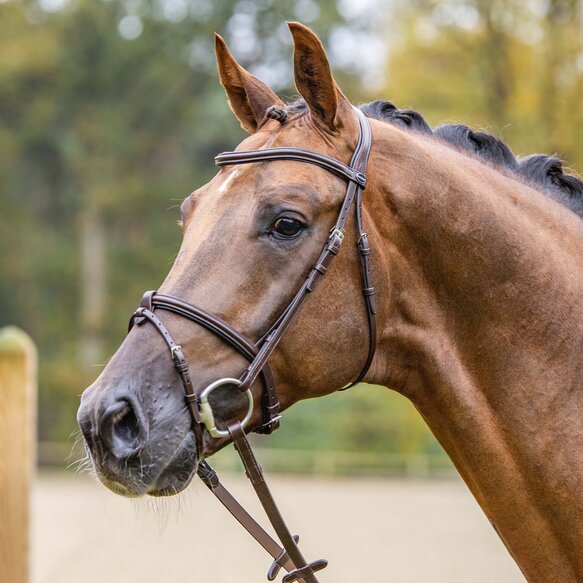
Which bridle suits me and my horse?
A bridle consists of a headpiece, cheekpieces, browband, throatlash and noseband; with reins and bit it becomes the complete bridle. There are many models. What matters are the shape of your horse's head, its sensitivity and how you ride. Whether reins are included is stated on the individual product.
Types of bridle at a glance
The biggest difference is in the noseband, i.e. the noseband straps and – if there is one – the flash strap:
- English combined bridle: combines elements of the English and Hanoverian nosebands. The noseband sits about two fingers' width below the cheekbone, the flash strap below the bit. It is the most common model and a solid choice for many horses and disciplines.
- Swedish combined bridle: similarly built; the noseband is often more widely padded and has a pulley.
- Hanoverian bridle: the noseband sits low under the bit and also serves as the flash strap.
- Mexican noseband: two crossed straps on the nasal bone leave plenty of room to breathe, which is why it is often seen in showjumping.
- Anatomical bridles: they leave out sensitive areas of the head (such as nerve pathways and bone) and offer plenty of ear room at the headpiece. They need to be fitted carefully.
- Double bridles: for advanced dressage, with an extra cheekpiece for the curb bit and without a flash strap.
- Bitless bridles: for example sidepull or hackamore. They act on the nasal bone and poll rather than in the mouth. They require you to ride with weight and leg aids independently of the reins. Also check whether they are allowed for your use and at shows.
Bridle, bit, snaffle – what goes with what?
The bridle is the headgear; the bit is chosen separately and must suit the horse's mouth. The term “Wassertrense” here means a snaffle bit with loose rings, not a complete bridle. With us you will find snaffle bits, eggbutt bits, mullen mouth bits, curb bits and bradoons. How each type of bit works is explained in our guide Bits – the basics explained; you can measure the right width with Measuring bits correctly.
Size and fit
In the shop you will find bridles in sizes Mini Shetty, Shetty, Pony, Cob, Warmblood and Warmblood Extra; some manufacturers also offer a Full (thoroughbred) size between Cob and Warmblood. The size names are only a guide, because every manufacturer cuts a little differently. So rely on the details in the product listing and, if in doubt, measure your horse's head. Check these points when fitting:
- Noseband: it should not press on the nasal bone or cheekbone. With a normally closed noseband you can usually still fit two fingers between the strap and the nasal bone.
- Headpiece and ears: the headpiece must not press on or rub against the ears. Anatomical models leave more room.
- Bit: it sits with one to two slight wrinkles at the corner of the mouth.
- Throatlash: leave about a hand's width so the horse can breathe freely and flex.
With pads, poll protectors and spare parts from bridle accessories, you can fine-tune the fit if needed. Matching reins and browbands are also available from us.
Material, look and care
Bridles come in leather, oiled leather and patent leather, round-stitched or flat, with lining, glitter or diamanté. Brown and black are the most popular colours. Colour does not affect the fit; workmanship and noseband shape do. To keep leather soft and durable:
- After riding, wipe off sweat, dust and saliva.
- Clean leather regularly and care for it with a suitable leather care product.
- Wipe patent leather with a damp cloth and care for it as the manufacturer recommends.
- Let wet leather dry slowly in the air, not on a radiator.
- Wipe metal parts and buckles and hang the bridle up dry.
Buying help in three questions
- What do you ride? Dressage, showjumping, cross-country or leisure place different demands on noseband and bit.
- What is your horse's head like? Sensitive, with a long or short nose, with a pronounced cheekbone? That affects whether an anatomical, combined or Mexican noseband fits better.
- What goes with saddle, reins and bit? Colour, fittings and leather can be coordinated well.
Still unsure? We are happy to advise you by phone, WhatsApp or video. You will also find many models directly under the brands, for example Dy'on, Kavalkade, Waldhausen, QHP and Trust.
Size depends on your horse's head, not only breed or height. Roughly: Shetty and Pony for small horses, Cob for sturdy small to medium horses with a broader head, Warmblood for larger horses. Some makers also offer Thoroughbred (Full) and Extra sizes. Because every maker cuts a little differently, compare the product measurements with your horse's head; we are happy to help.
Both have a combined noseband with cavesson and flash. The Swedish variant often has a more widely padded noseband with a pulley; the English combined is the most common standard model. Which fits better depends on your horse's head shape and sensitivity.
Anatomical bridles spare sensitive areas of the horse's head and offer plenty of ear clearance. They can make sense if your horse is sensitive to pressure. What matters is that they are fitted precisely, otherwise the benefit is lost.
Not automatically. Bitless bridles act on the nasal bone and poll rather than in the mouth. They assume you ride with rein-independent weight and leg aids and that your horse responds reliably. For cross-country they are not always the right choice, partly for insurance reasons. Also check whether they are allowed in your show discipline.
Wipe it dry after riding, clean the leather regularly and care for it with a suitable leather care product. Clean patent leather with a damp cloth. Wet leather dries best slowly in the air, not on a radiator.
That varies by product. Some bridles include reins; you usually choose the bit separately to suit your horse's mouth. Exact contents are listed on each product. Help choosing a bit is in our guide “Bits – the basics explained”.