

Well rugged up in any weather
Horse rugs for every season
Whether it's rain showers in the field, frosty nights in the stable or cooling off after training: with the right horse rug, your horse stays dry, warm or protected from insects. Here you'll find horse rugs for every season – from lightweight 0 g rain rugs and filled turnout rugs to stable rugs, coolers, fly rugs and quarter sheets. Brands include Bucas, Eskadron, Kentucky Horsewear, Horseware, QHP and Waldhausen. Not sure about size or fill? We're happy to advise you by phone, WhatsApp or video.


Content: 0.5 Litre (€44.00 / 1 Litre)




Horse rugs at a glance: which rug for what?
Not every horse rug suits every situation. What matters is the weather, how your horse is kept, its coat and what you have planned with your horse. These are the types of rug you should know:
Rain sheets and turnout rugs for field and paddock
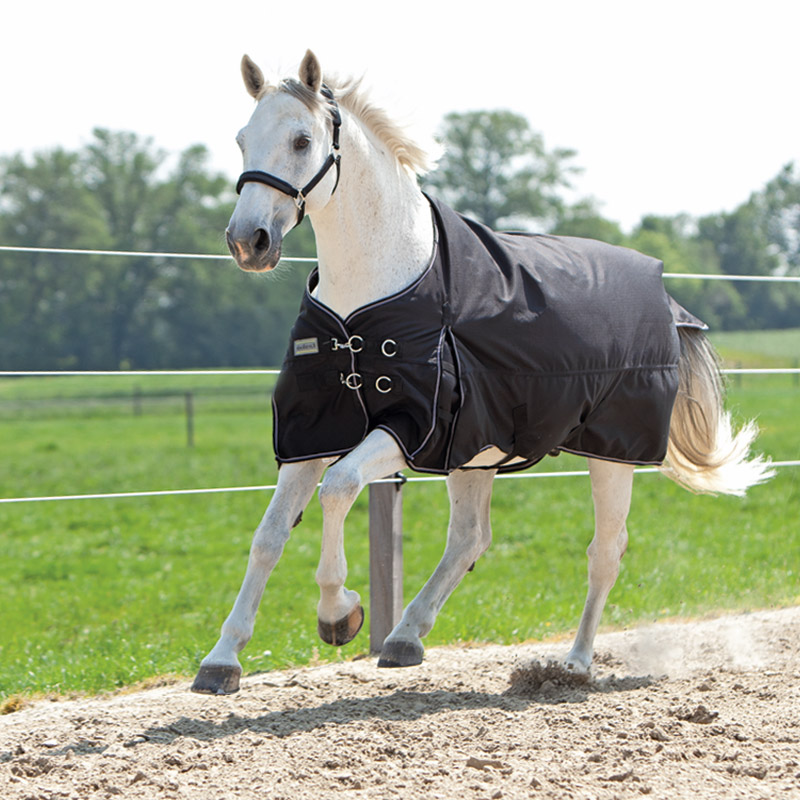
Turnout rugs – also called field rugs or turnouts – are waterproof, windproof and breathable. A rain sheet for your horse usually has no filling (0 g) and protects against wet and wind without adding warmth. How tough the outer material is can be seen from the denier rating (e.g. 600 D, 1200 D or 1680 D): the higher the value, the more tear-resistant the fabric – handy for horses that like to play rough in the herd.
Winter rugs: what does the fill weight mean?
Winter rugs are filled turnout or stable rugs. The gram figure describes how much filling is used per square metre – and therefore how warm the rug keeps your horse:
- 0 g: rain sheet without filling, pure protection against wet and wind
- 50 g: light filling for the in-between seasons
- 100–150 g: medium filling for cool, wet days
- 200–250 g: warm winter rug for frost and cold, wet weather
- 300 g and more: heavily filled, especially for clipped horses or horses that feel the cold
Many brands also state their own temperature ranges. How Bucas does this is explained in our guide Bucas horse rugs – the differences explained.
Stable rugs and under rugs
Stable rugs are not waterproof and are meant for the stable. A 50 g stable rug is suitable for the in-between seasons or as a light warm layer, thicker versions for clipped horses in winter. You combine under rugs (liners) with a turnout rug to increase the warmth flexibly – you'll find suitable models in our horse rug accessories.
Coolers
After riding, washing or at a show, coolers wick moisture away from the coat and stop your horse from getting cold. Classics are fleece, waffle fabric and wool or wool blends. Popular choices include the coolers from Eskadron and Kentucky Horsewear.
Fly rugs and eczema rugs
A fly rug for your horse is made of fine, breathable mesh and keeps flies, horseflies and midges away. There are fly rugs with and without neck cover, rain fly rugs with a water-repellent back panel and eczema rugs with a belly flap for sensitive horses. Everything about the types and how to use them can be found in Fly rugs explained.
Exercise sheets and quarter sheets
Exercise sheets and quarter sheets sit under or around the saddle while riding and keep the back muscles warm during warm-up, cool-down and out hacking – as fleece, rain or fly versions. For the horse walker there are special horse walker rugs.
Measuring the right rug size
A well-fitting rug doesn't slip, doesn't rub and gives your horse freedom of movement. With many European brands, the size in centimetres corresponds to the back length: place the tape measure in front of the withers and run it along the spine to the base of the tail. British and Irish brands often use the total length from the centre of the chest over the shoulder to the hindquarters and give the size in feet and inches (e.g. 6'3"). It's best to take both measurements and compare them with the size chart of the respective manufacturer. If you're between two sizes, look at your horse's build: a broad, well-muscled horse often needs the bigger rug.
When should you rug your horse?
Healthy, unclipped horses with a thick winter coat and access to shelter often manage well without a rug – their coat is excellent insulation. A rug makes sense above all if your horse is clipped, has little winter coat, is older or unwell, or can't find shelter in persistent rain and wind.
As a rough guide for unclipped horses: in wet and windy weather above about 10 °C, a 0 g rain rug is usually enough; between about 5 and 10 °C a light fill; around freezing a medium fill; and in hard frost a warm winter rug. Clipped horses usually need one level warmer. These are only guidelines – breed, age, feeding and exercise all play a part. Regularly slide your hand under the rug at the shoulder and chest: if it feels damp or hot there, the rug is too warm. You'll find more tips for the cold season under Riding in winter.
Horse rug brands at Lepona
We stock horse rugs from well-known manufacturers: Bucas stands for well-designed turnout rugs with temperature ratings, Eskadron for coolers, fly rugs and stable rugs in the current collection colours. Kentucky Horsewear offers stable, turnout and cooler rugs, Horseware the Amigo and Rambo lines, among others. There are also QHP turnout rugs, Waldhausen, Busse and other brands such as BR, Kavalkade and Premiere. You'll find reduced models in our horse rug sale.
Caring for horse rugs properly
With the right care, your horse rug will last much longer:
- Brush off coarse dirt and hair while dry before washing.
- Close all fastenings and wash removable straps in a laundry bag.
- Wash according to the manufacturer's instructions, usually at a maximum of 30–40 °C, with a special rug wash and without fabric softener.
- Re-proof waterproof rugs after washing and let them air-dry.
- Repair small tears early and store rugs clean and dry.
You'll find reproofing products, repair kits, neck covers, chest protectors and replacement straps in our horse rug accessories.
That depends on coat, clip and weather. As a guide: a 0 g rain rug on mild, wet days, 50–150 g in spring and autumn, 200 g and more in frost. Clipped horses usually need one level warmer.
Measure the back length from the withers along the spine to the base of the tail, and also the total length from the centre of the chest to the hindquarters. Always compare the measurements with the manufacturer's size chart.
Not necessarily. Healthy horses with a thick winter coat and access to shelter often manage without a rug. In persistent rain or wind, or if your horse has little coat, is older or unwell, a rain rug or light winter rug can make sense.
A rain rug is a turnout rug without fill (0 g): waterproof and windproof, but not warming. Filled turnout rugs also have a fill, for example 50, 150 or 300 g.
That depends on the material and the weather. The rug should dry quickly; in cool weather it's better to take a wet fly rug off. For changeable days, a rain fly rug with a water-repellent back is a good choice.
A 50 g stable rug is a light warm layer for the stable, for example in spring and autumn, for freshly clipped horses or as an under rug beneath a turnout rug, provided the rugs are suitable for this.